


Improving Protection to Prevent Bacterial Infections: Preliminary Applications of Reverse Vaccinology against the Main Cystic Fibrosis Pathogens
- PMID: 37515037
- PMCID: PMC10384294
- DOI: 10.3390/vaccines11071221
Improving Protection to Prevent Bacterial Infections: Preliminary Applications of Reverse Vaccinology against the Main Cystic Fibrosis Pathogens
Abstract
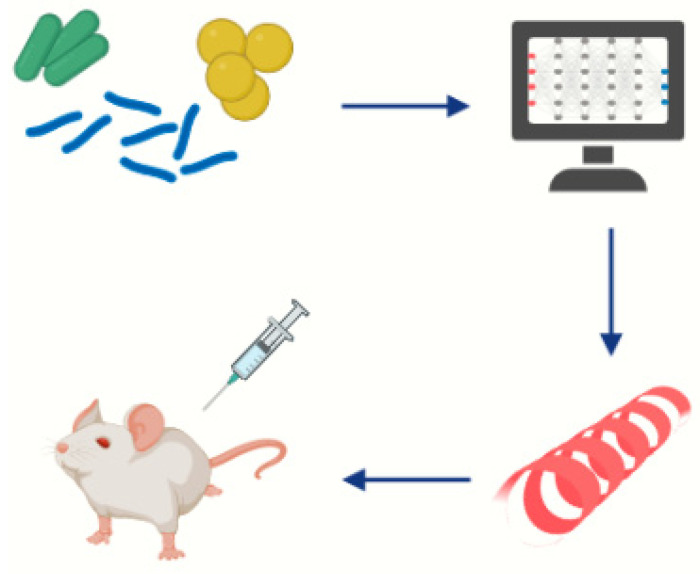
Reverse vaccinology is a powerful tool that was recently used to develop vaccines starting from a pathogen genome. Some bacterial infections have the necessity to be prevented then treated. For example, individuals with chronic pulmonary diseases, such as Cystic Fibrosis, are prone to develop infections and biofilms in the thick mucus that covers their lungs, mainly caused by Burkholderia cepacia complex, Haemophilus influenzae, Mycobacterium abscessus complex, Pseudomonas aeruginosa and Staphylococcus aureus. These infections are complicated to treat and prevention remains the best strategy. Despite the availability of vaccines against some strains of those pathogens, it is necessary to improve the immunization of people with Cystic Fibrosis against all of them. An effective approach is to develop a broad-spectrum vaccine to utilize proteins that are well conserved across different species. In this context, reverse vaccinology, a method based on computational analysis of the genome of various microorganisms, appears as one of the most promising tools for the identification of putative targets for broad-spectrum vaccine development. This review provides an overview of the vaccines that are under development by reverse vaccinology against the aforementioned pathogens, as well as the progress made so far.
Keywords: bacterial infection; cystic fibrosis; reverse vaccinology.
Conflict of interest statement
The authors declare no conflict of interest. The funders had no role in the design of the study; in the collection, analyses, or interpretation of data; in the writing of the manuscript; or in the decision to publish the results.
Figures
References
Publication types
Grants and funding
LinkOut - more resources
Full Text Sources
Molecular Biology Databases
