


A systematic review and meta-analysis of the sources of Campylobacter in poultry production (preharvest) and their relative contributions to the microbial risk of poultry meat
- PMID: 37516002
- PMCID: PMC10405099
- DOI: 10.1016/j.psj.2023.102905
A systematic review and meta-analysis of the sources of Campylobacter in poultry production (preharvest) and their relative contributions to the microbial risk of poultry meat
Abstract
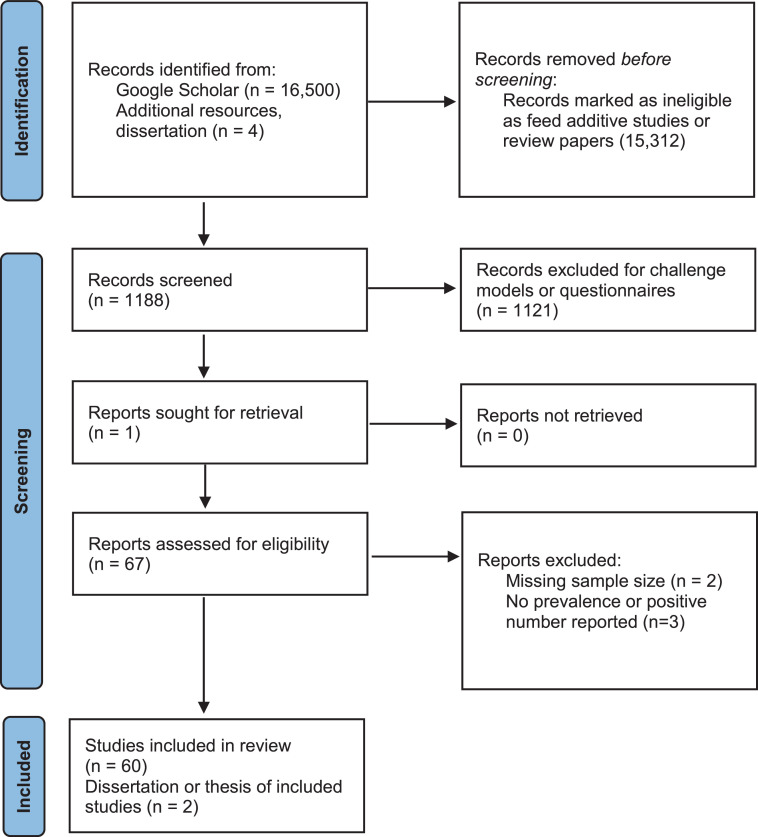
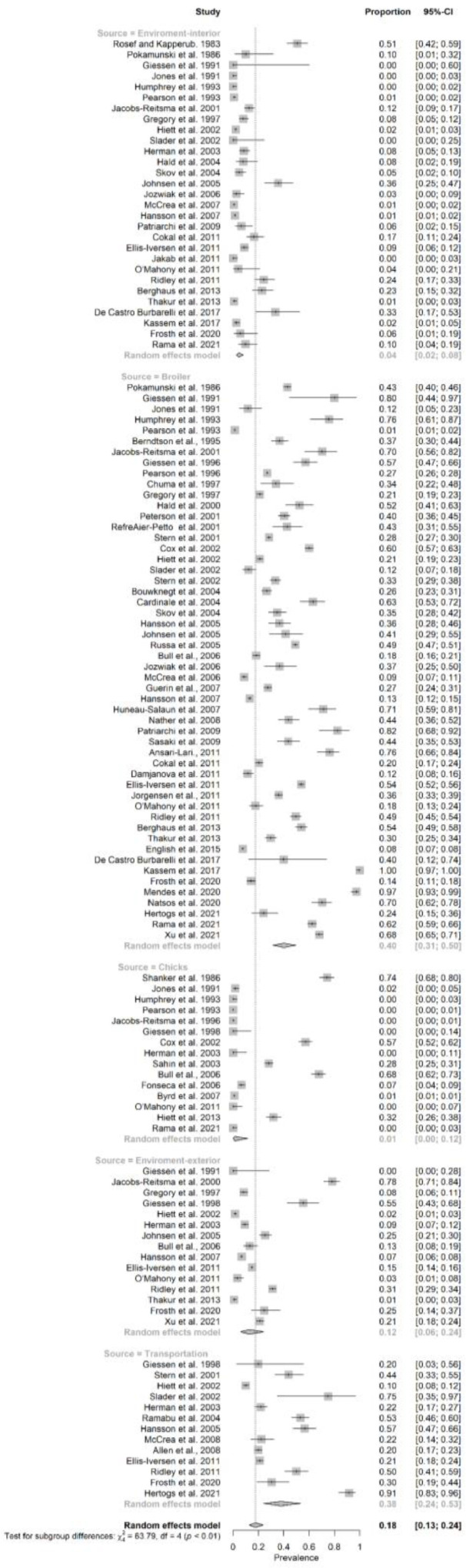
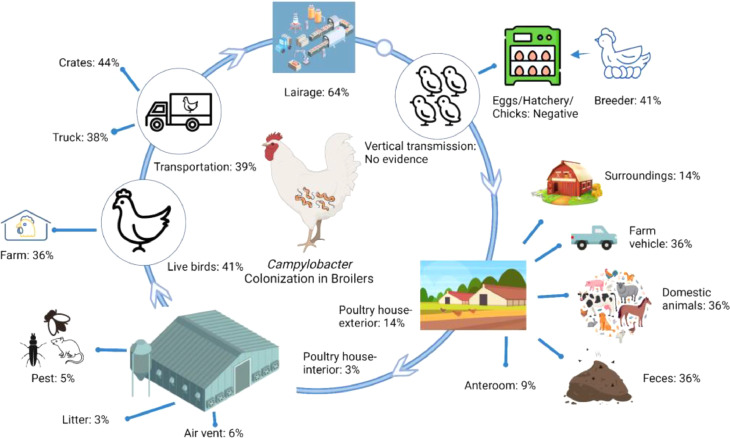
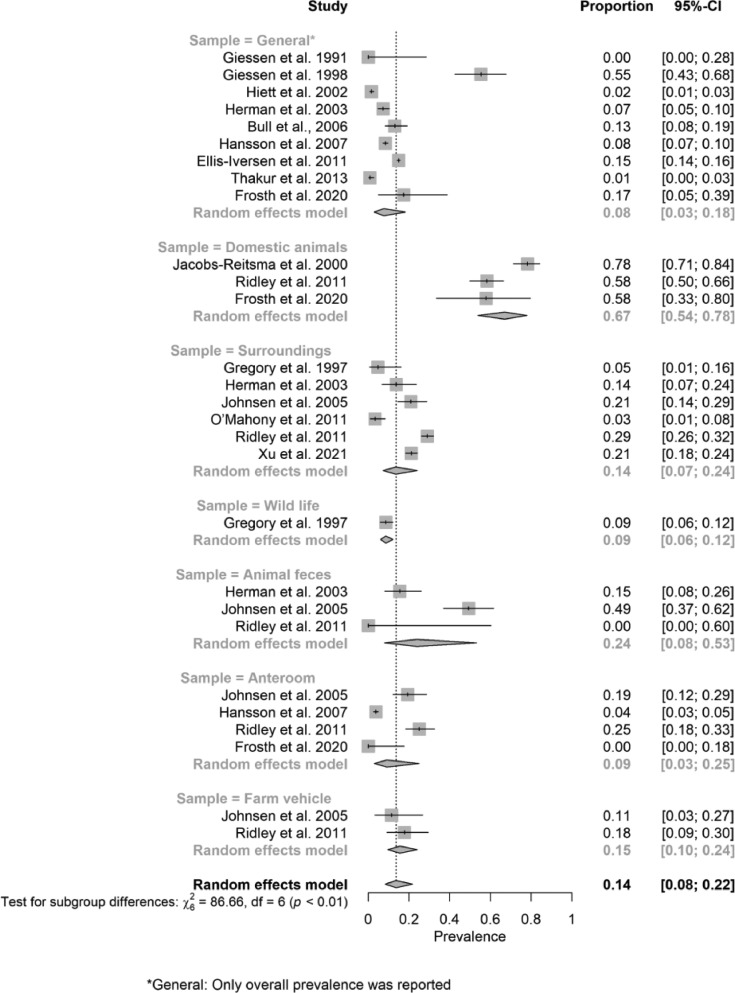
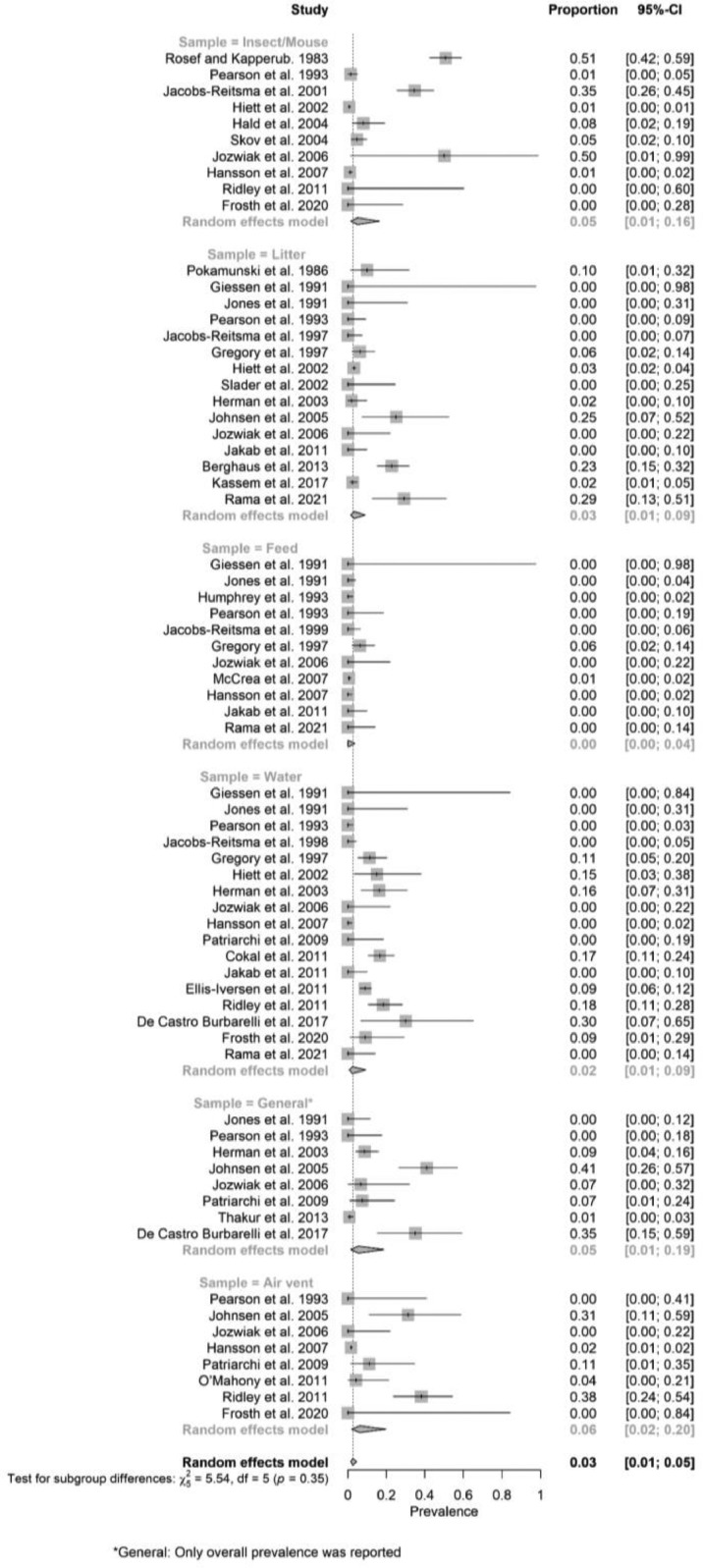
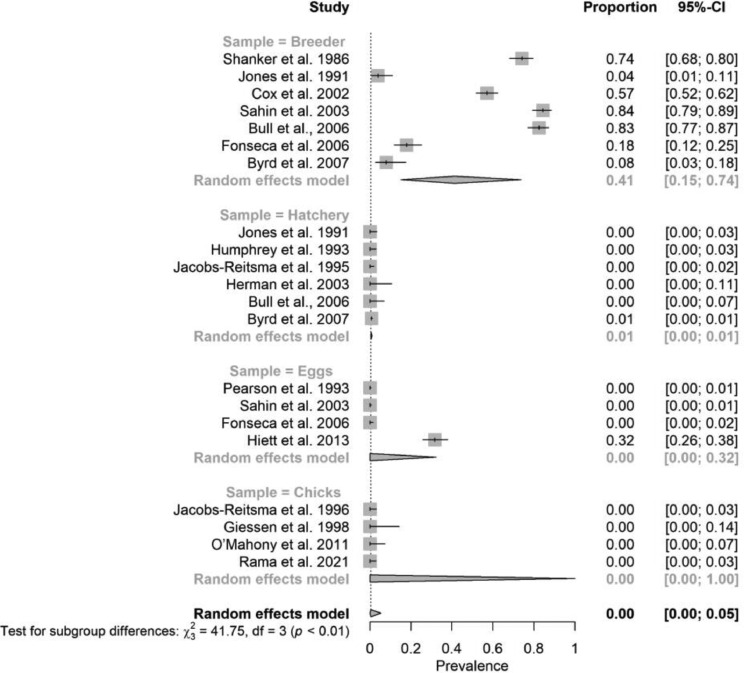
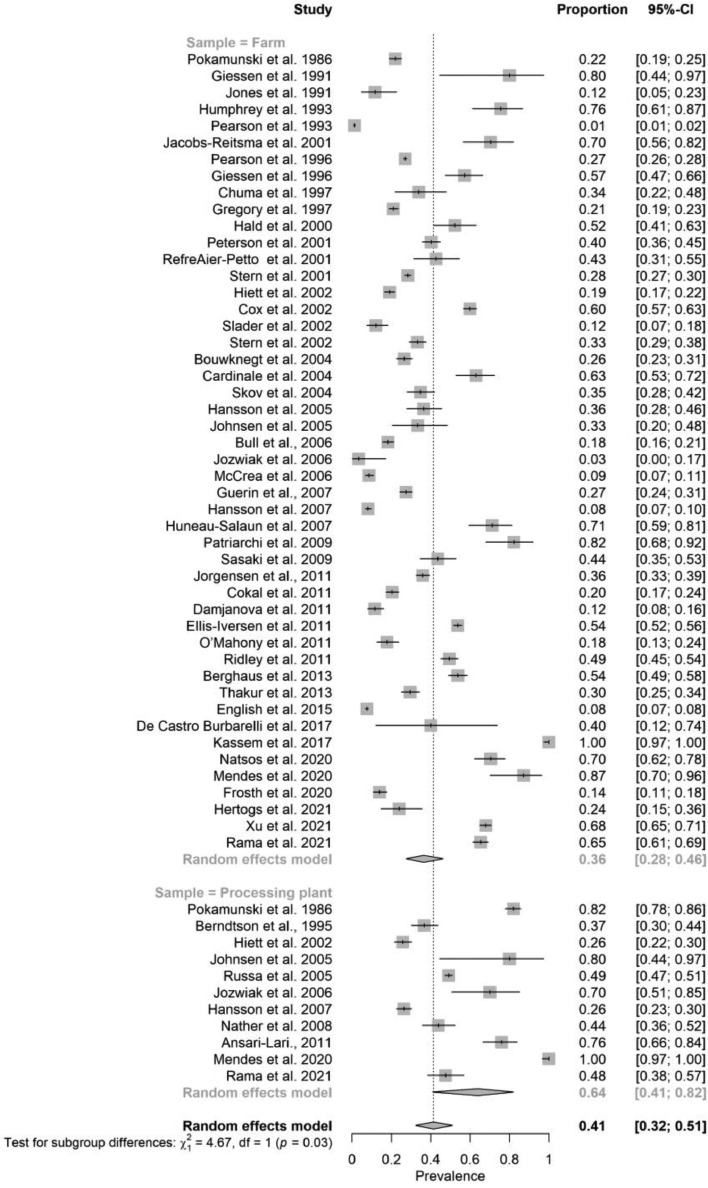
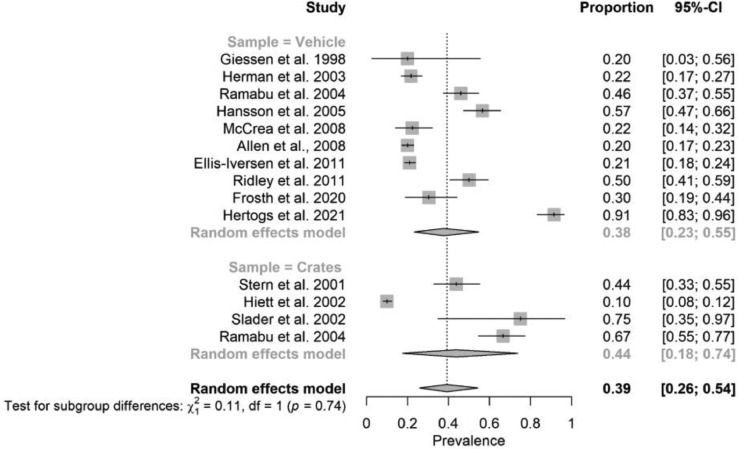
A systematic review and meta-analysis were conducted to idetnify the relative contributions of the sources of Campylobacter in poultry live production to Campylobacter prevalence of broiler meat. The keywords of Campylobacter, prevalence, live production, and broiler were used in Google Scholar to address the research interest. A total of 16,800 citations were identified, and 63 relevant citations were included in the meta-analysis after applying predetermined inclusion and exclusion criteria. A generalized linear mixed model approach combined with logit transformation was used in the current meta-analysis to stabilize the variance. The analysis revealed that Campylobacter is ubiquitous in the poultry house exterior environment including surroundings, wildlife, domestic animals, and farm vehicle, with a predicted prevalence of 14%. The recovery of Campylobacter in the interior environment of the poultry house is far less abundant than in the exterior, with a prevalence of 2%, including litter, water, insects, mice, feed, and air. A lack of evidence was observed for vertical transmission due to the day-old chicks being free of Campylobacter from 4 studies identified. Live birds are the predominant carrier of Campylobacter, with a predicted prevalence of 41%. Transportation equipment used for live haul had an overall prevalence of 39%, with vehicles showing a predicted prevalence of 44% and crates with a predicted prevalence of 22%. The results of this meta-analysis highlight the need to implement effective biosecurity measures to minimize the risk of Campylobacter in poultry meat, as human activity appears to be the primary factor for Campylobacter introduction.
Keywords: Campylobacter; broiler chicken; contribution factor; meta-analysis; preharvesting.
Copyright © 2023 The Authors. Published by Elsevier Inc. All rights reserved.
Figures
References
-
- Adkin A., Hartnett E., Jordan L., Newell D., Davison H. Use of a systematic review to assist the development of Campylobacter control strategies in broilers. J. Appl. Microbiol. 2006;100:306–315. - PubMed
-
- Aiassa E., Higgins J., Frampton G., Greiner M., Afonso A., Amzal B., Deeks J., Dorne J.-L., Glanville J., L¨ovei G. Applicability and feasibility of systematic review for performing evidence-based risk assessment in food and feed safety. Crit. Rev. Food Sci. Nutr. 2015;55:1026–1034. - PubMed
-
- Allen V.M., Weaver H., Ridley A.M., Harris J.A., Sharma M., Emery J., Sparks N., Lewis M., Edge S. Sources and spread of thermophilic Campylobacter spp. during partial depopulation of broiler chicken flocks. J. Food Prot. 2008;71:264–270. - PubMed
-
- Alves M.B., Fonseca B.B., Melo R.T., Mendonça E.P., Nalevaiko P.C., Girão L.C., Monteiro G.P., Silva P.L., Rossi D.A. Feed can be a source of Campylobacter jejuni infection in broilers. Br. Poult. Sci. 2017;58:46–49. - PubMed
Publication types
MeSH terms
LinkOut - more resources
Full Text Sources
Medical
