


Systemic inflammatory proteins in offspring following maternal probiotic supplementation for atopic dermatitis prevention
- PMID: 37516841
- PMCID: PMC10386175
- DOI: 10.1186/s12948-023-00186-3
Systemic inflammatory proteins in offspring following maternal probiotic supplementation for atopic dermatitis prevention
Abstract
Background: Maternal probiotic supplementation has a promising effect on atopic dermatitis (AD) prevention in infancy. In the randomised controlled study, Probiotics in the Prevention of Allergy among Children in Trondheim (ProPACT), maternal probiotics reduced the cumulative incidence of AD in their offspring by 40% at 2 years of age. However, our understanding on how probiotics prevented AD is still limited, and the role of inflammatory proteins in infants following maternal probiotic supplementation is unclear. We hypothesised that maternal probiotics lowered pro-inflammatory proteins and increased anti-inflammatory proteins in their 2-year-old children as a mechanism of AD prevention. We aimed to explore this hypothesis and the association between these proteins and the presence of AD, severity of AD, and the degree of preventive effect of probiotics.
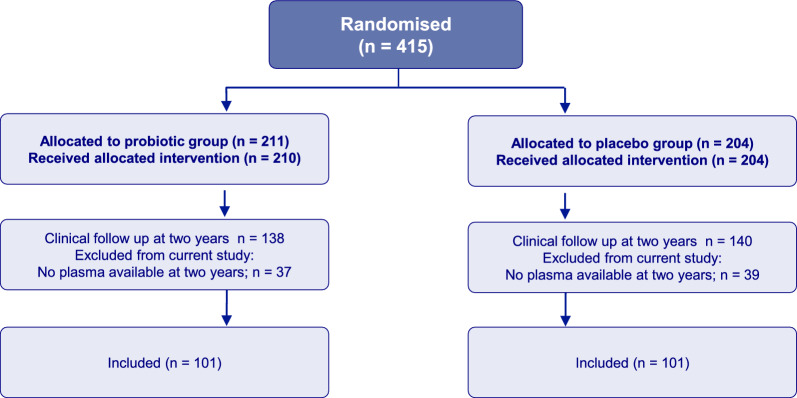
Methods: Plasma samples were collected from 2-year-old children (n = 202) during the ProPACT study, a randomised placebo-controlled trial of maternal probiotic supplementation. These samples were analysed for 92 inflammatory proteins using a multiplex proximity extension assay. Associations between inflammatory proteins and the presence and severity of AD, and the degree of preventive effect, was estimated individually using regression analysis and then collectively using unsupervised cluster analysis.
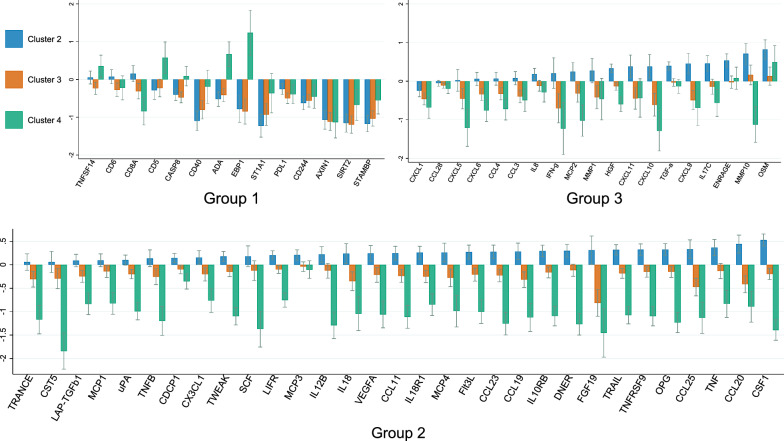
Results: Several proteins were observed to differ between the groups. The probiotic group had lower CCL11 and IL-17C, while children with AD had higher IL-17C, MCP-4, uPA, and CD6. Cytokine CCL20 and IL-18 had moderate correlation (r = 0.35 and r = 0.46) with the severity of AD. The cluster analysis revealed that children in the cluster of samples with the highest value of immune checkpoint receptors and inflammatory suppressor enzymes showed the greatest AD preventive effect from probiotics.
Conclusions: The proteins associated with both maternal probiotic supplementation and the presence and severity of AD warrant attention because of their potential biological relevance. Cluster analysis may provide a new insight when considering which subgroups benefit from probiotic supplementation. Larger studies are needed to confirm the results.
Trial registration number: The study was retrospectively registered at ClinicalTrials.gov (NCT00159523) on 12nd September 2005.
Keywords: Atopic dermatitis; Biomarkers; Children; Plasma; Probiotics.
© 2023. The Author(s).
Conflict of interest statement
The authors declare that they have no competing interests.
Figures
References
-
- Doll RJ, Joseph NI, McGarry D, Jhaveri D, Sher T, Hostoffer R. Epidemiology of allergic diseases. Allergy and asthma: the basics to best practices. Cham: Springer International Publishing; 2019. pp. 31–51.
-
- Mu Z, Zhang J. The role of genetics, the environment, and epigenetics in atopic dermatitis. In: Chang C, Lu Q, editors. Epigenetics in allergy and autoimmunity. Singapore: Springer Singapore; 2020. pp. 107–140. - PubMed
Associated data
LinkOut - more resources
Full Text Sources
Medical
Miscellaneous
