


Reconnoitering NGOs strategies to strengthen disaster risk communication (DRC) in Pakistan: A conventional content analysis approach
- PMID: 37519694
- PMCID: PMC10372212
- DOI: 10.1016/j.heliyon.2023.e17928
Reconnoitering NGOs strategies to strengthen disaster risk communication (DRC) in Pakistan: A conventional content analysis approach
Abstract
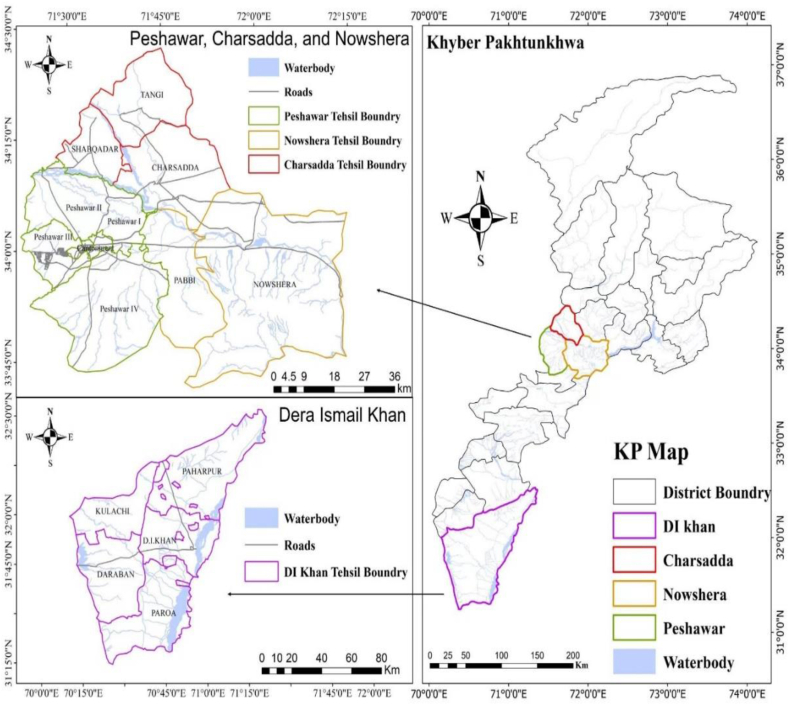
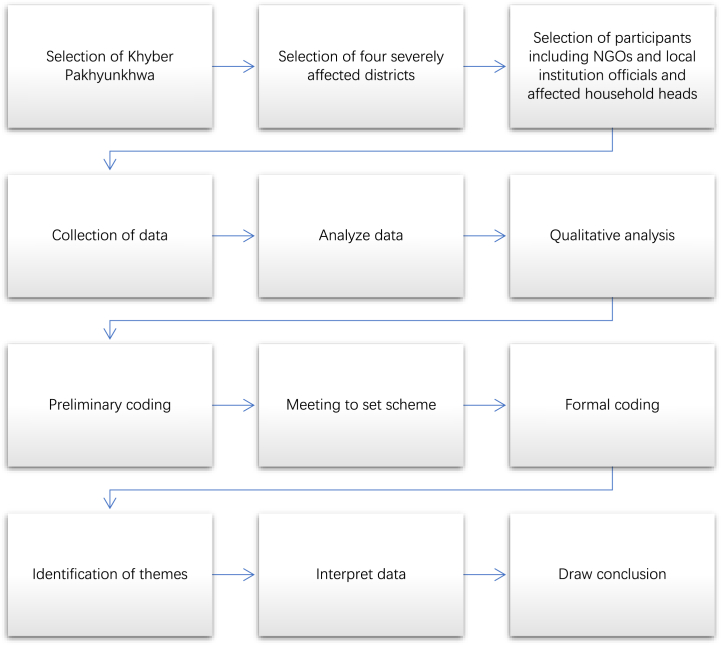
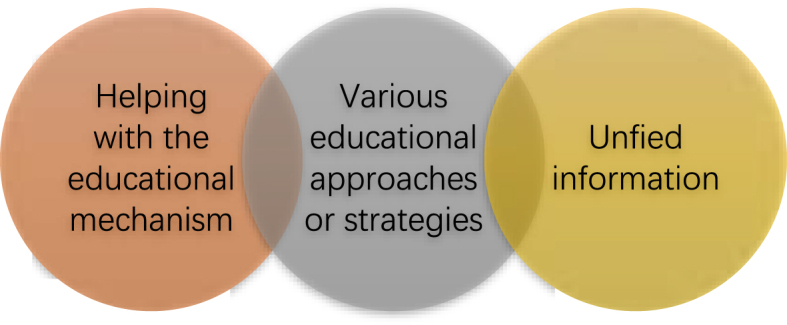
Risk communication is crucial since individuals need to understand how they are at risk and what proper steps to deal with flood events. Sharing information with the public opens the door for two-way communication about risks, wherein you learn about people's perspectives and work together to find ways to mitigate the risks. Beyond government scope, relief organizations play a big part in advising individuals about the likelihood of catastrophic events as they possess the commonalities that define community engagement. In numerous accounts of devastating events, the failure of risk management groups to coordinate their efforts and the public's mistrust of relief agencies are highlighted. One possible explanation for this skepticism could be relief organizations' failures in communicating risks. In addition, individuals' lack of skills and experience with catastrophes has left rural residents unprepared, which is why relief agencies need to raise their efforts or measures to communicate with people about possible risks. If these measures are uncovered, it could improve public communication and provide information for formulating recommendations to prevent fatalities. This study identifies the strategies used by relief organizations in enhancing disaster risk communication across four severely affected districts in Khyber Pakhtunkhwa, Pakistan. The qualitative research used semi-structured interviews with 50 participants from relief organizations, local institutions, and affected households. We employed qualitative content analysis and NVivo software to analyze the data. The findings of this study highlighted some significant strategies that relief organizations adopted in this line of work: the administration of educational and information transmission, managing obstacles in communication, and managing inter-organizational communications. The findings validate the potential for relief organizations to become change agents, facilitate communication between the public and relief organizations, and ultimately strengthen community resilience and reduce disaster risks as part of local responses.
Keywords: Community resilience; Disaster risk communication; Flood; Pakistan; Relief organizations.
© 2023 The Authors.
Conflict of interest statement
The authors declare that they have no known competing financial interests or personal relationships that could have appeared to influence the work reported in this paper.
Figures
References
-
- Charvériat C. 2000. Natural Disasters in Latin America and the Caribbean: an Overview of Risk.
-
- O'Brien K.L., Sygna L., Leichenko R., Adger W.N., Barnett J., Mitchell T., Schipper E.L.F., Tanner T., Vogel C., Mortreux C. GECHS) Project; 2008. Disaster Risk Reduction, Climate Change Adaptation and Human Security: A Commissioned Report for the Norwegian Ministry of Foreign Affairs by the Global Environmental Change and Human Security.
-
- Atta-ur-Rahman . VDM Publishing; 2010. Disaster Risk Management: Flood Perspective.
-
- Mn Rn eC C.B., Goyal A., Ont O.T.R., Ont S.H.O.T.R., Young J.A., Kristina Guy P.T., Vanderwerf A., Horne I.M., Md A.S.B. vol. 12. World Health Popul; 2010. (Humanitarian Response Following the Earthquake in Haiti: Reflections on Unprecedented Need for Rehabilitation). - PubMed
-
- Khan B., Iqbal M.J., Yosufzai M. Flood risk assessment of river Indus of Pakistan. Arabian J. Geosci. 2011;4:115–122.
LinkOut - more resources
Full Text Sources
