


Scars from a Previous Epidemic: Social Proximity to Zika and Fertility Intentions during the COVID-19 Pandemic
- PMID: 37520157
- PMCID: PMC10372507
- DOI: 10.1177/23780231231184767
Scars from a Previous Epidemic: Social Proximity to Zika and Fertility Intentions during the COVID-19 Pandemic
Abstract
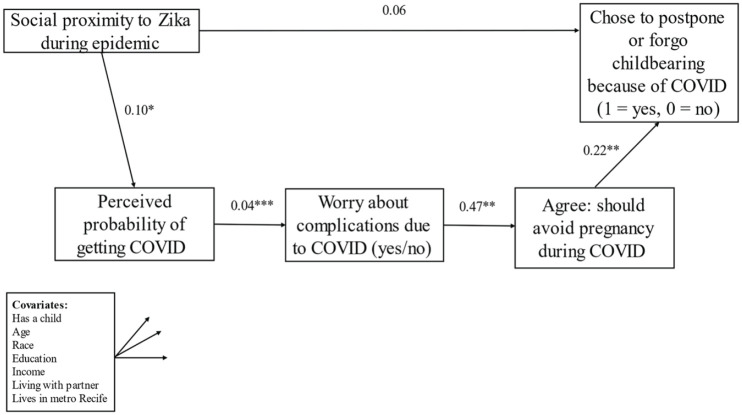
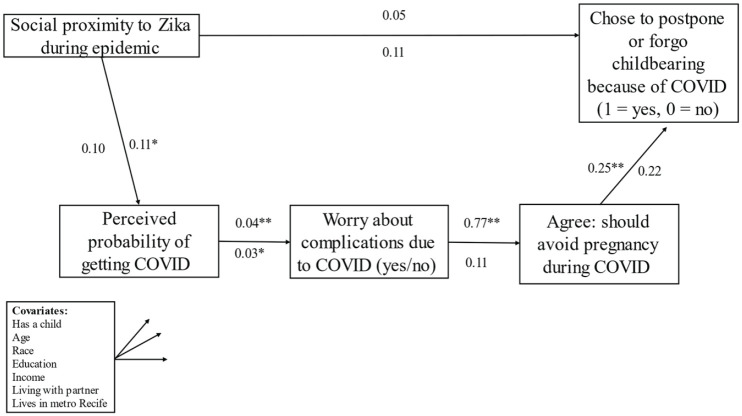
We examine whether women's social proximity to Zika during the Zika epidemic predicts intentions to avoid a pregnancy because of the COVID-19 pandemic either directly or indirectly via subjective assessments of the pandemic. We apply path models on unique microdata from Brazil, the country most affected by Zika and an epicenter of COVID-19, to understand whether a novel infectious disease outbreak left lasting imprints shaping fertility intentions during a subsequent novel infectious disease outbreak. Findings show that Zika social proximity is associated with fertility intentions through an indirect path related to subjective assessment of the COVID-19 pandemic. These findings emerged regardless of whether a woman herself had or suspected she had Zika and speak to the transformative consequences of novel infectious disease outbreaks that go beyond mortality and health.
Keywords: Brazil; COVID-19 pandemic; fertility; fertility intentions.
© The Author(s) 2023.
Figures
References
-
- Ajzen Icek. 1991. “The Theory of Planned Behavior.” Theories of Cognitive Self-Regulation 50(2):179–211. doi: 10.1016/0749-5978(91)90020-T. - DOI
-
- Barber Jennifer S.2001. “Ideational Influences on the Transition to Parenthood: Attitudes toward Childbearing and Competing Alternatives.” Social Psychology Quarterly 64(2):101–27. doi: 10.2307/3090128. - DOI
-
- Bernardi Laura. 2013. “From Mothers to Daughters: Intergenerational Transmission of Fertility Norms.” Pp. 165–81 in The Social Meaning of Children and Fertility Change in Europe, edited by Ellingsaeter A. L., Jensen A.-M., Lie M.London: Routledge.
Grants and funding
LinkOut - more resources
Full Text Sources