


A Woman's Heart: Improving Uptake and Awareness of Cardiovascular Screening for Middle-Aged Populations
- PMID: 37520181
- PMCID: PMC10377626
- DOI: 10.2147/IJWH.S328441
A Woman's Heart: Improving Uptake and Awareness of Cardiovascular Screening for Middle-Aged Populations
Abstract
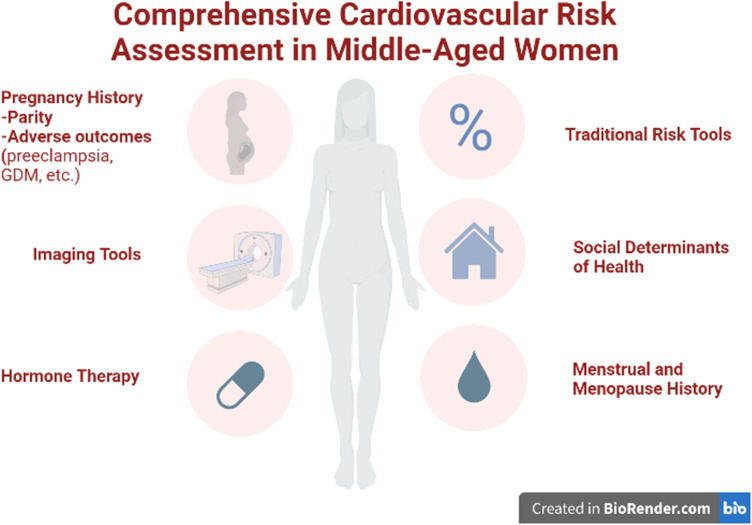
Mid-life, the years leading up to and following the menopause transition, in women is accompanied by a change in cardiometabolic risk factors, including increases in body weight, changes in body composition, a more insulin-resistant state, and a shift towards a more atherogenic dyslipidemia pattern. Cardiovascular disease (CVD) risk assessment should be performed continually throughout the lifespan, as risk is not stagnant and can change throughout the life course. However, mid-life is a particularly important time for a woman to be evaluated for CVD risk so that appropriate preventive strategies can be implemented. Along with assessing traditional risk factors, ascertainment of a reproductive history is an integral part of a comprehensive CVD risk assessment to recognize unique female-specific or female-predominant factors that modify a woman's risk. When there is uncertainty about CVD risk and the net benefit of preventive pharmacotherapy interventions (such as statins), measuring a coronary artery calcium score can help further refine risk and guide shared decision-making. Additionally, there should be heightened sensitivity around identifying signs and symptoms of ischemic heart disease in women, as these may present differently than in men. Ischemia from coronary microvascular disease and/or vasospasm may be present even without obstructive coronary artery disease and is associated with a heightened risk for major cardiovascular events and reduced quality of life. Therefore, correctly identifying CVD in women and implementing preventive and treatment therapies is paramount. Unfortunately, women are underrepresented in cardiovascular clinical trials, and more data are needed about how to best incorporate novel and emerging risk factors into CVD risk assessment. This review outlines an approach to CVD screening and risk assessment in women using several methods, focusing on the middle-aged population.
Keywords: cardiovascular disease; menopause; mid-life; prevention; risk assessment; women’s health.
© 2023 Kazzi et al.
Conflict of interest statement
Dr. Michos has served as a consultant for Amgen, Amarin, AstraZeneca, Bayer, Boehringer Ingelheim, Edwards Life Science, Esperion, Medtronic, Novartis, Novo Nordisk, and Pfizer. Dr. Sierra-Galan has served as a speaker for Pfizer. Dr Lale S Tokgözoğlu reports personal fees from Abbott, Amgen, AstraZeneca, Bayer, Daiichi Sankyo, MSD, Mylan, Novartis, NovoNordisk, Sanofi, Servier, Pfizer, and Recordati, outside the submitted work. The other authors have nothing to disclose for this work.
Figures
References
-
- Curtin SC. Trends in cancer and heart disease death rates among adults aged 45–64: United States, 1999–2017. Natl Vital Stat Rep. 2019;68(5):1–9. - PubMed
Publication types
LinkOut - more resources
Full Text Sources
