


Origin, impacts, and potential solutions to the fragmentation of the Mexican health system: a consultation with key actors
- PMID: 37525130
- PMCID: PMC10388521
- DOI: 10.1186/s12961-023-01025-2
Origin, impacts, and potential solutions to the fragmentation of the Mexican health system: a consultation with key actors
Abstract
Background: One of the central debates in health policy is related to the fragmentation of health systems. Fragmentation is perceived as a major obstacle to UHC. This article presents the results of a consultation with a group of actors of the Mexican policy arena on the origins and impacts of the fragmentation of the Mexican health system.
Methods: We used a consultation to nine key actors to collect thoughts on the fragmentation of the Mexican health system. The group included national and local decision makers with experience in health care issues and researchers with background in health systems and/or public policies. The sessions were recorded, transcribed verbatim and analyzed thematically.
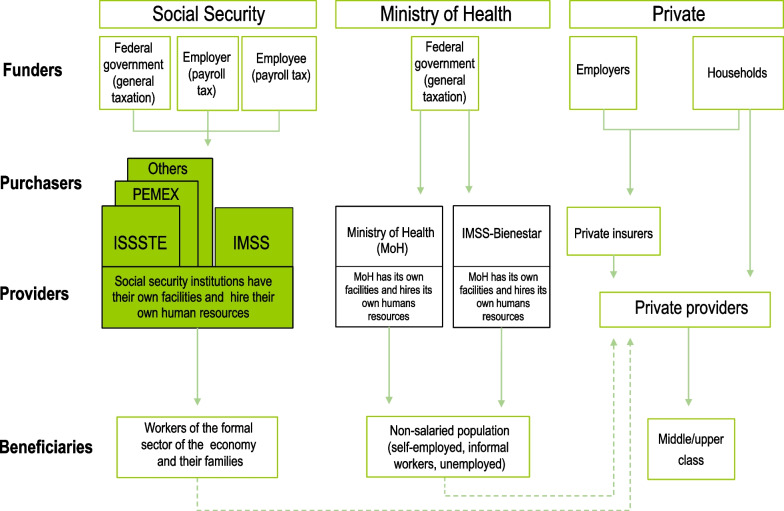
Results: Participants defined the term 'fragmentation' as the separation of the various groups of the population based on characteristics which define their access to health care services. This is a core characteristic of health systems in Latin America (LA). In general, those affiliated to social security institutions have a higher per capita expenditure than those without social security, which translates into differential health benefits. According to the actors in this consultation, fragmentation is the main structural problem of the Mexican health system. Actors agreed that the best way to end fragmentation is through the creation of a universal health system. Defragmentation plans should include a research component to document the impacts of fragmentation, and design and test the instruments needed for the integration process.
Conclusions: First, health system fragmentation in Mexico has created problems of equity since different population groups have unequal access to public resources and different health benefits. Second, Mexico needs to move beyond the fragmentation of its health system and guarantee, through its financial integration, access to the same package of health services to all its citizens. Third, defragmentation plans should include a research component to document the impacts of fragmentation, and design and test the instruments needed for the integration process. Fourth, defragmentation of health systems is not an easy task because there are vested interests that oppose its implementation. Political strategies to meet the resistance of these groups are an essential component of any defragmentation plan.
Keywords: Health system fragmentation; Mexican health system; UHC.
© 2023. The Author(s).
Conflict of interest statement
The authors declare no competing interests.
References
-
- Bossert T, Blanchet N, Sheetz S, Pinto D, Cali J, Cuevas RP. Comparative review of health system integration in selected countries in Latin America. Washington DC, USA; 2014. Report No.: IDB-TN-585. https://publications.iadb.org/en/publication/11898/comparative-review-he...
-
- Knaul F, Wong R, Arreola-Ornelas H, Méndez O, Network on Health Financing and Social Protection in Latin America and the Caribbean (LANET) et al. Household catastrophic health expenditures: a comparative analysis of twelve Latin American and Caribbean countries. Salud Publica Mex. 2011;53:s85–95. - PubMed
-
- Cotlear D, Nagpal S, Smith O. How 24 developing countries are implementing universal health coverage reforms from the bottom up. Washington DC 20433, USA: The World Bank; 2015. p. 1–289. http://hdl.handle.net/10986/22011
-
- Mesa-Lago C. Reassembling social security: a survey of pensions and health care reforms in Latin America. 1. New York: Oxford University Press; 2008.
MeSH terms
Grants and funding
LinkOut - more resources
Full Text Sources
Medical
