


Role of mitochondrial alterations in human cancer progression and cancer immunity
- PMID: 37525297
- PMCID: PMC10392014
- DOI: 10.1186/s12929-023-00956-w
Role of mitochondrial alterations in human cancer progression and cancer immunity
Abstract
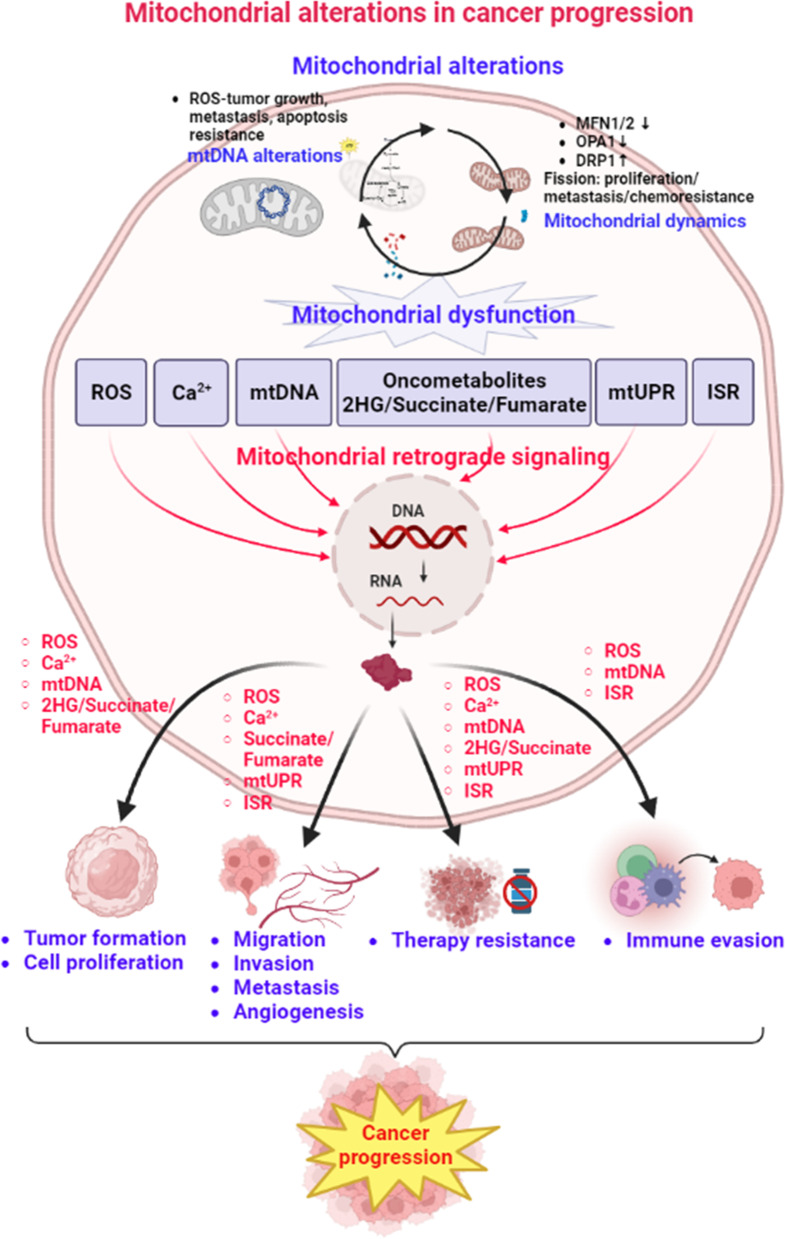
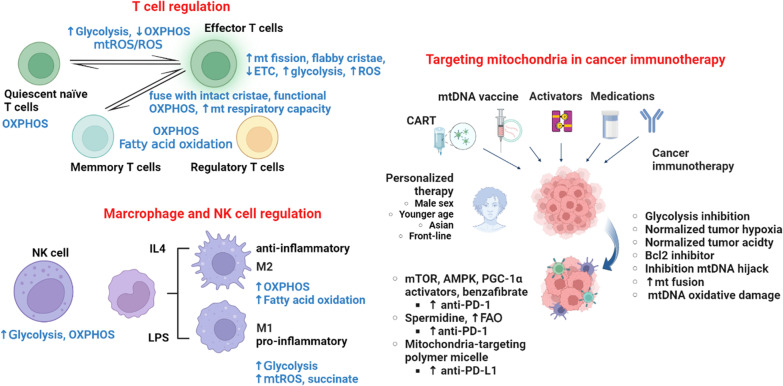
Dysregulating cellular metabolism is one of the emerging cancer hallmarks. Mitochondria are essential organelles responsible for numerous physiologic processes, such as energy production, cellular metabolism, apoptosis, and calcium and redox homeostasis. Although the "Warburg effect," in which cancer cells prefer aerobic glycolysis even under normal oxygen circumstances, was proposed a century ago, how mitochondrial dysfunction contributes to cancer progression is still unclear. This review discusses recent progress in the alterations of mitochondrial DNA (mtDNA) and mitochondrial dynamics in cancer malignant progression. Moreover, we integrate the possible regulatory mechanism of mitochondrial dysfunction-mediated mitochondrial retrograde signaling pathways, including mitochondrion-derived molecules (reactive oxygen species, calcium, oncometabolites, and mtDNA) and mitochondrial stress response pathways (mitochondrial unfolded protein response and integrated stress response) in cancer progression and provide the possible therapeutic targets. Furthermore, we discuss recent findings on the role of mitochondria in the immune regulatory function of immune cells and reveal the impact of the tumor microenvironment and metabolism remodeling on cancer immunity. Targeting the mitochondria and metabolism might improve cancer immunotherapy. These findings suggest that targeting mitochondrial retrograde signaling in cancer malignancy and modulating metabolism and mitochondria in cancer immunity might be promising treatment strategies for cancer patients and provide precise and personalized medicine against cancer.
Keywords: Cancer immunity; Cancer progression; Mitochondria; Retrograde signaling.
© 2023. The Author(s).
Conflict of interest statement
The authors declare that they have no competing interests.
Figures
References
Publication types
MeSH terms
Substances
Grants and funding
- MOST 111-2314-B-075-062-MY3/Ministry of Science and Technology, Taiwan
- MOST 111-2320-B-A49-024/Ministry of Science and Technology, Taiwan
- MOST-111-2320-B-075-004/Ministry of Science and Technology, Taiwan
- V111C-135, V112C-029/Taipei Veterans General Hospital
- V111B-007 and V112C-047/Taipei Veterans General Hospital
LinkOut - more resources
Full Text Sources
Medical
