


Exploring the therapeutic potential of an antinociceptive and anti-inflammatory peptide from wasp venom
- PMID: 37528129
- PMCID: PMC10393941
- DOI: 10.1038/s41598-023-38828-w
Exploring the therapeutic potential of an antinociceptive and anti-inflammatory peptide from wasp venom
Abstract
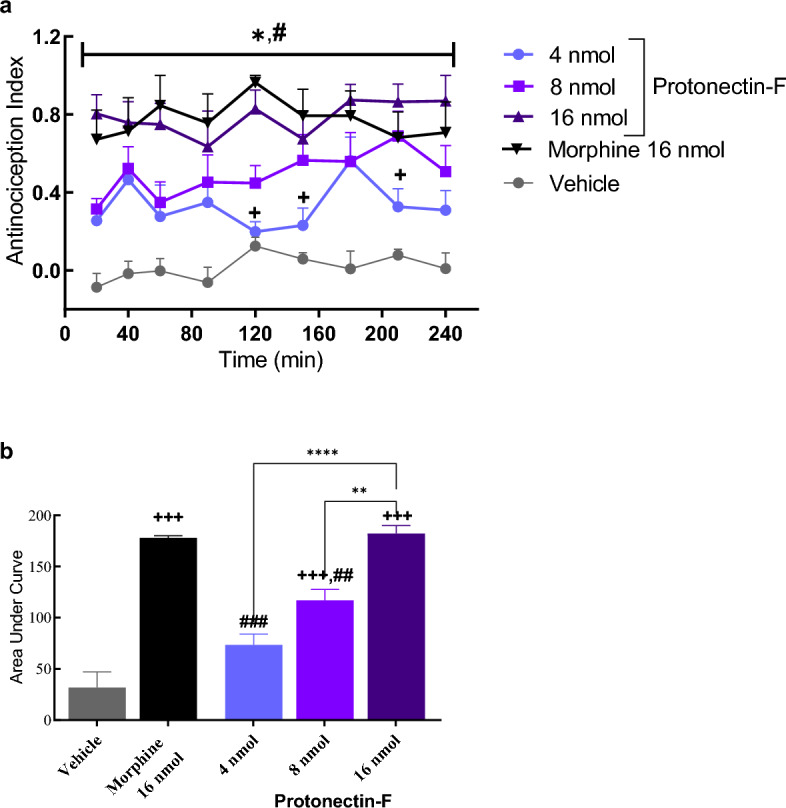
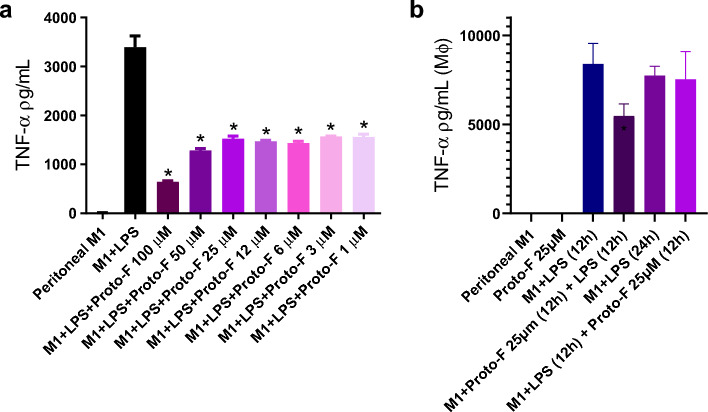
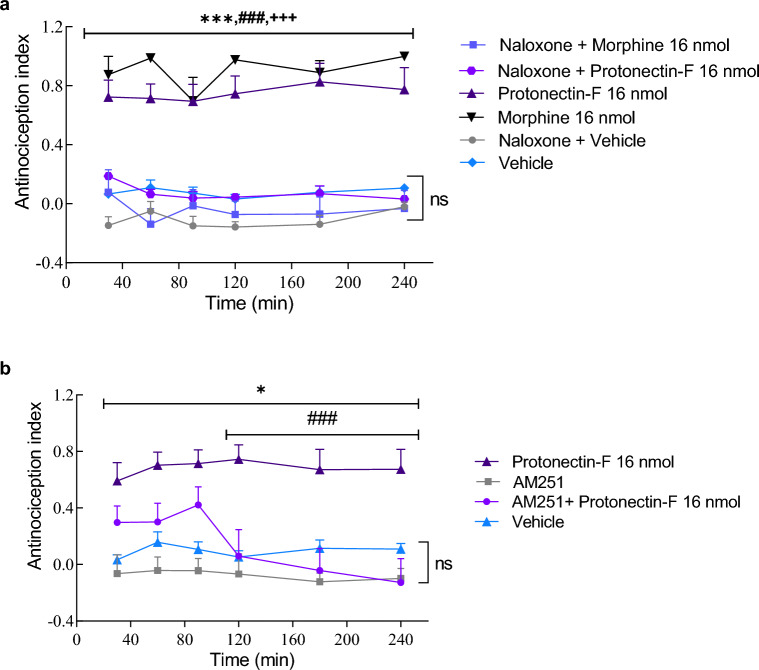
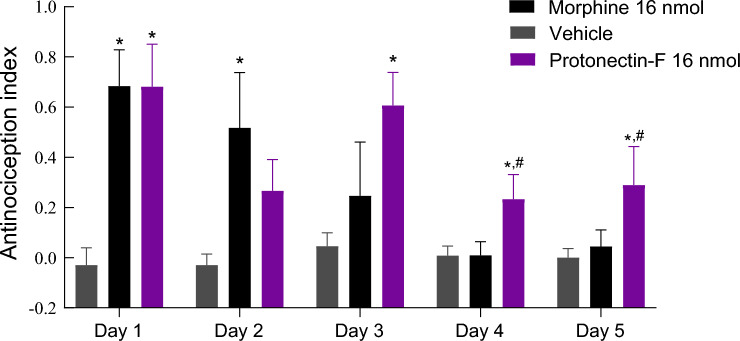
Animal venoms are rich sources of neuroactive compounds, including anti-inflammatory, antiepileptic, and antinociceptive molecules. Our study identified a protonectin peptide from the wasp Parachartergus fraternus' venom using mass spectrometry and cDNA library construction. Using this peptide as a template, we designed a new peptide, protonectin-F, which exhibited higher antinociceptive activity and less motor impairment compared to protonectin. In drug interaction experiments with naloxone and AM251, Protonectin-F's activity was decreased by opioid and cannabinoid antagonism, two critical antinociception pathways. Further experiments revealed that this effect is most likely not induced by direct action on receptors but by activation of the descending pain control pathway. We noted that protonectin-F induced less tolerance in mice after repeated administration than morphine. Protonectin-F was also able to decrease TNF-α production in vitro and modulate the inflammatory response, which can further contribute to its antinociceptive activity. These findings suggest that protonectin-F may be a potential molecule for developing drugs to treat pain disorders with fewer adverse effects. Our results reinforce the biotechnological importance of animal venom for developing new molecules of clinical interest.
© 2023. The Author(s).
Conflict of interest statement
The authors declare no competing interests.
Figures
References
-
- Arbuckle K. Evolutionary Context of Venom in Animals. In: Malhotra A, Gopalakrishnakone P, editors. Evolution of Venomous Animals and Their Toxins. Springer; 2017. pp. 3–31.
-
- Fry BG, Koludarov I, Jackson TNW, Holford M, Terrat Y, Casewell NR, Undheim EAB, Vetter I, Ali SA, Low DHW, et al. Venoms to Drugs: Venom as a Source for the Development of Human Therapeutics. The Royal Society of Chemistry; 2015. CHAPTER 1 Seeing the Woods for the Trees: Understanding Venom Evolution as a Guide for Biodiscovery; pp. 1–36.
Publication types
MeSH terms
Substances
LinkOut - more resources
Full Text Sources
