


Dietary intake during a pragmatic cluster-randomized weight loss trial in an underserved population in primary care
- PMID: 37528391
- PMCID: PMC10394871
- DOI: 10.1186/s12937-023-00864-7
Dietary intake during a pragmatic cluster-randomized weight loss trial in an underserved population in primary care
Abstract
Background: Currently there are limited data as to whether dietary intake can be improved during pragmatic weight loss interventions in primary care in underserved individuals.
Methods: Patients with obesity were recruited into the PROPEL trial, which randomized 18 clinics to either an intensive lifestyle intervention (ILI) or usual care (UC). At baseline and months 6, 12, and 24, fruit and vegetable (F/V) intake and fat intake was determined. Outcomes were analyzed by repeated-measures linear mixed-effects multilevel models and regression models, which included random cluster (clinic) effects. Secondary analyses examined the effects of race, sex, age, and food security status.
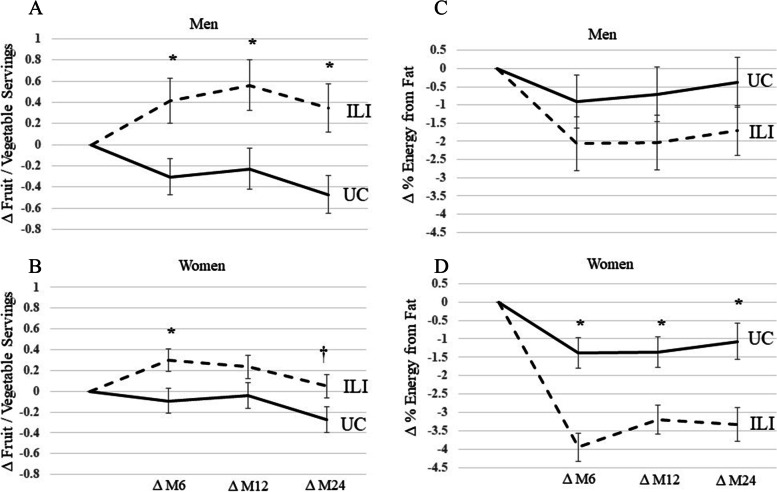
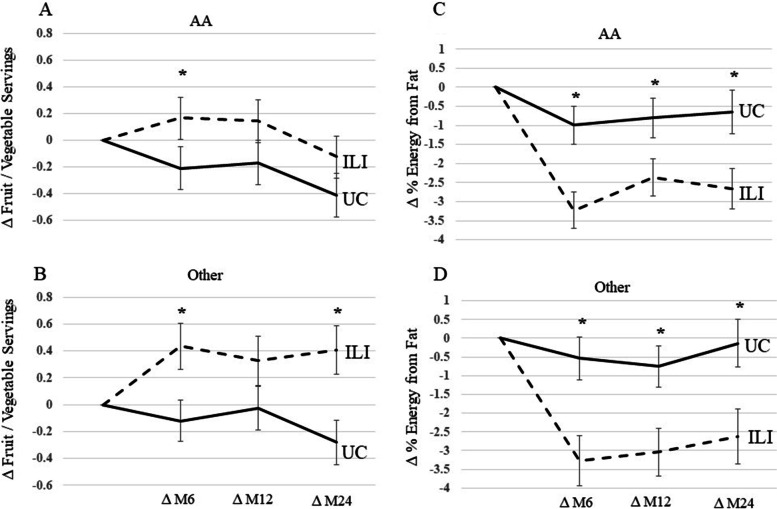
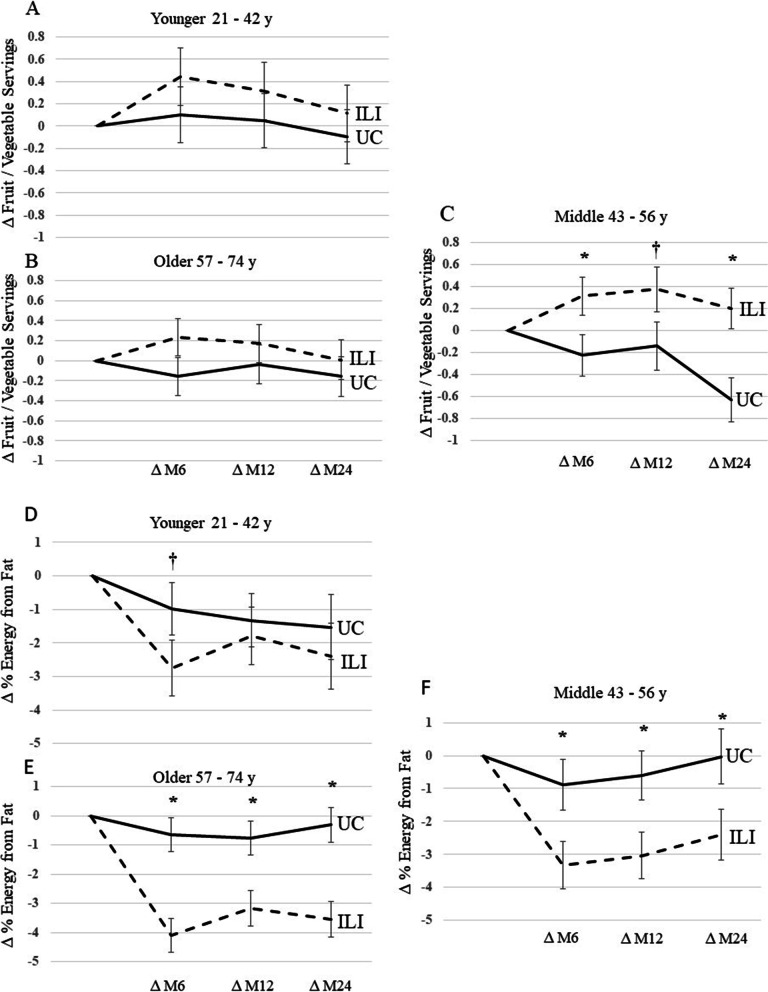
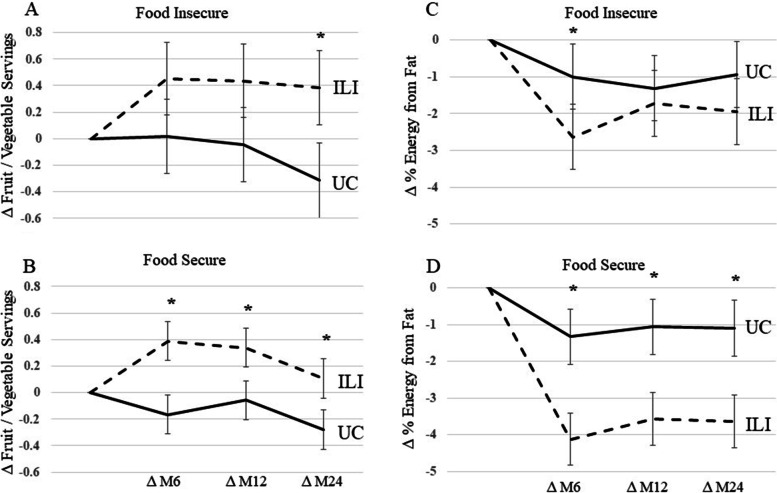
Results: A total of 803 patients were recruited. 84.4% were female, 67.2% African American, 26.1% received Medicaid, and 65.5% made less than $40,000. No differences in F/V intake were seen between the ILI and UC groups at months 6, 12, or 24. The ILI group reduced percent fat at months 6, 12, and 24 compared to UC. Change in F/V intake was negatively correlated with weight change at month 6 whereas change in fat intake was positively associated with weight change at months 6, 12, and 24 for the ILI group.
Conclusions: The pragmatic weight loss intervention in primary care did not increase F/V intake but did reduce fat intake in an underserved population with obesity. F/V intake was negatively associated with weight loss at month 6 whereas percent fat was positively correlated with weight loss throughout the intervention. Future efforts better targeting both increasing F/V intake and reducing fat intake may promote greater weight loss in similar populations.
Trial registration: NCT Registration: NCT02561221.
Keywords: Age; Diet; Energy Restriction; Food Insecurity; Lifestyle Intervention; Race; Sex; Underserved; Weight loss.
© 2023. The Author(s).
Conflict of interest statement
JWA, RLN, Jr., CAM, CLA, TCD, WDJ, DZ, CH, KDD, EFM, BFS, and PTK report no conflicts of interest. CKM has interests in the energy balance models and weight graph approach that was used during the trial to promote dietary adherence. Specifically, CKM is part of a US and European patent application related to this technology and he receives royalties paid to his university from the licensing of this technology. VAF has grants to Tulane from Fratyl and Jaguar Gene Therapy. He receives honoraria for consulting and lectures from Asahi, Novo Nordisk, Sanofi, Bayer, Abbott, and Boehringer Ingelheim. He has stock options in Mellitus Health and BRAVO4Health and stock in Amgen and Abbott. VAF also has patents pending for BRAVO risk engine for predicting diabetes complications andPAX4 gene therapy for type 1 diabetes. CJL is a speaker and consultant for Amgen, Sanofi, Esperion, AstraZeneca, DSM, and GOED. He is also a consultant for Novartis.
Figures

References
-
- Hales CM, Carroll MD, Fryar CD, Ogden CL. Prevalence of obesity and severe obesity among adults: United States, 2017–2018. Hyattsville: National Center for Health Statistics; 2020.
-
- U.S. Department of Health and Human Services and U.S. Department of Agriculture . Dietary Guidelines for Americans, 2020–2025. 9th 2020.
Publication types
MeSH terms
Associated data
Grants and funding
LinkOut - more resources
Full Text Sources
Medical
