Health Consequences of Thymus Removal in Adults
- PMID: 37530823
- PMCID: PMC10557034
- DOI: 10.1056/NEJMoa2302892
Health Consequences of Thymus Removal in Adults
Abstract
Background: The function of the thymus in human adults is unclear, and routine removal of the thymus is performed in a variety of surgical procedures. We hypothesized that the adult thymus is needed to sustain immune competence and overall health.
Methods: We evaluated the risk of death, cancer, and autoimmune disease among adult patients who had undergone thymectomy as compared with demographically matched controls who had undergone similar cardiothoracic surgery without thymectomy. T-cell production and plasma cytokine levels were also compared in a subgroup of patients.
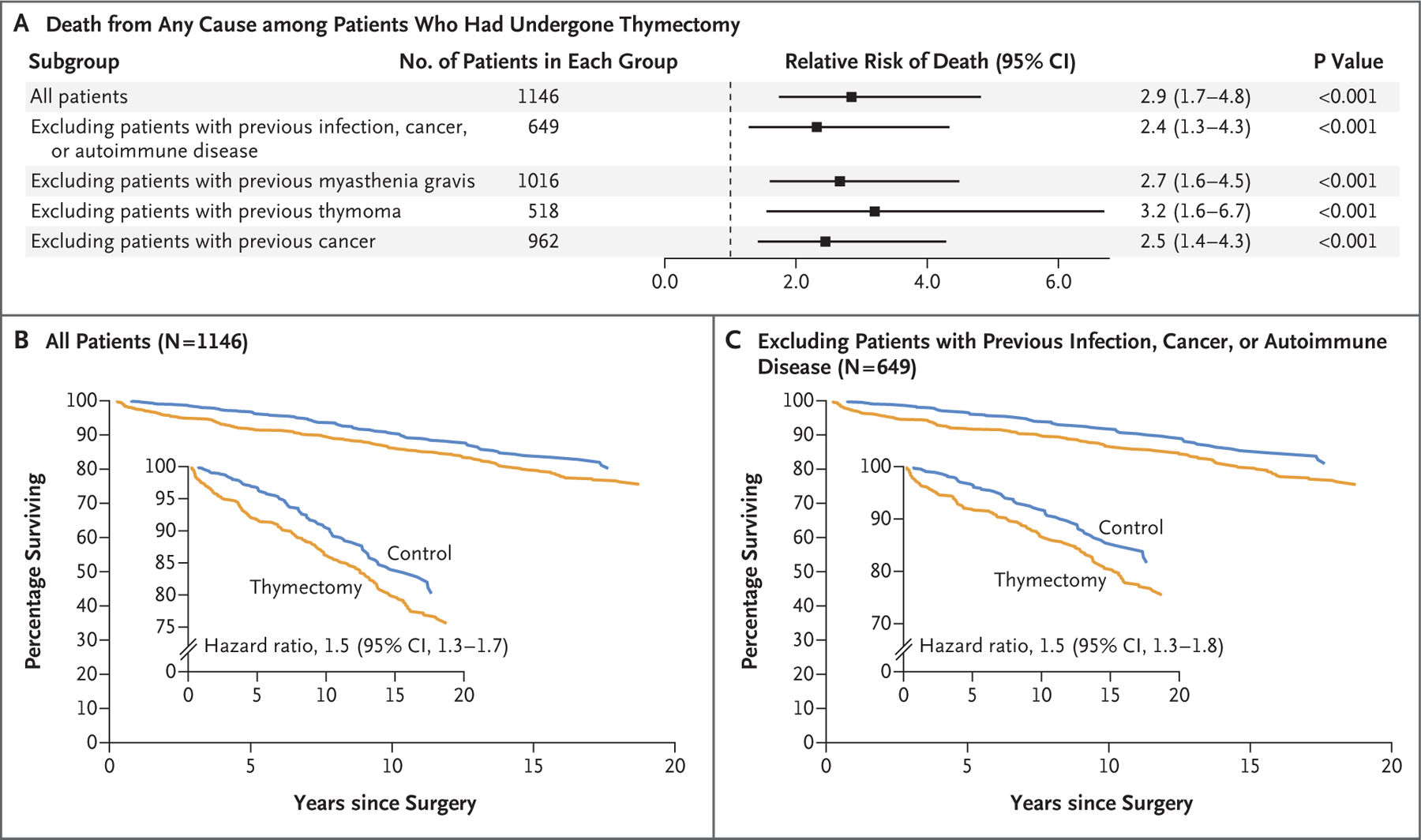
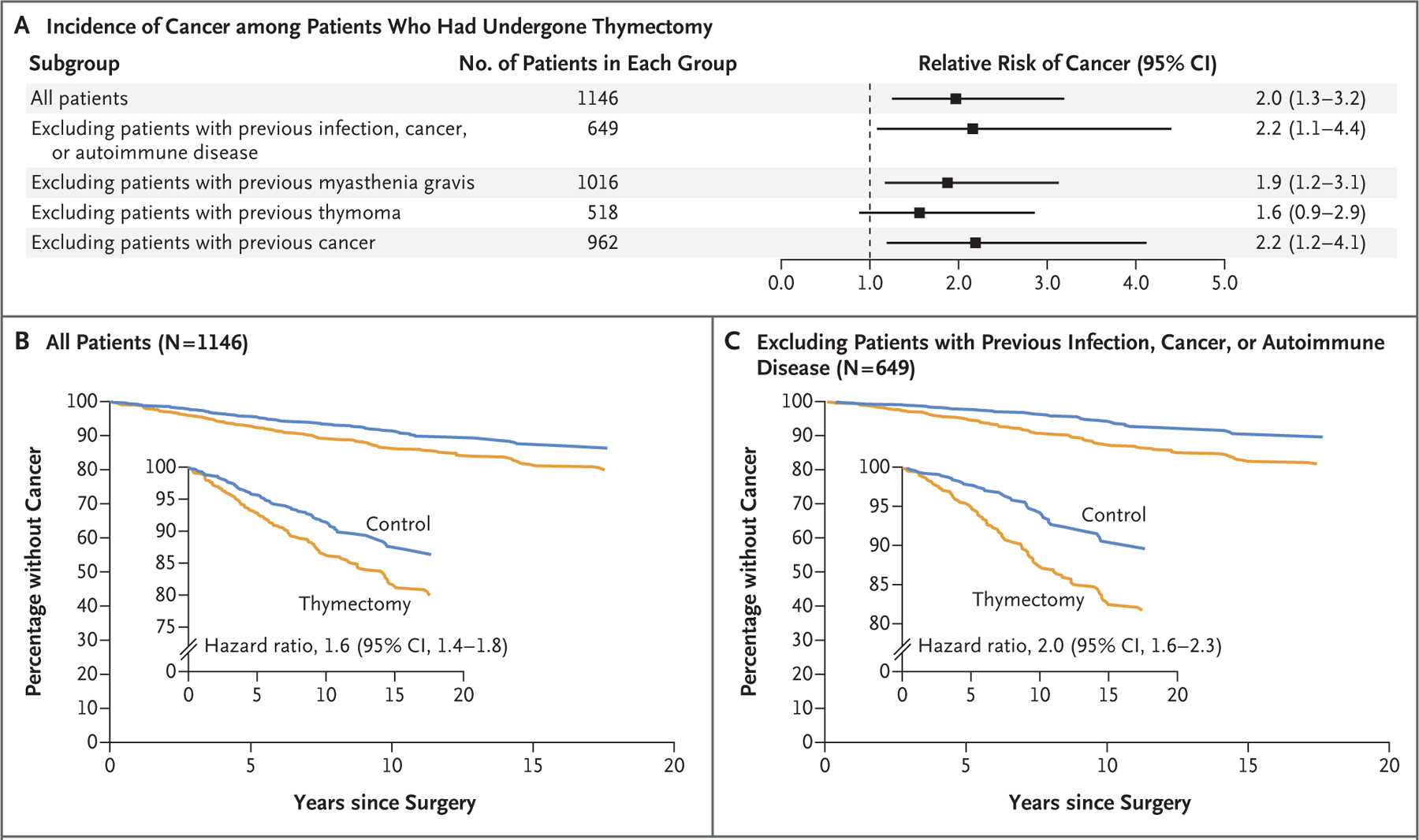
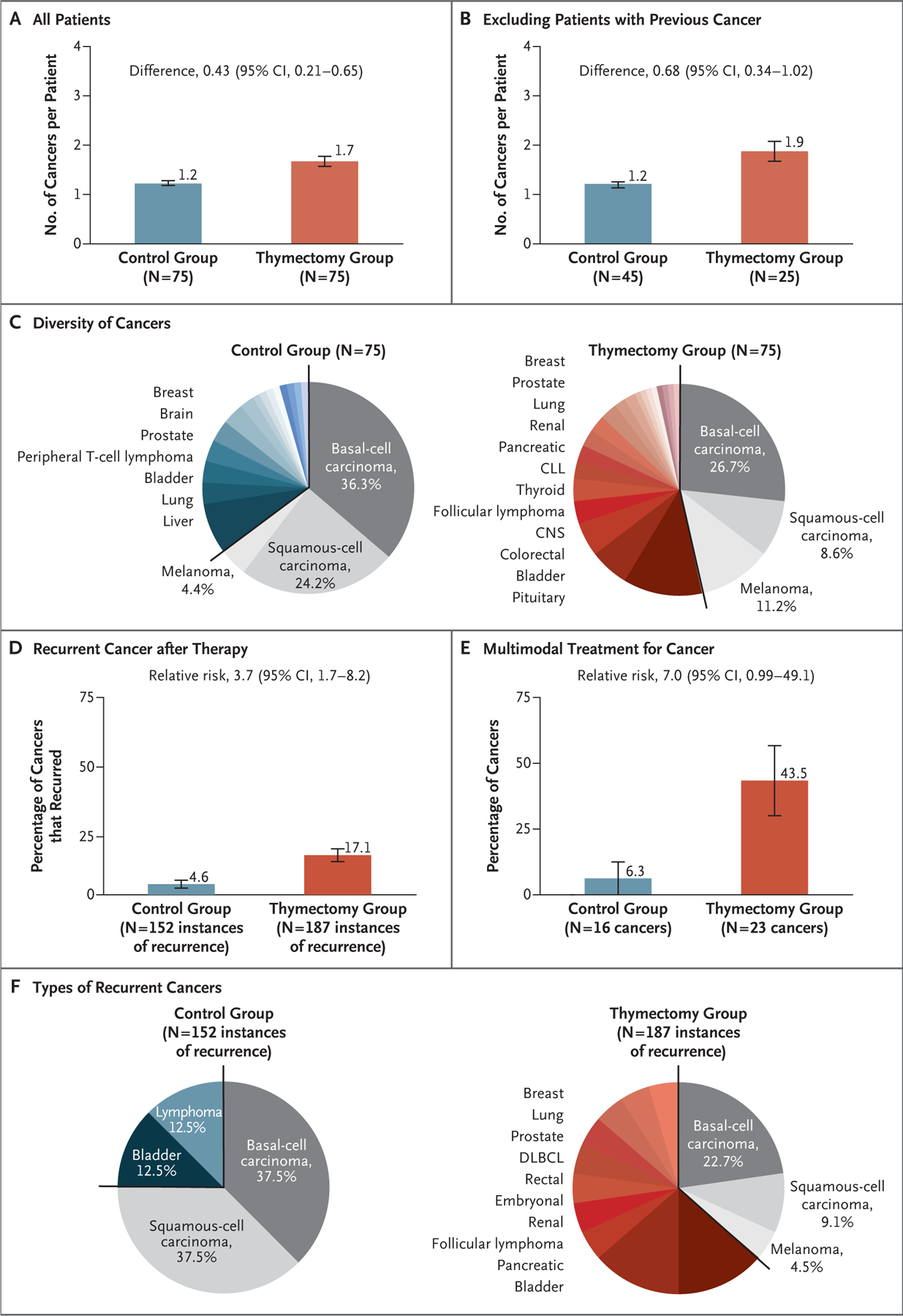
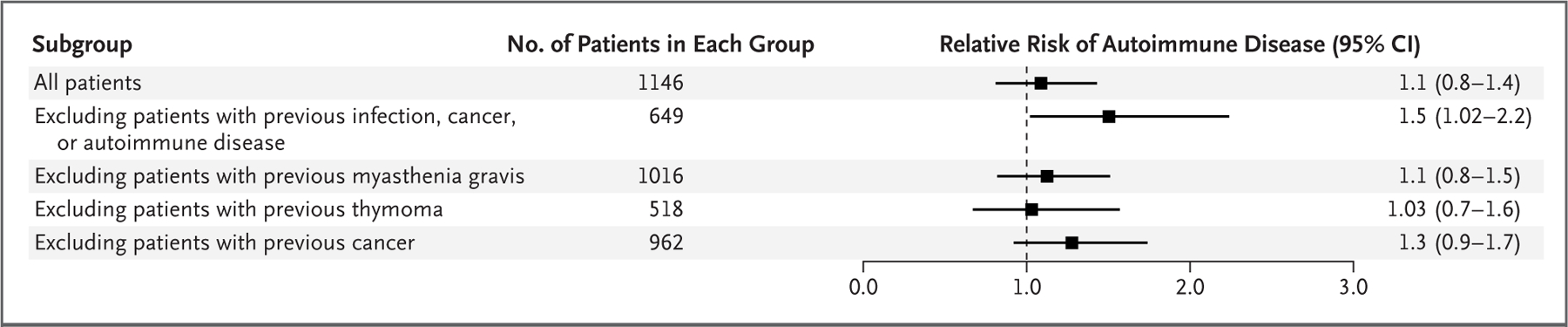
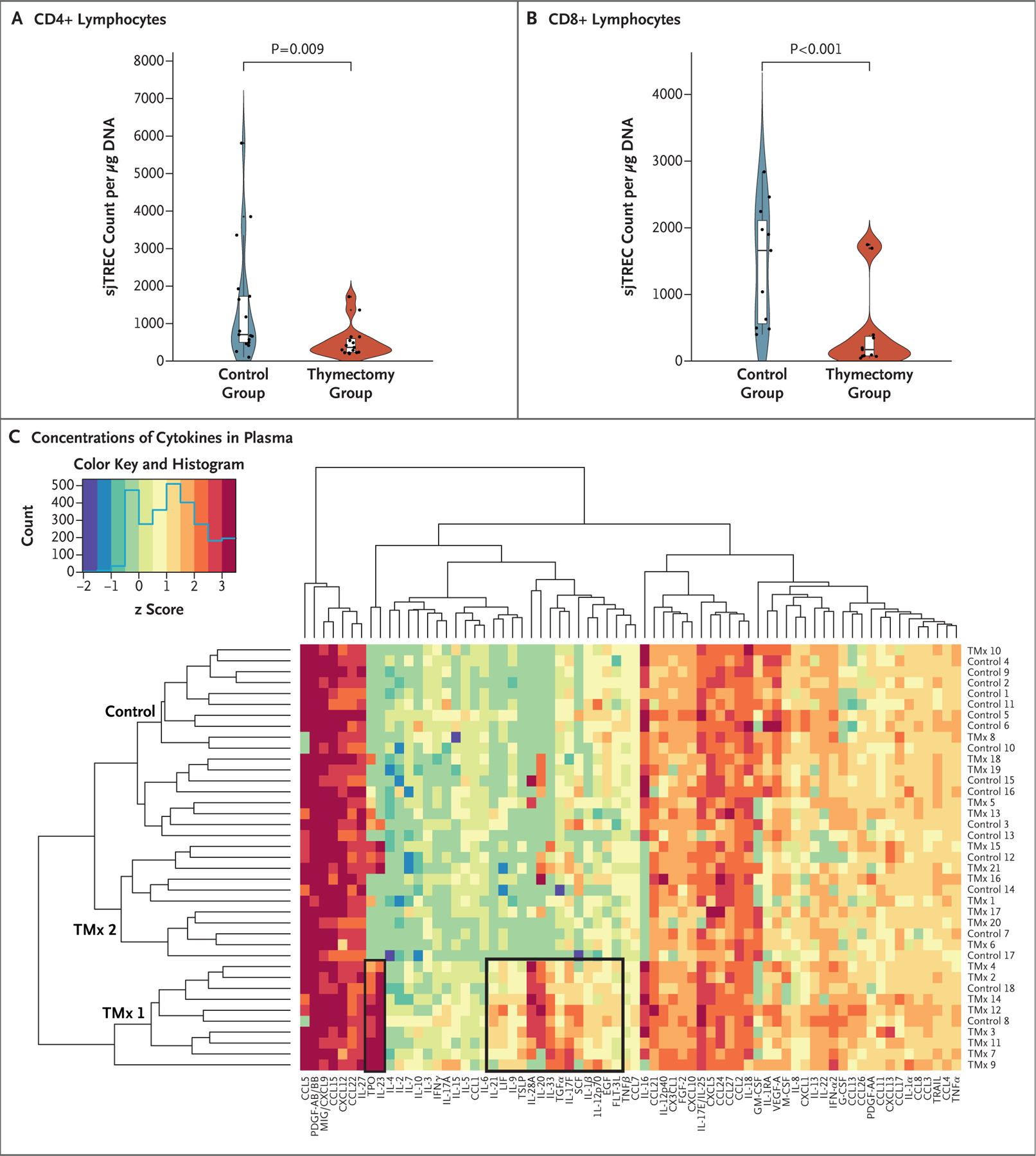
Results: After exclusions, 1420 patients who had undergone thymectomy and 6021 controls were included in the study; 1146 of the patients who had undergone thymectomy had a matched control and were included in the primary cohort. At 5 years after surgery, all-cause mortality was higher in the thymectomy group than in the control group (8.1% vs. 2.8%; relative risk, 2.9; 95% confidence interval [CI], 1.7 to 4.8), as was the risk of cancer (7.4% vs. 3.7%; relative risk, 2.0; 95% CI, 1.3 to 3.2). Although the risk of autoimmune disease did not differ substantially between the groups in the overall primary cohort (relative risk, 1.1; 95% CI, 0.8 to 1.4), a difference was found when patients with preoperative infection, cancer, or autoimmune disease were excluded from the analysis (12.3% vs. 7.9%; relative risk, 1.5; 95% CI, 1.02 to 2.2). In an analysis involving all patients with more than 5 years of follow-up (with or without a matched control), all-cause mortality was higher in the thymectomy group than in the general U.S. population (9.0% vs. 5.2%), as was mortality due to cancer (2.3% vs. 1.5%). In the subgroup of patients in whom T-cell production and plasma cytokine levels were measured (22 in the thymectomy group and 19 in the control group; mean follow-up, 14.2 postoperative years), those who had undergone thymectomy had less new production of CD4+ and CD8+ lymphocytes than controls (mean CD4+ signal joint T-cell receptor excision circle [sjTREC] count, 1451 vs. 526 per microgram of DNA [P = 0.009]; mean CD8+ sjTREC count, 1466 vs. 447 per microgram of DNA [P<0.001]) and higher levels of proinflammatory cytokines in the blood.
Conclusions: In this study, all-cause mortality and the risk of cancer were higher among patients who had undergone thymectomy than among controls. Thymectomy also appeared be associated with an increased risk of autoimmune disease when patients with preoperative infection, cancer, or autoimmune disease were excluded from the analysis. (Funded by the Tracey and Craig A. Huff Harvard Stem Cell Institute Research Support Fund and others.).
Copyright © 2023 Massachusetts Medical Society.
Figures
Comment in
-
Health Consequences of Thymus Removal in Adults.N Engl J Med. 2023 Nov 2;389(18):1724. doi: 10.1056/NEJMc2310640. N Engl J Med. 2023. PMID: 37913513 No abstract available.
-
Health Consequences of Thymus Removal in Adults.N Engl J Med. 2023 Nov 2;389(18):1724-1725. doi: 10.1056/NEJMc2310640. N Engl J Med. 2023. PMID: 37913514 No abstract available.
-
Health Consequences of Thymus Removal in Adults.N Engl J Med. 2023 Nov 2;389(18):1725-1726. doi: 10.1056/NEJMc2310640. N Engl J Med. 2023. PMID: 37913515 No abstract available.
-
Health Consequences of Thymus Removal in Adults.N Engl J Med. 2023 Nov 2;389(18):1726. doi: 10.1056/NEJMc2310640. N Engl J Med. 2023. PMID: 37913516 No abstract available.
-
Health Consequences of Thymus Removal in Adults. Reply.N Engl J Med. 2023 Nov 2;389(18):1726-1727. doi: 10.1056/NEJMc2310640. N Engl J Med. 2023. PMID: 37913517 No abstract available.
References
-
- van Gent R, Schadenberg AWL, Otto SA, et al. Long-term restoration of the human T-cell compartment after thymectomy during infancy: a role for thymic regeneration? Blood 2011;118:627–34. - PubMed
-
- Wells WJ, Parkman R, Smogorzewska E, Barr M. Neonatal thymectomy: does it affect immune function? J Thorac Cardiovasc Surg 1998;115:1041–6. - PubMed
-
- Kurobe H, Tominaga T, Sugano M, et al. Complete but not partial thymectomy in early infancy reduces T-cell-mediated immune response: three-year tracing study after pediatric cardiac surgery. J Thorac Cardiovasc Surg 2013;145(3):656–662, 662.e1–662.e2. - PubMed
-
- Prelog M, Wilk C, Keller M, et al. Diminished response to tick-borne encephalitis vaccination in thymectomized children. Vaccine 2008;26:595–600. - PubMed
Publication types
MeSH terms
Substances
Grants and funding
LinkOut - more resources
Full Text Sources
Medical
Research Materials