


Multiple sclerosis lesions that impair memory map to a connected memory circuit
- PMID: 37532802
- PMCID: PMC10592111
- DOI: 10.1007/s00415-023-11907-8
Multiple sclerosis lesions that impair memory map to a connected memory circuit
Abstract
Background: Nearly 1 million Americans are living with multiple sclerosis (MS) and 30-50% will experience memory dysfunction. It remains unclear whether this memory dysfunction is due to overall white matter lesion burden or damage to specific neuroanatomical structures. Here we test if MS memory dysfunction is associated with white matter lesions to a specific brain circuit.
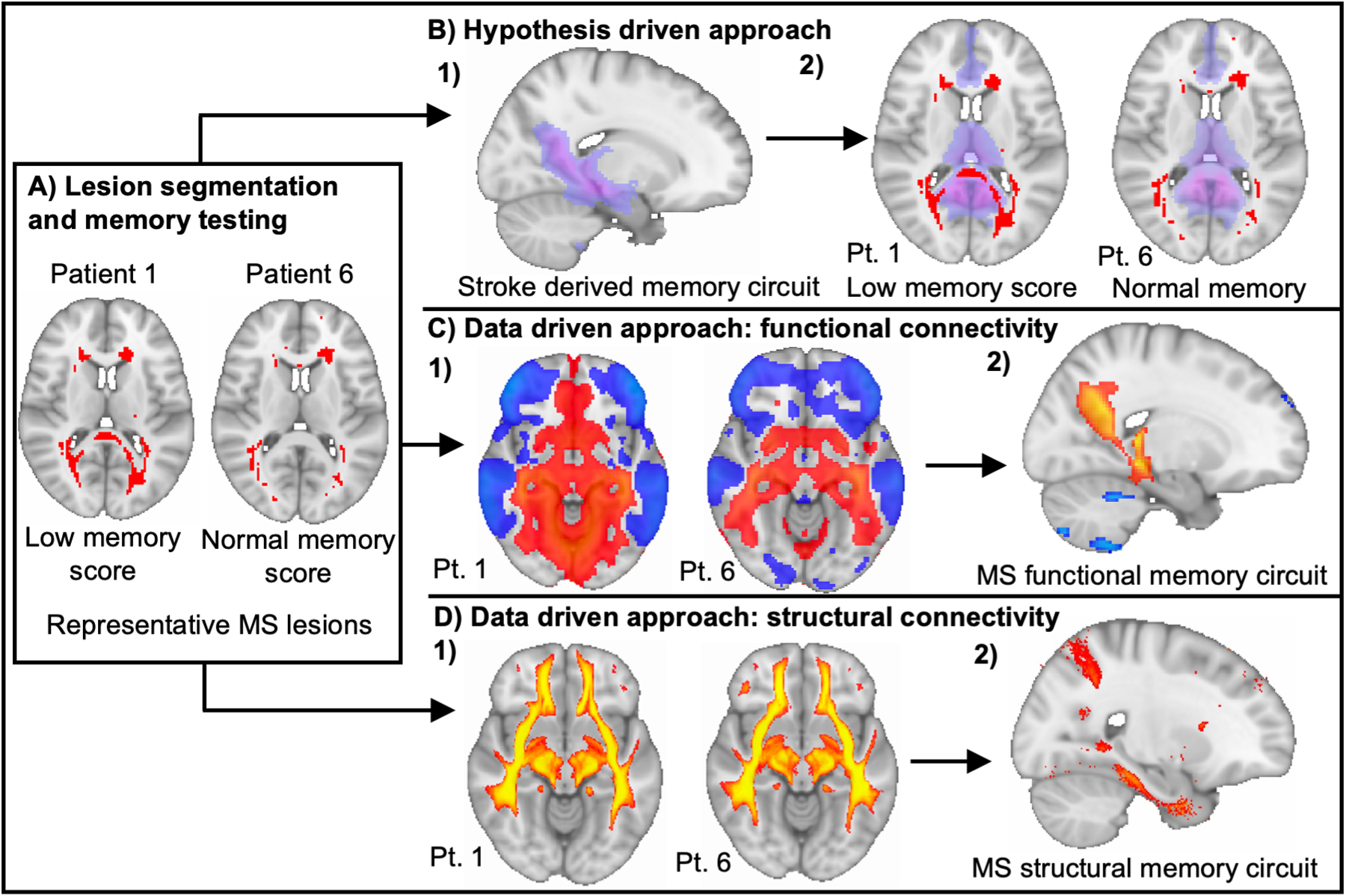
Methods: We performed a cross-sectional analysis of standard structural images and verbal memory scores as assessed by immediate recall trials from 431 patients with MS (mean age 49.2 years, 71.9% female) enrolled at a large, academic referral center. White matter lesion locations from each patient were mapped using a validated algorithm. First, we tested for associations between memory dysfunction and total MS lesion volume. Second, we tested for associations between memory dysfunction and lesion intersection with an a priori memory circuit derived from stroke lesions. Third, we performed mediation analyses to determine which variable was most associated with memory dysfunction. Finally, we performed a data-driven analysis to derive de-novo brain circuits for MS memory dysfunction using both functional (n = 1000) and structural (n = 178) connectomes.
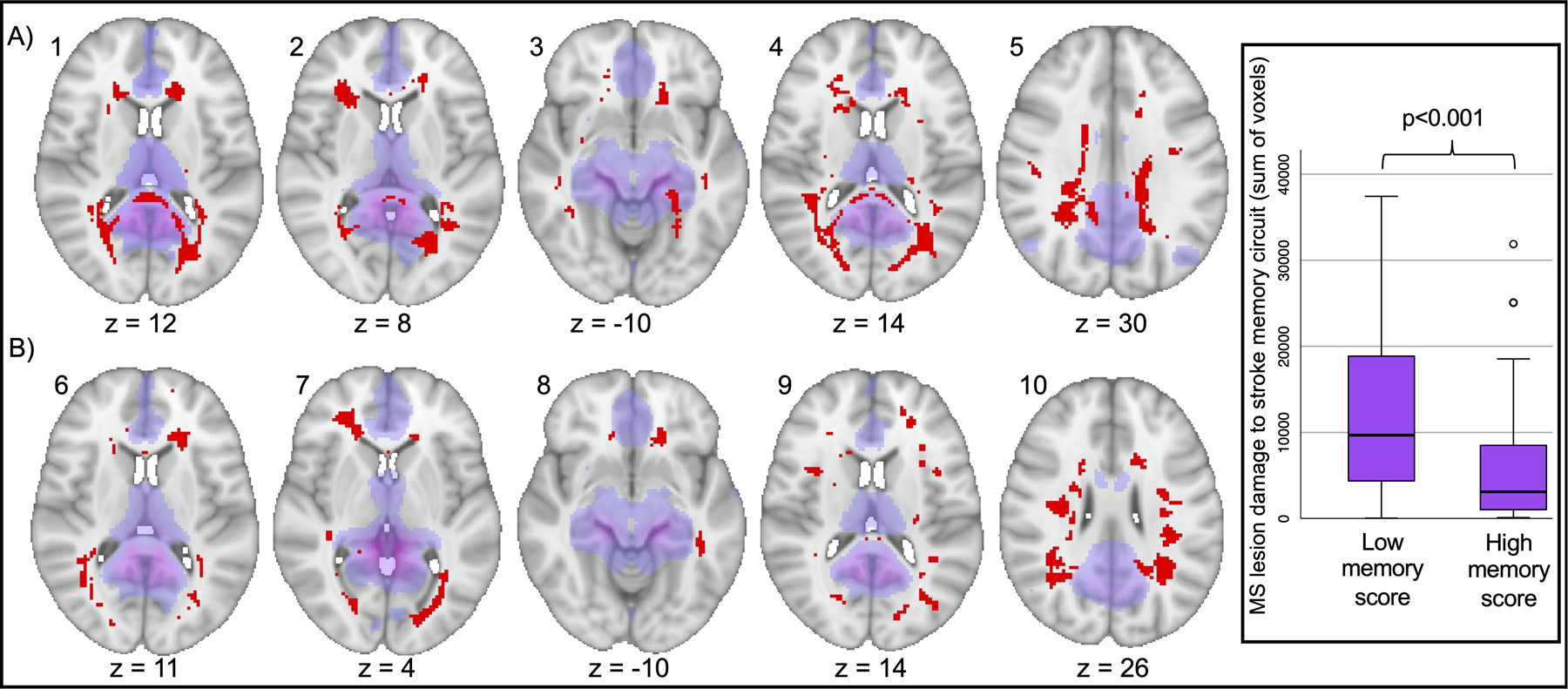
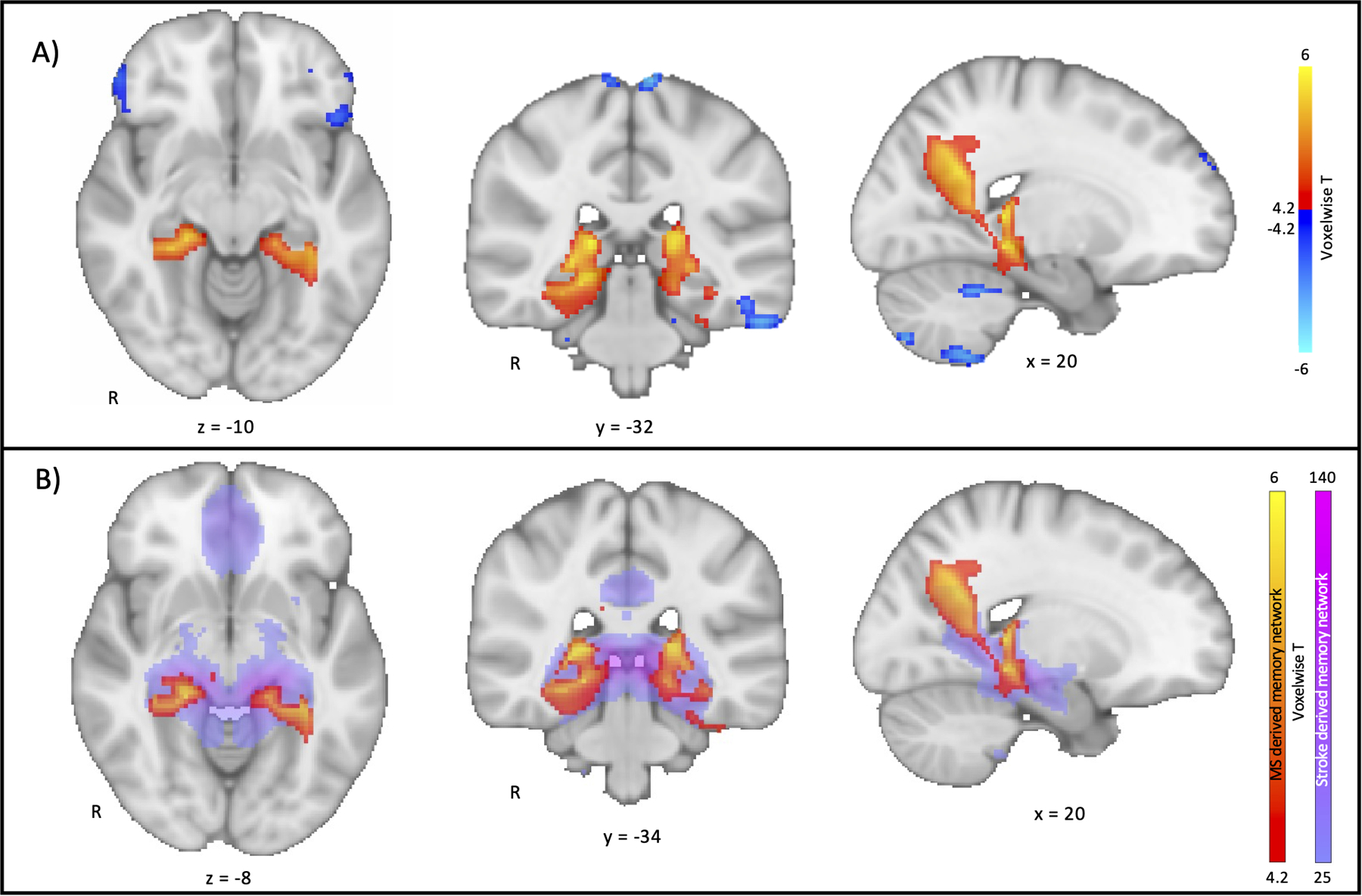
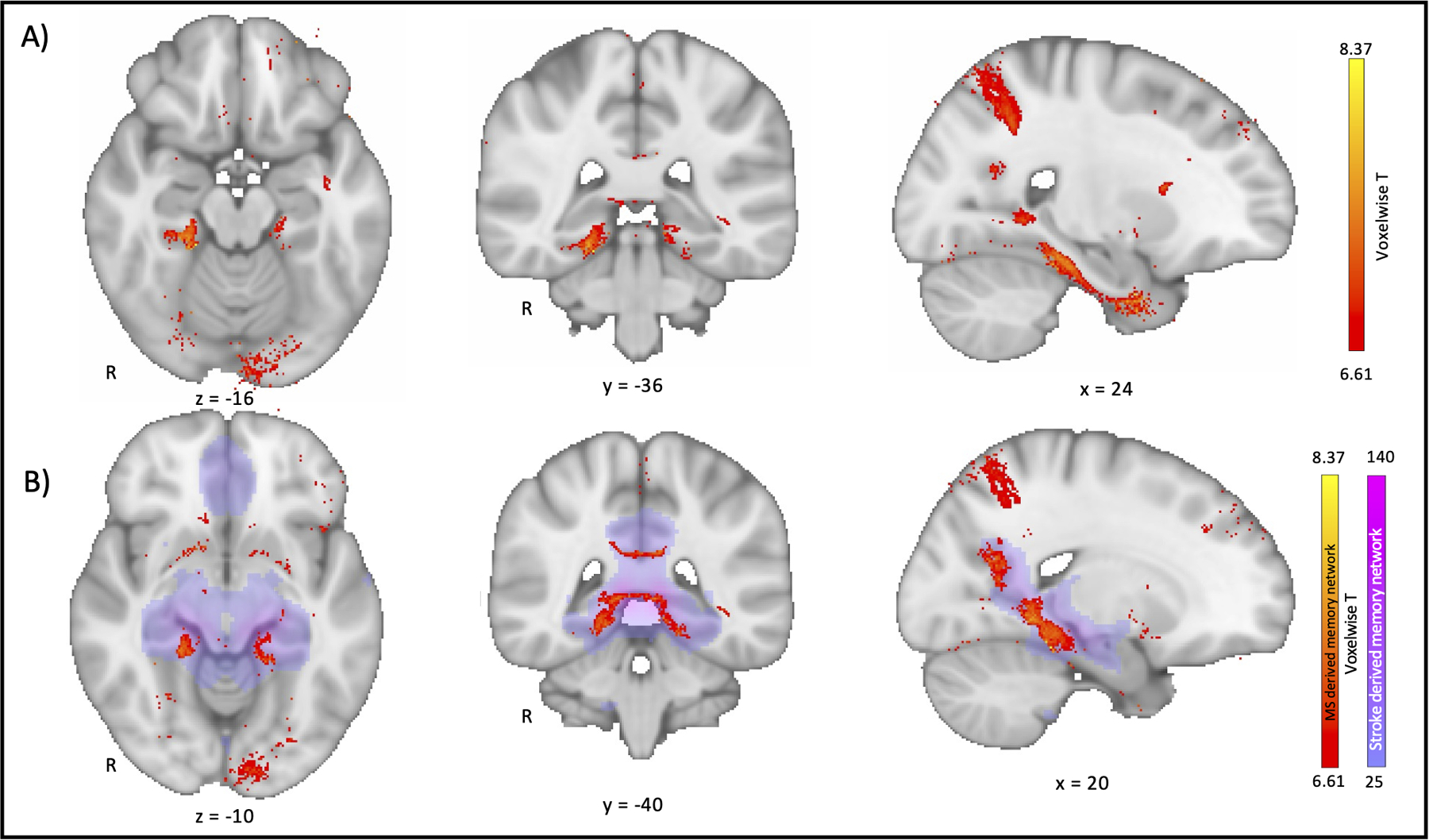
Results: Both total lesion volume (r = 0.31, p < 0.001) and lesion damage to our a priori memory circuit (r = 0.34, p < 0.001) were associated with memory dysfunction. However, lesion damage to the memory circuit fully mediated the association of lesion volume with memory performance. Our data-driven analysis identified multiple connections associated with memory dysfunction, including peaks in the hippocampus (T = 6.05, family-wise error p = 0.000008), parahippocampus, fornix and cingulate. Finally, the overall topography of our data-driven MS memory circuit matched our a priori stroke-derived memory circuit.
Conclusions: Lesion locations associated with memory dysfunction in MS map onto a specific brain circuit centered on the hippocampus. Lesion damage to this circuit fully mediated associations between lesion volume and memory. A circuit-based approach to mapping MS symptoms based on lesions visible on standard structural imaging may prove useful for localization and prognosis of higher order deficits in MS.
Keywords: Lesion network mapping; Memory; Multiple sclerosis; White matter lesion; fMRI.
© 2023. The Author(s), under exclusive licence to Springer-Verlag GmbH Germany.
Conflict of interest statement
Rohit Bakshi has received consulting fees from Bristol-Myers Squibb and EMD Serono and research support from Bristol-Myers Squibb, EMD Serono, and Novartis. The other authors report no competing interests.
Figures
References
-
- Benedict RH, Cookfair D, Gavett R, Gunther M, Munschauer F, Garg N, Weinstock-Guttman B (2006) Validity of the minimal assessment of cognitive function in multiple sclerosis (MACFIMS). J Int Neuropsychol Soc 12:549–558 - PubMed
-
- De Meo E, Portaccio E, Giorgio A, Ruano L, Goretti B, Niccolai C, Patti F, Chisari CG, Gallo P, Grossi P, Ghezzi A, Roscio M, Mattioli F, Stampatori C, Simone M, Viterbo RG, Bonacchi R, Rocca MA, De Stefano N, Filippi M, Amato MP (2021) Identifying the Distinct Cognitive Phenotypes in Multiple Sclerosis. JAMA Neurol 78:414–425 - PMC - PubMed
-
- McGinley MP, Goldschmidt CH, Rae-Grant AD (2021) Diagnosis and Treatment of Multiple Sclerosis: A Review. JAMA 325:765–779 - PubMed
-
- Thompson AJ, Banwell BL, Barkhof F, Carroll WM, Coetzee T, Comi G, Correale J, Fazekas F, Filippi M, Freedman MS, Fujihara K, Galetta SL, Hartung HP, Kappos L, Lublin FD, Marrie RA, Miller AE, Miller DH, Montalban X, Mowry EM, Sorensen PS, Tintore M, Traboulsee AL, Trojano M, Uitdehaag BMJ, Vukusic S, Waubant E, Weinshenker BG, Reingold SC, Cohen JA (2018) Diagnosis of multiple sclerosis: 2017 revisions of the McDonald criteria. Lancet Neurol 17:162–173 - PubMed
MeSH terms
Grants and funding
- K23 MH120510/MH/NIMH NIH HHS/United States
- R56 AG069086/MH/NIMH NIH HHS/United States
- R01MH113929/MH/NIMH NIH HHS/United States
- R01 AG060987/AG/NIA NIH HHS/United States
- K23MH120510/MH/NIMH NIH HHS/United States
- U54 MH091657/MH/NIMH NIH HHS/United States
- R21 MH126271/MH/NIMH NIH HHS/United States
- R56 AG069086/AG/NIA NIH HHS/United States
- R01AG060987/AG/NIA NIH HHS/United States
- R01MH115949/MH/NIMH NIH HHS/United States
- R01 MH115949/MH/NIMH NIH HHS/United States
- R01 MH113929/MH/NIMH NIH HHS/United States
- R21MH126271/MH/NIMH NIH HHS/United States
- R56AG069086/AG/NIA NIH HHS/United States
LinkOut - more resources
Full Text Sources
Medical
