


Protocol to evaluate the effectiveness and cost-effectiveness of an environmental nutrition and physical activity intervention in nurseries (Nutrition and Physical Activity Self Assessment for Child Care - NAP SACC UK): a multicentre cluster randomised controlled trial
- PMID: 37532982
- PMCID: PMC10398919
- DOI: 10.1186/s12889-023-16229-y
Protocol to evaluate the effectiveness and cost-effectiveness of an environmental nutrition and physical activity intervention in nurseries (Nutrition and Physical Activity Self Assessment for Child Care - NAP SACC UK): a multicentre cluster randomised controlled trial
Abstract
Background: One in seven UK children have obesity when starting school, with higher prevalence associated with deprivation. Most pre-school children do not meet UK recommendations for physical activity and nutrition. Formal childcare settings provide opportunities to deliver interventions to improve nutritional quality and physical activity to the majority of 3-4-year-olds. The nutrition and physical activity self-assessment for childcare (NAP SACC) intervention has demonstrated effectiveness in the USA with high acceptability in the UK. The study aims to evaluate the effectiveness and cost-effectiveness of the NAP SACC UK intervention to increase physical activity, reduce sedentary time and improve nutritional intake.
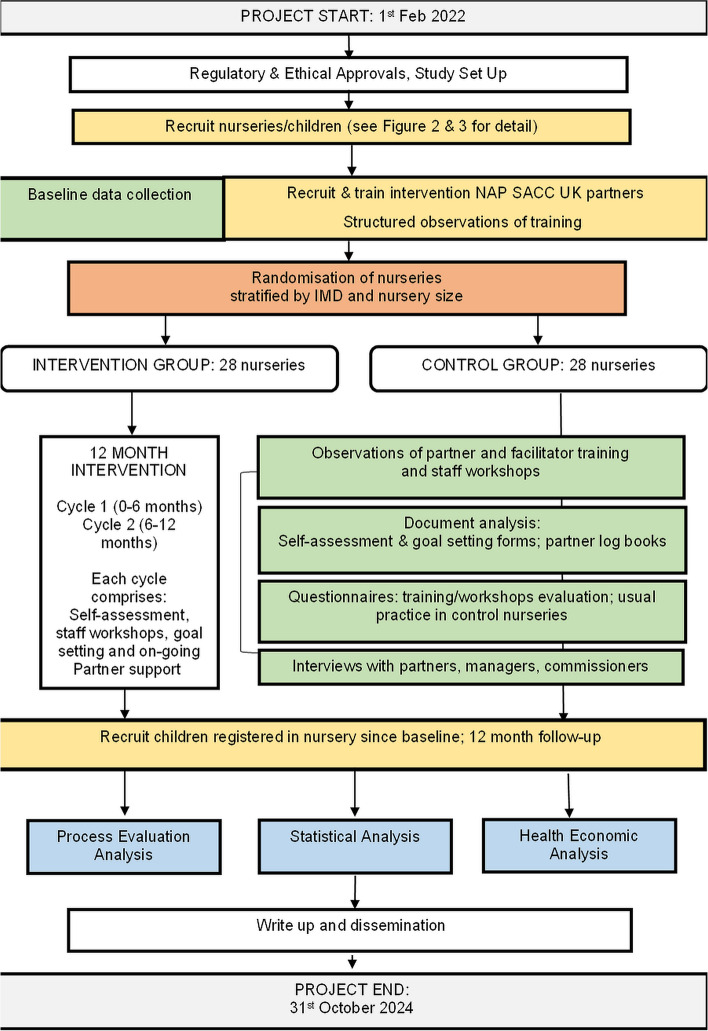
Methods: Multi-centre cluster RCT with process and economic evaluation. Participants are children aged 2 years or over, attending UK early years settings (nurseries) for ≥ 12 h/week or ≥ 15 h/week during term time and their parents, and staff at participating nurseries. The 12-month intervention involves nursery managers working with a Partner (public health practitioner) to self-assess policies and practices relating to physical activity and nutrition; nursery staff attending one physical activity and one nutrition training workshop and setting goals to be achieved within 6 months. The Partner provides support and reviews progress. Nursery staff receive a further workshop and new goals are set, with Partner support for a further 6 months. The comparator is usual practice. Up to 56 nurseries will be stratified by area and randomly allocated to intervention or comparator arm with minimisation of differences in level of deprivation.
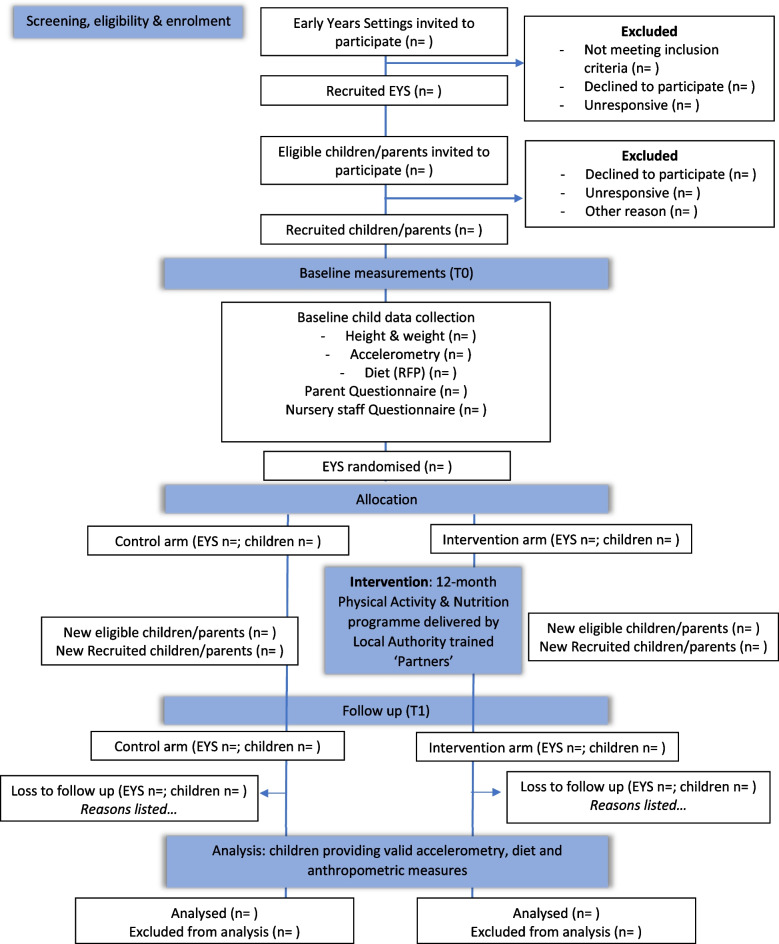
Primary outcomes: accelerometer-assessed mean total activity time on nursery days and average total energy (kcal) intake per eating occasion of lunch and morning/afternoon snacks consumed within nurseries.
Secondary outcomes: accelerometer-assessed mean daily minutes of moderate-to-vigorous physical activity and sedentary time per nursery day, total physical activity on nursery days compared to non-nursery days, average serving size of lunch and morning/afternoon snacks in nursery per day, average percentage of core and non-core food in lunch and morning/afternoon snacks, zBMI, proportion of children who are overweight/obese and child quality-of-life. A process evaluation will examine fidelity, acceptability, sustainability and context. An economic evaluation will compare costs and consequences from the perspective of the local government, nursery and parents.
Trial registration: ISRCTN33134697, 31/10/2019.
Keywords: Child; Early years; Nursery; Nutrition; Obesity prevention; Physical activity; Prevention.
© 2023. The Author(s).
Conflict of interest statement
The authors declare that they have no competing interests with the exception of CM: The intellectual property surrounding the Remote Food Photography Method© (RFPM) is owned by Pennington Biomedical Research Center / Louisiana State University and Corby Martin is an inventor of the technology.
Figures
Update of
-
Protocol to evaluate the effectiveness and cost-effectiveness of an environmental nutrition and physical activity intervention in nurseries (Nutrition and Physical Activity Self Assessment for Child Care - NAP SACC UK): a multicentre cluster randomised controlled trial.Res Sq [Preprint]. 2023 Mar 2:rs.3.rs-2370293. doi: 10.21203/rs.3.rs-2370293/v1. Res Sq. 2023. Update in: BMC Public Health. 2023 Aug 2;23(1):1475. doi: 10.1186/s12889-023-16229-y. PMID: 36909497 Free PMC article. Updated. Preprint.
References
-
- Population Health Team ND. National Child Measurement Programme, England 2020/21 School Year. NHS Digital, Government Statistical Service; 2021.
-
- Government S. Scottish Health Survey 2019 - volume 1: main report 2020. Available from: http://www.gov.scot/publications/scottish-health-survey-2019-volume-1-ma.... Accessed 10 Jan 2022.
Publication types
MeSH terms
Grants and funding
LinkOut - more resources
Full Text Sources
Research Materials
