


Optimizing Sanitation Network Upgrading Projects in Slum Areas
- PMID: 37535302
- PMCID: PMC10447308
- DOI: 10.1007/s11524-023-00751-w
Optimizing Sanitation Network Upgrading Projects in Slum Areas
Abstract
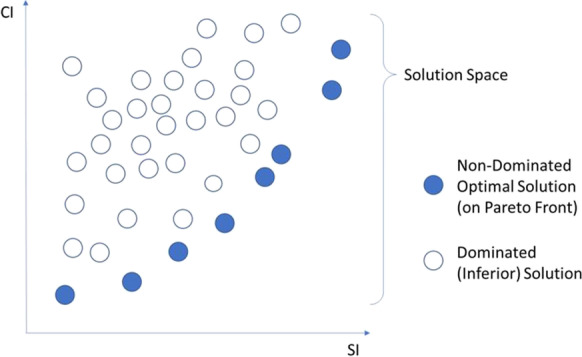
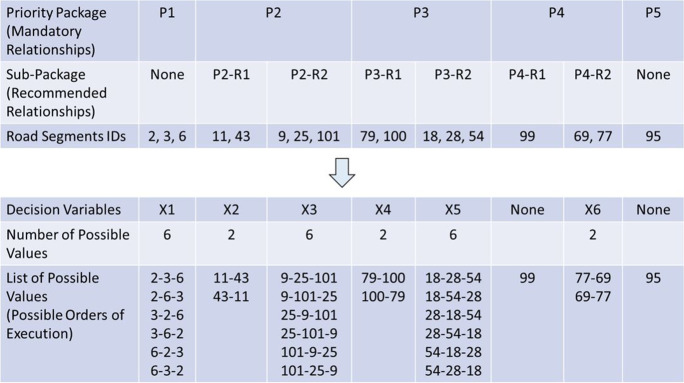
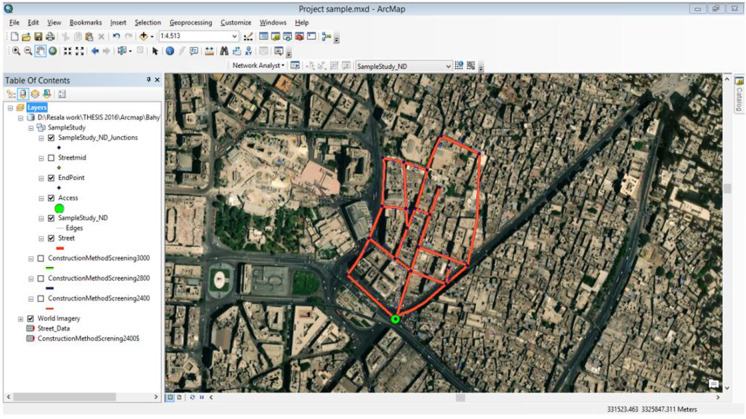
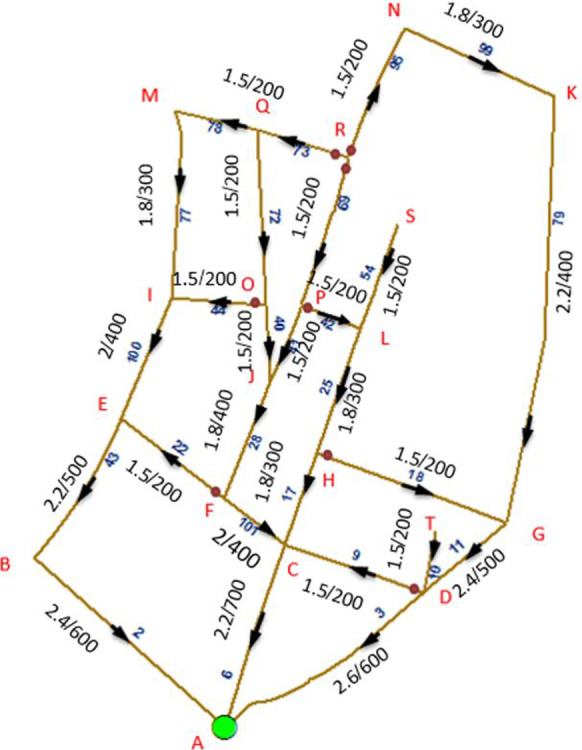
Infrastructure upgrading projects are a key element in enhancing the livelihood of residents in slum areas. These projects face significant constructability challenges common to dense-urban construction coupled with the unique socioeconomic challenges of operating in slums. This research focuses on sanitation network upgrading projects in slum areas and proposes a novel methodology capable of (1) accounting for the unique constructability challenges for these projects, (2) accelerating the provision of sanitation services, and (3) optimizing construction decisions. The key contribution of this research to the body of knowledge is in developing a comprehensive construction planning framework capable of achieving these three objectives. The proposed framework focuses specifically on sewer lines upgrading within the larger sanitation networks upgrading projects. This framework consists of five main models that can guide planners in selecting the appropriate equipment sizes, trench system configuration, and optimal equipment routing, in addition to identifying all possible execution sequences along with the corresponding construction cost and duration of each sequence. Most notably, this framework proposes an approach to assess the serviceability of different construction plans measured by how fast sanitary services can be provided to slum dwellers. A multi-objective, genetic algorithms optimization model is developed to identify the optimal construction plans that accelerate the sanitary service provision to residents while minimizing construction costs. A real-world example is presented to demonstrate the model capabilities in optimizing construction plans.
Keywords: Genetic algorithms; Network logistic analysis; Sanitary network upgrading; Serviceability performance measurement; Slum area.
© 2023. The Author(s).
Figures


References
-
- Brusselaers N, et al. Economic, social and environmental impact assessment for off-site construction logistics: the data availability issue. IOP Conf Ser: Earth Environ Sci. 2020;588(3):032030. doi: 10.1088/1755-1315/588/3/032030. - DOI
-
- Maas G, van Gassel F. The influence of automation and robotics on the performance construction. Autom Constr. 2005;14(4):435–441. doi: 10.1016/j.autcon.2004.09.010. - DOI
-
- Solanki, T.S., R.R.J.I.J.o.S. Salgude, and T. Research, Typical challenges faced in the slum transformation construction project. 2019. 8: 1586-1589.
-
- Friesen, J.; Knoche, C.; Hartig, J.; Pelz, P.F.; Taubenbock, H.; Wurm, M. Sensitivity of slum size distributions as a function of spatial parameters for slum classification. In Proceedings of the 2019 joint urban remote sensing event (JURSE), Vannes, France, 2019; pp. 1–4.
MeSH terms
LinkOut - more resources
Full Text Sources
