


Prostaglandins for adult liver transplanted recipients
- PMID: 37540003
- PMCID: PMC10401650
- DOI: 10.1002/14651858.CD006006.pub3
Prostaglandins for adult liver transplanted recipients
Abstract
Background: Prostaglandins are naturally occurring lipids that are synthesised from arachidonic acid. Multiple studies have evaluated the benefits of prostaglandins in reducing ischaemia reperfusion injury after liver transplantation. New studies have been published since the previous review, and hence it was important to update the evidence for this intervention.
Objectives: To evaluate the benefits and harms of prostaglandins in adults undergoing liver transplantation compared with placebo or standard care.
Search methods: We used standard, extensive Cochrane search methods. The latest search date was 27 December 2022.
Selection criteria: We included randomised clinical trials evaluating prostaglandins initiated in the perioperative period compared with placebo or standard care for adults undergoing liver transplantation. We included trials irrespective of reported outcomes.
Data collection and analysis: We used standard Cochrane methods. Our primary outcomes were 1. all-cause mortality, 2. serious adverse events, and 3. health-related quality of life. Our secondary outcomes were 4. liver retransplantation, 5. early allograft dysfunction, 6. primary non-function of the allograft, 7. acute kidney failure, 8. length of hospital stay, and 9. adverse events considered non-serious. We used GRADE to assess certainty of evidence.
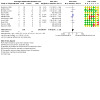
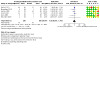
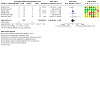
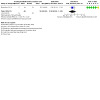
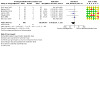
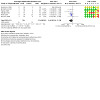
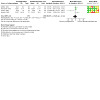
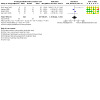
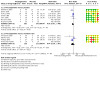
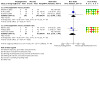
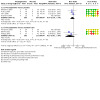
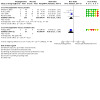
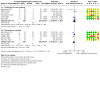
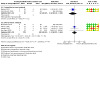
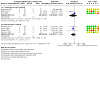
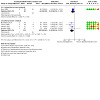
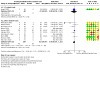
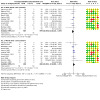
Main results: We included 11 randomised clinical trials with 771 adult liver transplant recipients (mean age 47.31 years, male 61.48%), of whom 378 people were randomised to receive prostaglandins and 393 people were randomised to either placebo (272 participants) or standard care (121 participants). All trials were published between 1993 and 2016. Ten trials were conducted in high- and upper-middle-income countries. Prostaglandins may reduce all-cause mortality up to one month (risk ratio (RR) 0.86, 95% confidence interval (CI) 0.61 to 1.23; risk difference (RD) 21 fewer per 1000, 95% CI 63 fewer to 36 more; 11 trials, 771 participants; low-certainty evidence). Prostaglandins may result in little to no difference in serious adverse events (RR 0.92, 95% CI 0.60 to 1.40; RD 81 fewer per 1000, 95% CI 148 fewer to 18 more; 6 trials, 568 participants; low-certainty evidence). None of the included trials reported health-related quality of life. Prostaglandins may result in little to no difference in liver retransplantation (RR 0.98, 95% CI 0.49 to 1.96; RD 1 fewer per 1000, 95% CI 33 fewer to 62 more; 6 trials, 468 participants; low-certainty evidence); early allograft dysfunction (RR 0.62, 95% CI 0.33 to 1.18; RD 137 fewer per 1000, 95% CI 241 fewer to 47 more; 1 trial, 99 participants; low-certainty evidence); primary non-function of the allograft (RR 0.58, 95% CI 0.26 to 1.32; RD 23 fewer per 1000, 95% CI 40 fewer to 16 more; 7 trials, 624 participants; low-certainty evidence); and length of hospital stay (mean difference (MD) -1.15 days, 95% CI -5.44 to 3.14; 4 trials, 369 participants; low-certainty evidence). Prostaglandins may result in a large reduction in the development of acute kidney failure requiring dialysis (RR 0.42, 95% CI 0.24 to 0.73; RD 100 fewer per 1000, 95% CI 132 fewer to 49 fewer; 5 trials, 477 participants; low-certainty evidence). The evidence is very uncertain about the effect of prostaglandins on adverse events considered non-serious (RR 1.19, 95% CI 0.42 to 3.36; RD 225 fewer per 1000, 95% CI 294 fewer to 65 fewer; 4 trials, 329 participants; very low-certainty evidence). Two trials reported receiving funding; one of these was with vested interests. We found one registered ongoing trial.
Authors' conclusions: Eleven trials evaluated prostaglandins in adult liver transplanted recipients. Based on low-certainty evidence, prostaglandins may reduce all-cause mortality up to one month; may cause little to no difference in serious adverse events, liver retransplantation, early allograft dysfunction, primary non-function of the allograft, and length of hospital stay; and may have a large reduction in the development of acute kidney injury requiring dialysis. We do not know the effect of prostaglandins on adverse events considered non-serious. We lack adequately powered, high-quality trials evaluating the effects of prostaglandins for people undergoing liver transplantation.
Copyright © 2023 The Cochrane Collaboration. Published by John Wiley & Sons, Ltd.
Conflict of interest statement
ZUM: none.
CTV: none.
AS: none.
LK: none.
UG: none.
DB: none.
RN: none.
SS: none.
Figures
Update of
-
Prostaglandins for adult liver transplanted patients.Cochrane Database Syst Rev. 2011 Nov 9;(11):CD006006. doi: 10.1002/14651858.CD006006.pub2. Cochrane Database Syst Rev. 2011. Update in: Cochrane Database Syst Rev. 2023 Aug 4;8:CD006006. doi: 10.1002/14651858.CD006006.pub3. PMID: 22071826 Updated.
References
References to studies included in this review
Alevizacos 1993 {published data only}
-
- Alevizacos P, Bechstein WO, Rossaint R, Neuhaus P. Failure of PGE1 to prevent allograft reperfusion injury in a prospective randomized trial. Transplantation Proceedings 1993;25:2545-6. - PubMed
Bärthel 2012 {published data only (unpublished sought but not used)}
-
- Bärthel E, Rauchfus F, Habrecht O, Koch A, Klinzing S, Marxs G, et al. Impact of iloprost on early graft viability after liver transplantation – results of a prospective randomized controlled clinical trial. Liver Transplantation 2008;14(S1):S137.
Bharathan 2016 {published and unpublished data}
-
- Bharathan VK, Chandran B, Gopalakrishnan U, Varghese CT, Menon RC, Balakrishnan D, et al. Perioperative prostaglandin E1 infusion in living donor liver transplantation: a double-blind, placebo-controlled randomized trial. Liver Transplantation 2016;22(8):1067-74. - PubMed
Bosch 2000 {published data only}
-
- Bosch C, Mora A, Roigé J, Hidalgo E, Lazaro JL, Margarit C, et al. Haemodynamic tolerance of intraportal prostaglandin E1 in liver transplantation. European Journal of Anaesthesiology 2000;17:45.
Henley 1995 {published data only}
-
- Henley KS, Lucey MR, Normolle DP, Merion RM, McLaren ID, Crider BA, et al. A double-blind, randomized, placebo controlled trial of prostaglandin E1 in liver transplantation. Hepatology 1995;21:366-72. - PubMed
Hidalgo 2002 {published data only (unpublished sought but not used)}
-
- Hidalgo EL, Margaritt CC. Hemodynamic Study of Liver Transplantation: Ischemia-Reperfusion Injury Analysis and Evaluation of Intra-Portal Prostaglandin E1 Administration in the Reperfusion Phase [Estudiohemodinámico del Transplante Hepático: Análisis dela Lésion de Isquemia–reperfusión y Valoración de Laadministración Intraportal de Prostaglandina E1 en la Fasede Revascularización] [Doctoral Thesis]. Barcelona: Universitat Autonoma De Barcelona, 2002.
-
- Margarit C, Hidalgo E, Bilbao I, Mora A, Murio E, Lazaro JL, et al. Intraportal prostaglandin E1 (PGE1) infusion after liver graft reperfusion: a randomized control trial. Liver Transplantation 2003;9:C84.
Himmelreich 1993 {published data only}
-
- Himmelreich G, Hundt K, Bechstein WO, Rossaint R, Neuhaus P, Riess H. Influence of prostaglandin E1 infusion on hemostasis in orthotopic liver transplantation. Seminars in Thrombosis and Hemostasis 1993;19(3):273-8. - PubMed
-
- Himmelreich G, Hundt K, Neuhaus P, Bechstein WO, Roissant R, Riess H. Evidence that intraoperative prostaglandin E1 infusion reduces impaired platelet aggregation after reperfusion in orthotopic liver transplantation. Transplantation 1993;55(4):819-26. - PubMed
Ismail 1995 {published data only}
-
- Ismail T, Ayres R, Kiff P, McMaster P, Neuberger J. Enisoprost in liver transplantation. Transplantation 1995;59:1298-301. - PubMed
Klein 1996 {published data only}
-
- Chavin KD, Uber L, Baliga P, Rajagopalan P, Cofer J. The effects of prostaglandin E1 on hepatic allograft vascular inflow: a prospective randomized double-blind study. American Surgeon 1996;62(3):184-7. - PubMed
-
- Klein AS, Cofer JB, Pruett TL, Thuluvath PJ, McGory R, Uber L, et al. Prostaglandin E1 administration following orthotopic liver transplantation: a randomized prospective multicenter trial. Gastroenterology 1996;111:710-5. - PubMed
Manasia 1996 {published data only}
-
- Manasia AR, Leibowitz AB, Miller CM, Silverstein JH, Schwartz M, Delgiudice R, et al. Postoperative intravenous infusion of alprostadil (PGE1) does not improve renal function in hepatic transplant recipients. Journal of the American College of Surgeons 1996;182(4):347-52. - PubMed
Neumann 2000 {published data only}
-
- Neumann UP, Kaisers U, Langrehr JM, Glanemann M, Muller AR, Lang M, et al. Administration of prostacyclin after liver transplantation: a placebo controlled randomized trial. Clinical Transplantation 2000;14(1):70-4. - PubMed
References to studies excluded from this review
Almazroo 2021 {published data only}
-
- Almazroo O, Miah M, Pillai V, Humar A, Tevar A, Hughes C, et al. Clinical evaluation of the safety and preliminary efficacy of continuous infusion of treprostinil to prevent ischemia and reperfusion injury in adult orthotopic liver transplant recipients. American Journal of Transplantation 2017;17(Suppl 3):295-6. - PMC - PubMed
-
- Almazroo OA, Miah MK, Pillai VC, Shaik IH, Xu R, Dharmayan S, et al. An evaluation of the safety and preliminary efficacy of peri- and post-operative treprostinil in preventing ischemia and reperfusion injury in adult orthotopic liver transplant recipients. Clinical Transplantation 2021;35(6):e14298. [DOI: 10.1111/ctr.14298] - DOI - PMC - PubMed
-
- Venkataramanan R, Shaik IH, Pillai VC, Almazroo OA, Miah MK, Xu R, et al. Treprostinil is safe and potentially useful in preventing ischemia and reperfusion injury in adult orthotopic liver transplant recipients. American Journal of Transplantation 2020;20(Suppl 3):1054-5.
Briegel 1992 {published data only}
-
- Briegel J, Haller M, Zulke C, Kilger E, Pratschke E, Jauch KW, et al. Primary graft nonfunction following orthotopic liver transplantation: treatment with prostacyclin. Transplantation Proceedings 1992;24(6):2693–5. - PubMed
Bucuvalas 2001 {published data only}
-
- Bucuvalas JC, Ryckman FC, Krug S, Alonso MH, Balistreri WF, Kotagal U. Effect of treatment with prostaglandin E1 and N-acetylcysteine on pediatric liver transplant recipients: a single-center study. Pediatric Transplantation 2001;5(4):274-8. - PubMed
Garcia‐Valdecasas 1994 {published data only}
-
- Garcia-Valdecasas JC, Rull R, Grande L, Fuster J, Rimola A, Lacy AM, et al. Prostaglandin and lipoperoxide levels and postoperative liver function in human liver transplantation. Transplantation Proceedings 1994;26(6):3633-4. - PubMed
Ghonem 2011 {published data only}
-
- Ghonem N, Yoshida J, Stolz DB, Humar A, Starzl TE, Murase N, et al. Treprostinil, a prostacyclin analog, ameliorates ischemia-reperfusion injury in rat orthotopic liver transplantation. American Journal of Transplantation 2011;11:2508-16. - PubMed
-
- Ghonem NS, Zhao W, Zhang S, Murase N, Yoshida J, Stolz DB, et al. Hepatic ischemia-reperfusion injury impairs drug metabolism and treprostinil, a prostacyclin analog, improves the functional capacity of the liver graft post-transplantation. Drug Metabolism Reviews 2010;42(Suppl 1):81-2. [DOI: 10.3109/03602532.2010.506057] - DOI
-
- Ghonem NS. Treprostinil for Protection of Liver Grafts Against Ischemia and Reperfusion Injury During Orthotopic Liver Transplantation – a Translational Study [Doctoral dissertation]. Pittsburgh: University of Pittsburgh, 2004.
Giostra 1997 {published data only}
-
- Giostra E, Chen H, Deng H, Buhler L, Romand JA, Hadengue A, et al. Prophylactic administration of prostaglandin E1 in liver transplantation: results of a pilot trial. Transplantation Proceedings 1997;29(5):2381-4. - PubMed
Grazi 1994 {published data only}
-
- Grazi GL, Mazziotti A, Jovine E, Stefanini GF, Frena A, Ercolani G, et al. Prostaglandin therapy in primary liver graft nonfunction after orthotopic transplantation. Transplantation Proceedings 1994;26(6):3651-2. - PubMed
Greig 1989 {published data only}
-
- Greig PD, Woolf GM, Abecassis M, Forster J, Strasberg SM, Taylor BR, et al. Prostaglandin E1 for primary nonfunction following liver transplantation. Transplantation Proceedings 1989;21(2):3360-1. - PubMed
-
- Greig PD, Woolf GM, Abecassis M, Strasberg SM, Taylor B, Superina RA, et al. Treatment of primary liver graft nonfunction with prostaglandin E1 results in increased graft and patient survival. Transplantation Proceedings 1989;21(1 Pt 2):2385-8. - PubMed
-
- Greig PD, Woolf GM, Sinclair SB, Abecassis M, Strasberg AM, Taylor BR, et al. Treatment of primary liver graft nonfunction with prostaglandin E1. Transplantation 1989;48:447-53. - PubMed
Hommann 2007 {published data only}
-
- Hommann M, Kammerer D, Lehmann G, Kornberg A, Kupper B, Daffner W, et al. Prevention of early loss of bone mineral density after liver transplantation by prostaglandin E1. Transplantation Proceedings 2007;39:540-3. - PubMed
Hsieh 2014 {published data only}
Kaisers 1996 {published data only}
-
- Kaisers U, Neumann U, Kuhlen R, Sprenger M, Neuhaus P, Rossaint R. Nitroglycerin versus epoprostenol: effects on hemodynamics, oxygen delivery, and hepatic venous oxygenation after liver transplantation. Liver Transplantation and Surgery 1996;2:455-60. - PubMed
Klein 1999 {published data only}
-
- Klein M, Geoghegan J, Wangemann R, Böckler D, Schmidt K, Scheele J. Preconditioning of donor livers with prostaglandin I2 before retrieval decreases hepatocellular ischemia-reperfusion injury. Transplantation 1999;67:1128-32. - PubMed
Kornberg 2004 {published data only}
-
- Kornberg A, Schotte U, Kupper B, Hommann M, Scheele J. Impact of selective prostaglandin E1 treatment on graft perfusion and function after liver transplantation. Hepato-gastroenterology 2004;51(56):526-31. - PubMed
Maeda 1998 {published data only}
-
- Maeda T, Murase N, Subbotin V, Sakamoto T, Yamada T, Terakura M, et al. Analogs of cyclic nucleotides in rat liver preservation. Transplantation 1998;66(7):844-51. - PubMed
Natori 1997 {published data only}
-
- Natori S, Fujii Y, Kurosawa H, Nakano A, Shimada H. Prostaglandin E1 protects against ischemia-reperfusion injury of the liver by inhibition of neutrophil adherence to endothelial cells. Transplantation 1997;64(11):1514-20. - PubMed
Neumann 1998 {published data only (unpublished sought but not used)}
-
- Neumann UP, Kaisers U, Langrehr JM, Lang M, Glanemann M, Raakow R, et al. Treatment with PGE1 in patients after liver transplantation. Transplantation Proceedings 1998;30:1869-70. - PubMed
Neumann 1999 {published data only (unpublished sought but not used)}
-
- Neumann UP, Kaisers U, Langrehr JM, Glanemann M, Muller AR, Lang M, et al. Reduction of reperfusion injury with prostacyclin I2 after liver transplantation. Transplantation Proceedings 1999;31:1029-30. - PubMed
Onoe 2013 {published data only}
-
- Onoe T, Tanaka Y, Ide K, Ishiyama K, Oshita A, Kobayashi T, et al. Attenuation of portal hypertension by continuous portal infusion of PGE1 and immunologic impact in adult-to-adult living-donor liver transplantation. Transplantation 2013;95:1521-7. - PubMed
Radojkovic 2017 {published data only}
-
- Radojkovic M, Stojanovic M, Stanojevic G, Radojkovic D, Gligorijevic J, Ilic I, et al. Ischemic preconditioning vs adenosine vs prostaglandin E1 for protection against liver ischemia/reperfusion injury. Brazilian Journal of Medical and Biological Research 2017;50(8):e6185. [DOI: 10.1590/1414-431X20176185] - DOI - PMC - PubMed
Ruwart 1996 {published data only}
-
- Ruwart MJ, Henley KS. Prostaglandins in liver disease and liver transplantation. Gastroenterology Clinics of North America 1996;25(2):397-407. - PubMed
Sato 2003 {published data only}
-
- Sato Y, Kurosaki I, Yamamoto S, Nakatsuka H, Oya H, Shirai Y, et al. Postoperative management for donor safety in living related donor liver transplantation. Hepato-gastroenterology 2003;50(49):196-200. - PubMed
Sheiner 1995 {published data only}
-
- Sheiner PA. Prostaglandins in liver transplantation. Hepatology 1995;21(2):592-3. - PubMed
Shin 2012 {published data only}
-
- Shin M, Song SH, Kim JM, Kim SJ, Joh JW, Lee SK, et al. Effectiveness of intraportal prostaglandin E1 administration after liver transplantation. Transplantation Proceedings 2012;44:500-4. - PubMed
Smith 1996 {published data only}
-
- Smith DG, Henley KS, Remmert CS, Hass SL, Campbell DA, McLaren ID. A cost analysis of alprostadil in liver transplantation. Pharmacoeconomics 1996;9(6):517-24. - PubMed
Suehiro 2005 {published data only}
Suzuki 1991 {published data only}
Takaya 1993 {published data only}
Takaya 1995 {published data only}
Tancharoen 1992 {published data only}
-
- Tancharoen S, Jones RM, Angus PW, Hardy KJ. Beneficial effect of prostaglandin E1 on hepatic allograft rejection following orthotopic liver transplantation. Transplantation Proceedings 1993;25(5):2890-1. - PubMed
-
- Tancharoen S, Jones RM, Angus PW, Michell ID, McNicol L, Hardy KJ. Prostaglandin E1 therapy in orthotopic liver transplantation recipients: indications and outcome. Transplantation Proceedings 1992;24(5):2248-9. - PubMed
References to ongoing studies
Shin 2021 {published data only}
-
- Shin YU, Song GW. Prospective, randomized, open-label, single center, case control study to evaluate impact of Eglandin® (Alprostadil) on incidence of antibody-mediated rejection according to length of use in ABO-incompatible living donor liver transplant patient. www.cris.nih.go.kr/cris/search/detailSearchEn.do?seq=18959 (accessed 4 September 2022).
Additional references
Castellini 2018
Deeks 2021
-
- Deeks JJ, Higgins JP, Altman DG. Chapter 10: Analysing data and undertaking meta-analyses. In: Higgins JP, Thomas J, Chandler J, Cumpston M, Li T, Page MJ, et al, editor(s). Cochrane Handbook for Systematic Reviews of Interventions Version 6.2 (updated February 2021). Cochrane, 2021. Available from training.cochrane.org/handbook/archive/v6.2.
Deeks 2022
-
- Deeks JJ, Higgins JP, Altman DG. Chapter 10: Analysing data and undertaking meta-analyses. In: Higgins JP, Thomas J, Chandler J, Cumpston M, Li T, Page MJ, et al, editor(s). Cochrane Handbook for Systematic Reviews of Interventions Version 6.3 (updated February 2022). Cochrane, 2022. Available from www.training.cochrane.org/handbook.
ELTR 2021
-
- European Liver Transplant Registry. Evolution of liver transplants in Europe. www.eltr.org/Evolution-of-LTs-in-Europe.html (accessed 15 August 2021).
Gartlehner 2019
-
- Gartlehner G, Nussbaumer-Streit B, Wagner G, Patel S, Swinson-Evans T, Dobrescuc A, et al. Increased risks for random errors are common in outcomes graded as high certainty of evidence. Journal of Clinical Epidemiology 2019;106:50-9. - PubMed
GRADEpro GDT [Computer program]
-
- GRADEpro GDT. Version accessed 23 April 2021. Hamilton (ON): McMaster University (developed by Evidence Prime), October 2013. Available at gradepro.org.
Gralnek 2000
-
- Gralnek IM, Hays RD, Kilbourne A, Rosen HR, Keeffe EB, Artinian L, et al. Development and evaluation of the liver disease quality of life instrument in persons with advanced, chronic liver disease – The LDQOL 1.0. American Journal of Gastroenterology 2000;95(12):3552-65. - PubMed
Hartog 2022
Higgins 2003
Higgins 2011a
-
- Higgins JP, Green S, editor(s). Cochrane Handbook for Systematic Reviews of Interventions Version 5.1.0 (updated March 2011). The Cochrane Collaboration, 2011. Available from training.cochrane.org/handbook/archive/v5.1/.
Higgins 2011b
Higgins 2011c
-
- Higgins JP, Altman DG, Sterne JA. Chapter 8: Assessing risk of bias in included studies. In: Higgins JP, Green S, editor(s). Cochrane Handbook for Systematic Reviews of Interventions Version 5.1.0 (updated March 2011). The Cochrane Collaboration, 2011. Available from training.cochrane.org/handbook/archive/v5.1/.
Higgins 2021
-
- Higgins JP, Thomas J, Chandler J, Cumpston M, Li T, Page MJ, et al, editor(s). Cochrane Handbook for Systematic Reviews of Interventions Version 6.2 (updated February 2021). Cochrane, 2021. Available from training.cochrane.org/handbook/archive/v6.2.
Higgins 2022
-
- Higgins JP, Li T, Deeks JJ. Chapter 6: Choosing effect measures and computing estimates of effect. In: Higgins JP, Thomas J, Chandler J, Cumpston M, Li T, Page MJ, et al, editor(s). Cochrane Handbook for Systematic Reviews of Interventions Version 6.3 (updated February 2022). Cochrane, 2022. Available from www.training.cochrane.org/handbook.
Hossain 2006
Hunt 1981
-
- Hunt JN, Franz DR. Effect of prostaglandin E2 on gastric mucosal bleeding caused by aspirin. Digestive Diseases and Sciences 1981;26(4):301-5. - PubMed
ICH‐GCP 2016
-
- International Council for Harmonisation of technical requirements for pharmaceuticals for human use (ICH). ICH Harmonised Guideline. Integrated addendum to ICH E6(R1): guideline for good clinical practice E6(R2). database.ich.org/sites/default/files/E6_R2_Addendum.pdf (accessed 4 September 2022).
Imberger 2016
Jakobsen 2014
KDIGO 2012
-
- Kidney Disease: Improving Global Outcomes. KDIGO clinical practice guideline for acute kidney injury. Kidney International 2012;2(Suppl 1):1-138. - PubMed
Kjaergard 2001
-
- Kjaergard LL, Villumsen J, Gluud C. Reported methodologic quality and discrepancies between large and small randomized trials in meta-analyses. Annals of Internal Medicine 2001;135:982-9. - PubMed
Lironi 2017
Lundh 2017
Masior 2022
Moher 1998
-
- Moher D, Pham B, Jones A, Cook DJ, Jadad AR, Moher M, et al. Does quality of reports of randomised trials affect estimates of intervention efficacy reported in meta-analyses? Lancet 1998;352:609-13. - PubMed
Moher 2009
Olthoff 2010
-
- Olthoff KM, Kulik L, Samstein B, Kaminski M, Abecassis M, Emond J, et al. Validation of a current definition of early allograft dysfunction in liver transplant recipients and analysis of risk factors. Liver Transplantation 2010;16(8):943-9. - PubMed
OPTN 2017
-
- Organ Procurement and Transplantation Network (OPTN). Policy 9: allocation of livers and liver-intestines. optn.transplant.hrsa.gov/media/1200/optn_policies.pdf (accessed 22 November 2022).
OPTN 2022
-
- Organ Procurement and Transplantation Network (OPTN). National data. optn.transplant.hrsa.gov/data/view-data-reports/national-data/ (accessed 19 May 2022).
Page 2021
-
- Page MJ, Higgins JP, Sterne JA. Chapter 13: Assessing risk of bias due to missing results in a synthesis. In: Higgins JP, Thomas J, Chandler J, Cumpston M, Li T, Page MJ, et al, editor(s). Cochrane Handbook for Systematic Reviews of Interventions Version 6.2 (updated February 2021). Cochrane, 2021. Available from training.cochrane.org/handbook/archive/v6.2.
Review Manager 2020 [Computer program]
-
- Review Manager (RevMan). Version 5.4. Copenhagen: The Cochrane Collaboration, 2020.
Review Manager Web 2023 [Computer program]
-
- Review Manager Web (RevMan Web). Version 4.27.0. Copenhagen: The Cochrane Collaboration, 2023. Available at revman.cochrane.org.
Ricciotti 2011
Santesso 2020
Savović 2012a
-
- Savović J, Jones HE, Altman DG, Harris RJ, Jüni P, Pildal J, et al. Influence of reported study design characteristics on intervention effect estimates from randomized, controlled trials. Annals of Internal Medicine 2012;157(6):429-38. - PubMed
Savović 2012b
-
- Savović J, Jones HE, Altman DG, Harris RJ, Jüni P, Pildal J, et al. Influence of reported study design characteristics on intervention effect estimates from randomised controlled trials: combined analysis of meta-epidemiological studies. Health Technology Assessment 2012;16(35):1-82. - PubMed
Savović 2018
Schulz 1995
-
- Schulz KF, Chalmers I, Hayes RJ, Altman DG. Empirical evidence of bias. Dimensions of methodological quality associated with estimates of treatment effects in controlled trials. JAMA 1995;273:408-12. - PubMed
Schünemann 2021a
-
- Schünemann HJ, Higgins JP, Vist GE, Glasziou P, Akl EA, Skoetz N, et al. Chapter 14: Completing 'Summary of findings' tables and grading the certainty of the evidence. In: Higgins JP, Thomas J, Chandler J, Cumpston M, Li T, Page MJ, et al, editor(s). Cochrane Handbook for Systematic Reviews of Interventions Version 6.2 (updated February 2021). Cochrane, 2021. Available from training.cochrane.org/handbook/archive/v6.2.
Schünemann 2021b
-
- Schünemann HJ, Vist GE, Higgins JP, Santesso N, Deeks JJ, Glasziou P, et al. Chapter 15: Interpreting results and drawing conclusions. In: Higgins JP, Thomas J, Chandler J, Cumpston M, Li T, Page MJ, et al, editor(s). Cochrane Handbook for Systematic Reviews of Interventions Version 6.2 (updated February 2021). Cochrane, 2021. Available from training.cochrane.org/handbook/archive/v6.2.
Smith 1981
-
- Smith JB. Prostaglandins and platelet aggregation. Journal of Internal Medicine 1981;210(S651):91-8. - PubMed
Sterne 2011
-
- Sterne J, Sutton A, Loannidis J, Terrin N, Jones D, Lau J, et al. Recommendations for examining and interpreting funnel plot asymmetry in meta-analyses of randomized controlled trials. BMJ (Clinical Research Ed.) 2011;343:d4002. - PubMed
Thorlund 2017
-
- Thorlund K, Engstrøm J, Wetterslev J, Brok J, Imberger G, Gluud C. User Manual for Trial Sequential Analysis (TSA); 2nd edition. Copenhagen Trial Unit, 2017. Available from ctu.dk/tsa/learn-more (accessed 19 September 2022).
TSA 2017 [Computer program]
-
- TSA – Trial Sequential Analysis. Version 0.9.5.10 Beta. Copenhagen: Copenhagen Trial Unit, 2017. ctu.dk/tsa/downloads/.
Wetterslev 2008
-
- Wetterslev J, Thorlund K, Brok J, Gluud C. Trial sequential analysis may establish when firm evidence is reached in cumulative meta-analysis. Journal of Clinical Epidemiology 2008;61(1):64-75. - PubMed
Wetterslev 2009
Wetterslev 2017
References to other published versions of this review
Cavalcanti 2011
Publication types
MeSH terms
Substances
LinkOut - more resources
Full Text Sources
Miscellaneous
