


Salivary microbiome profiles of oral cancer patients analyzed before and after treatment
- PMID: 37542310
- PMCID: PMC10403937
- DOI: 10.1186/s40168-023-01613-y
Salivary microbiome profiles of oral cancer patients analyzed before and after treatment
Abstract
Background: Treating oral squamous cell carcinoma (OSCC) introduces new ecological environments in the oral cavity. This is expected to cause changes in the oral microbiome. The purpose of this study was to gain new information on the salivary microbiome of OSCC patients in order to improve the aftercare of OSCC patients. The aims of this study were to investigate possible changes in the salivary microbiome profiles of OSCC patients before and after cancer treatment and to compare these changes with the profiles of healthy controls.
Patients and methods: Paraffin-stimulated whole saliva samples were collected, and the salivary flow rate was measured from 99 OSCC patients prior to surgical resection of the tumor and other adjuvant therapy. After treatment, 28 OSCC patients were re-examined with a mean follow-up time of 48 months. In addition, 101 healthy controls were examined and sampled. After DNA extraction and purification, the V4 hypervariable region of the 16S rRNA gene was amplified and sequenced using Illumina MiSeq. The merged read pairs were denoised using UNOISE3, mapped to zero-radius operational taxonomic units (zOTUs), and the representative zOTU sequences were assigned a taxonomy using HOMD. Descriptive statistics were used to study the differences in the microbial profiles of OSCC patients before and after treatment and in comparison to healthy controls.
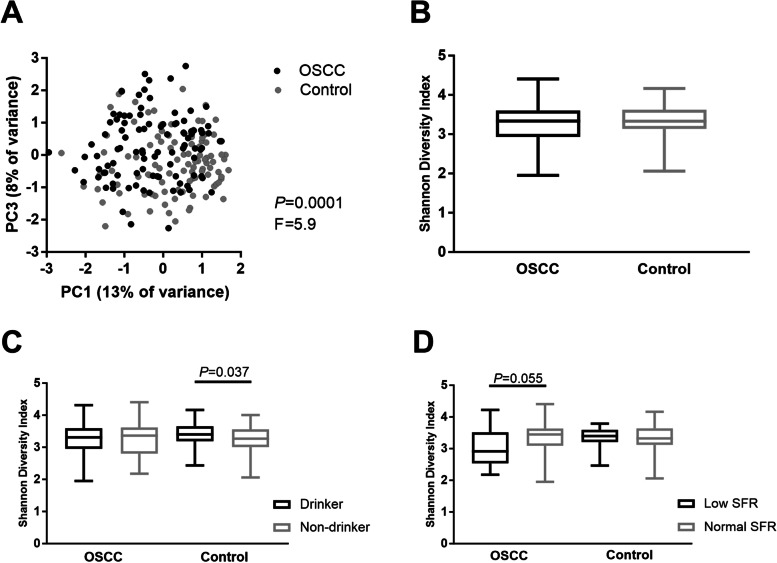
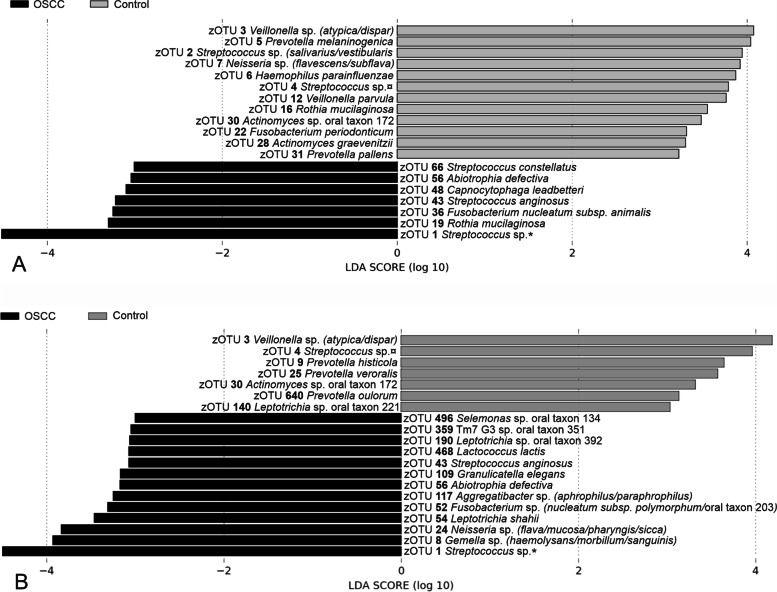
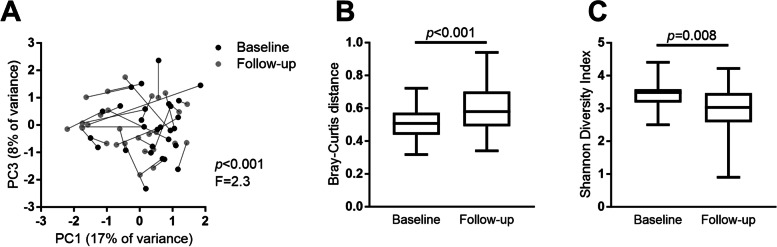
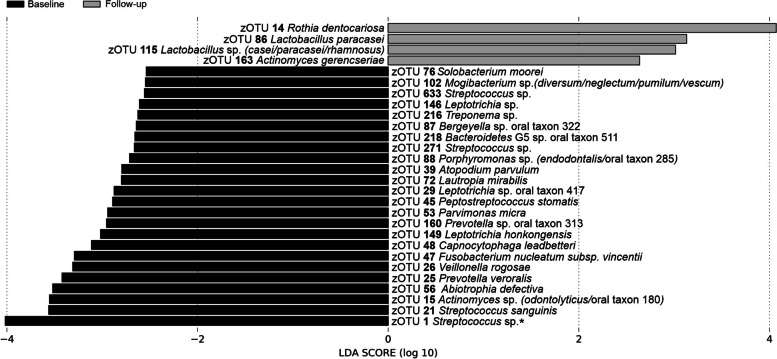
Results: At baseline, the OSCC patients showed a higher relative abundance of zOTUs classified as Streptococcus anginosus, Abiotrophia defectiva, and Fusobacterium nucleatum. The microbial profiles differed significantly between OSCC patients and healthy controls (F = 5.9, p < 0.001). Alpha diversity of the salivary microbiome of OSCC patients was decreased at the follow-up, and the microbial profiles differed significantly from the pre-treatment (p < 0.001) and from that of healthy controls (p < 0.001).
Conclusions: OSCC patients' salivary microbiome profile had a higher abundance of potentially pathogenic bacteria compared to healthy controls. Treatment of the OSCC caused a significant decrease in alpha diversity and increase in variability of the salivary microbiome, which was still evident after several years of follow-up. OSCC patients may benefit from preventive measures, such as the use of pre- or probiotics, salivary substitutes, or dietary counseling. Video Abstract.
Keywords: Cancer treatment; Oral cancer; Oral microbiome.
© 2023. BioMed Central Ltd., part of Springer Nature.
Conflict of interest statement
The authors declare no competing interests.
Figures
References
-
- World Health Organization (WHO). Estimated number of new cases in 2020, World, both sexes, all ages 2020. https://gco.iarc.fr/today/online-analysis-table. (Accessed 2 Jan 2023).
-
- World Health Organization (WHO). Estimated number of deaths in 2020, World, both sexes, all ages 2020. https://gco.iarc.fr/today/online-analysis-table. (Accessed 2 Jan 2023).
-
- Almangush A, Makitie AA, Triantafyllou A, de Bree R, Strojan P, Rinaldo A, et al. Staging and grading of oral squamous cell carcinoma: an update. Oral Oncol 2020;107:104799. 10.1016/j.oraloncology.2020.104799. - PubMed
-
- Vassiliou L V, Acero J, Gulati A, Holzle F, Hutchison IL, Prabhu S, et al. Management of the clinically N(0) neck in early-stage oral squamous cell carcinoma (OSCC). An EACMFS position paper. J Craniomaxillofac Surg 2020;48:711–8. 10.1016/j.jcms.2020.06.004. - PubMed
Publication types
MeSH terms
Substances
LinkOut - more resources
Full Text Sources
Medical
