


Spatial-temporal trends in global childhood overweight and obesity from 1975 to 2030: a weight mean center and projection analysis of 191 countries
- PMID: 37542334
- PMCID: PMC10403851
- DOI: 10.1186/s12992-023-00954-5
Spatial-temporal trends in global childhood overweight and obesity from 1975 to 2030: a weight mean center and projection analysis of 191 countries
Abstract
Background: The geographic information science-based interactive map provided good prospects for the public health to study disease prevalence. The purpose of this study is to understand global spatial-temporal trends of childhood overweight and obesity and underlying causes help formulating intervention strategies.
Methods: This multiple cross-sectional study included data on childhood overweight and obesity prevalence, gross national income per capita, and urbanization rate for 191 countries from 1975-2016. Autoregressive integrated moving average model, standard deviational ellipse model and mixed-effects models were used to explore spatial-temporal trends of childhood overweight and obesity and associations with gross national income per capita and urbanization rate.
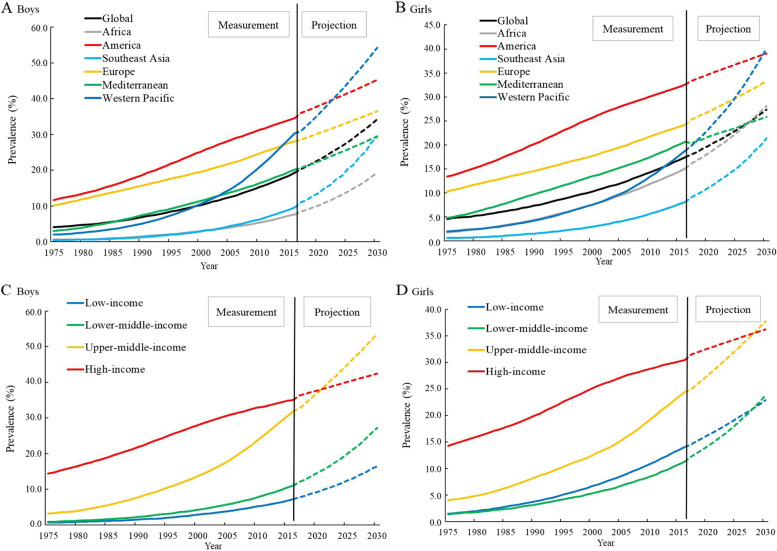
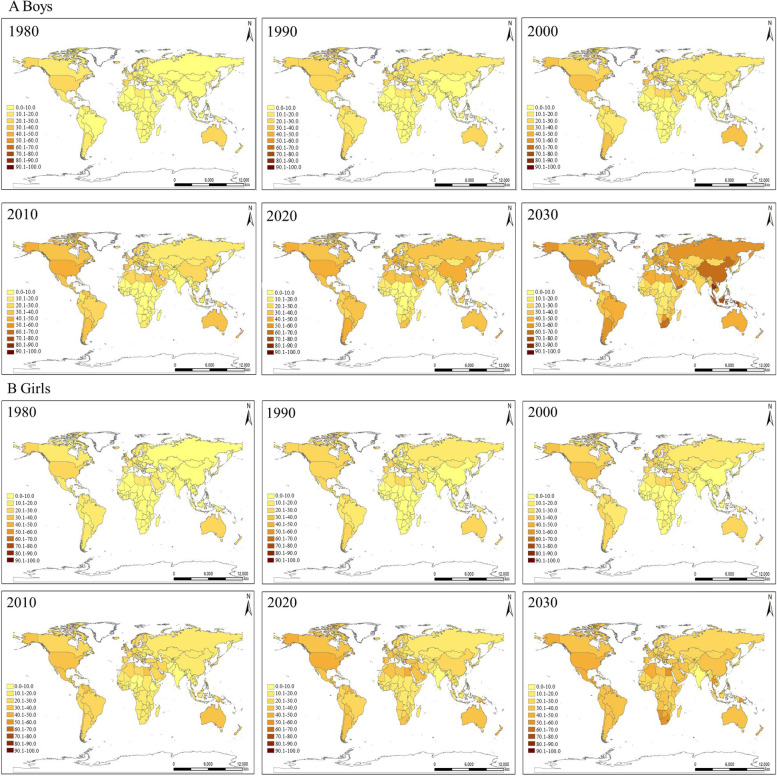
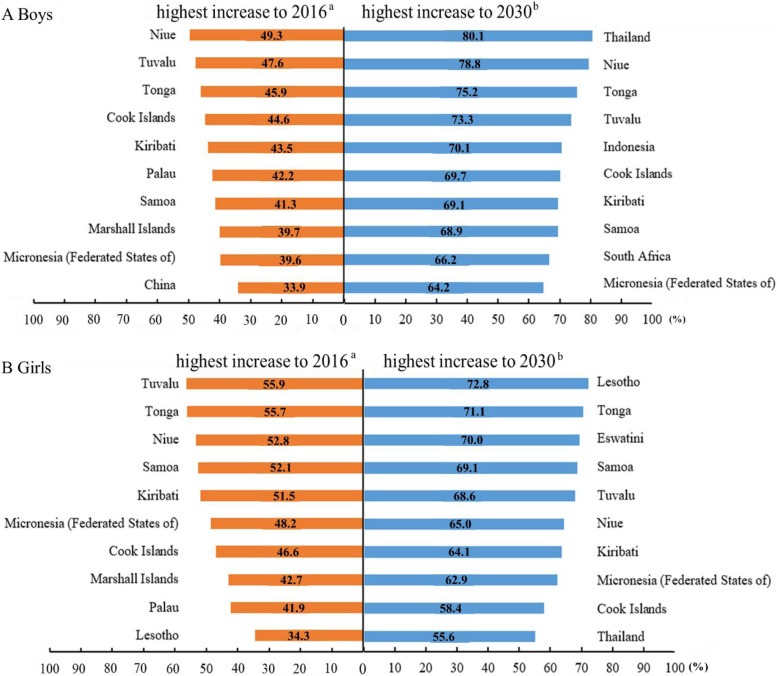
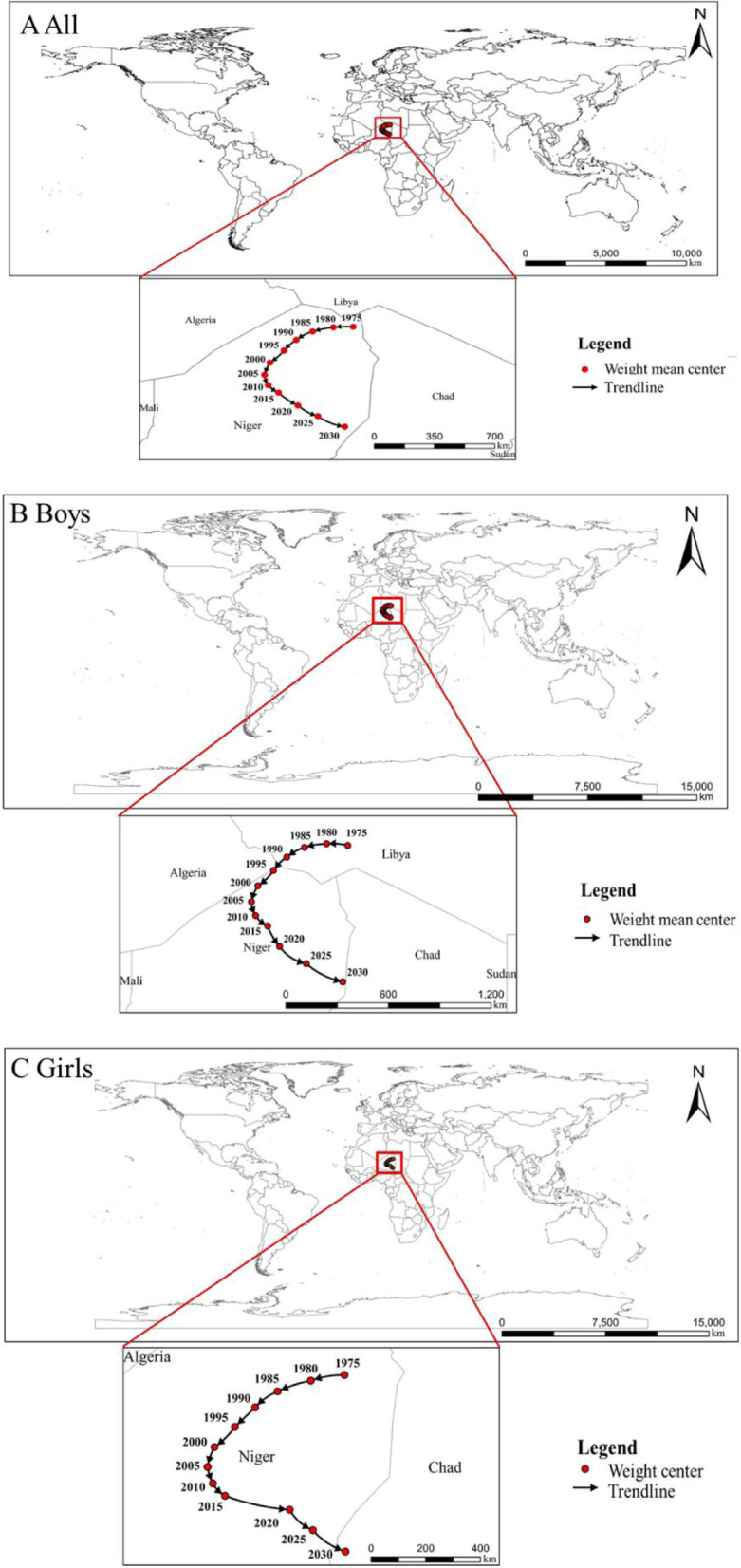
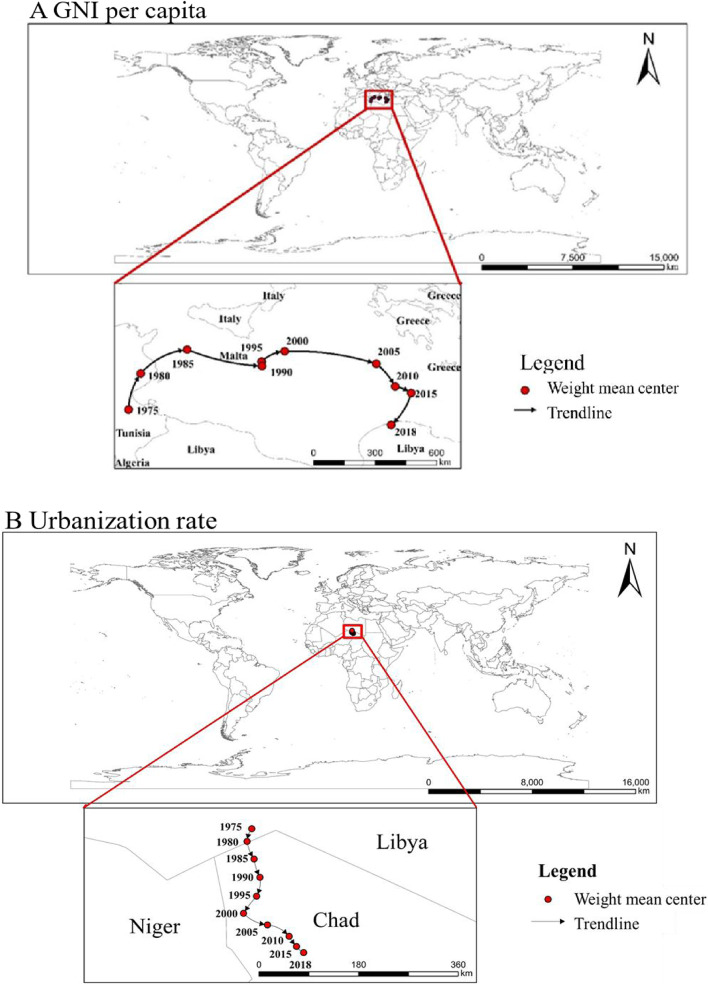
Results: Globally, childhood overweight and obesity rate would reach 30.0% in 2030 (boys: 34.2%, girls: 27.4%). By 2030, it would reach 58.3% in middle- and high-income countries and 68.1% in Western Pacific region. Spatial-temporal trendline for childhood overweight and obesity in 1975-2030 exhibited a "C" shape, migrating from 1975 (15.6。E, 24.6。N) to 2005 (10.6。E, 21.7。N), then to 2030 (14.8。E, 17.4。N). The trendline for urbanization rate was also an irregular "C", and the turning point appeared five years earlier than childhood overweight and obesity.
Conclusions: Globally, childhood overweight and obesity prevalence will continue to increase. Its weight mean center migrated from western countries to Asia and Africa following economic development.
Keywords: Children and adolescents; Global; Overweight and obesity; Projection; Trends.
© 2023. BioMed Central Ltd., part of Springer Nature.
Conflict of interest statement
The authors declare that they have no competing interests.
Figures
References
-
- Ng M, Fleming T, Robinson M, Thomson B, Graetz N, Margono C, et al. Global, regional, and national prevalence of overweight and obesity in children and adults during 1980–2013: a systematic analysis for the Global Burden of Disease Study 2013. Lancet. 2014;384(9945):766–781. doi: 10.1016/S0140-6736(14)60460-8. - DOI - PMC - PubMed
-
- Scholze J, Alegria E, Ferri C, Langham S, Stevens W, Jeffries D, et al. Epidemiological and economic burden of metabolic syndrome and its consequences in patients with hypertension in Germany, Spain and Italy; a prevalence-based model. BMC Public Health. 2010;10:529. doi: 10.1186/1471-2458-10-529. - DOI - PMC - PubMed
Publication types
MeSH terms
LinkOut - more resources
Full Text Sources
