


The global burden of neglected zoonotic diseases: Current state of evidence
- PMID: 37545541
- PMCID: PMC10400928
- DOI: 10.1016/j.onehlt.2023.100595
The global burden of neglected zoonotic diseases: Current state of evidence
Abstract
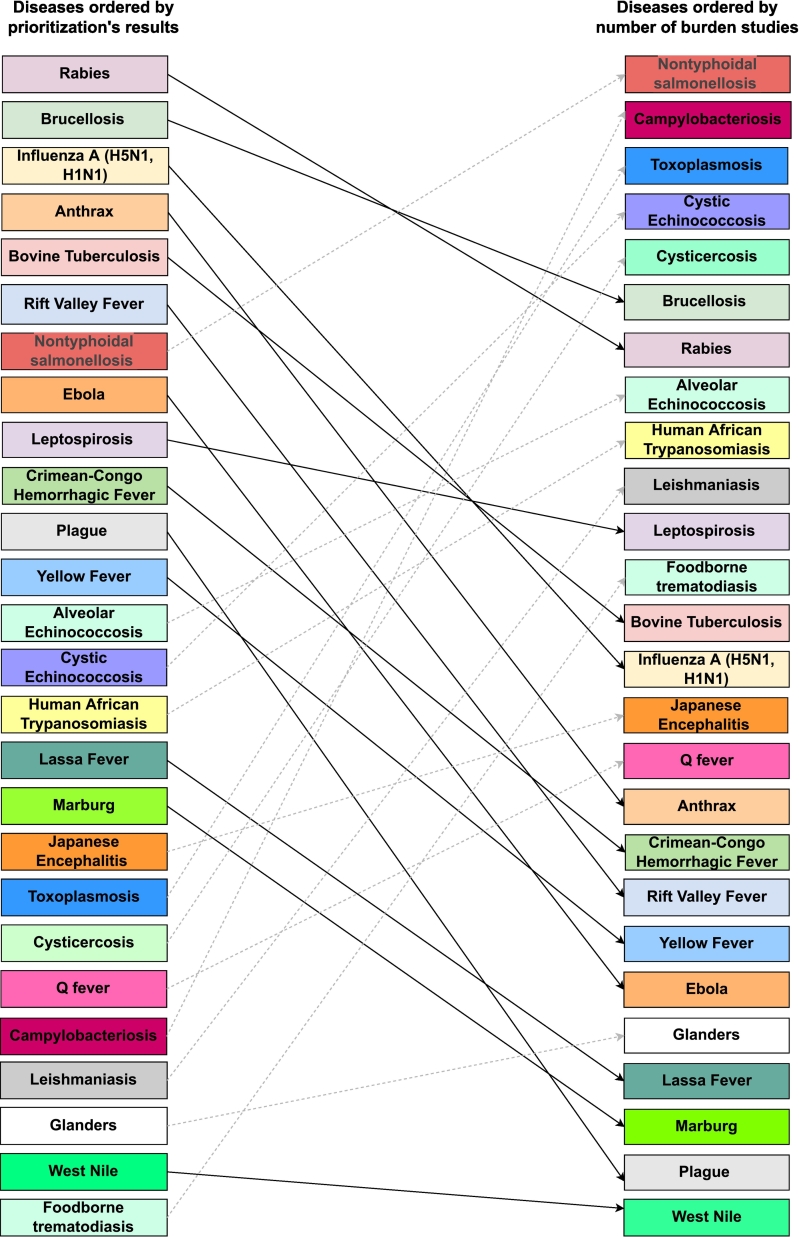
The majority of emerging infectious diseases are zoonoses, most of which are classified as "neglected". By affecting both humans and animals, zoonoses pose a dual burden. The disability-adjusted life year (DALY) metric quantifies human health burden since it combines mortality and morbidity. This review aims to describe and analyze the current state of evidence on neglected zoonotic diseases (NZDs) burden and start a discussion on the current understanding of the global burden of NZDs. We identified 26 priority NZDs through consulting three international repositories for national prioritization exercises. A systematic review of global and national burden of disease (BoD) studies was conducted using pre-selected databases. Data on diseases, location and DALYs were extracted for each eligible study. A total of 1887 records were screened, resulting in 74 eligible studies. The highest number of BoD was found for non-typhoidal salmonellosis (23), whereas no estimates were found for West Nile, Marburg and Lassa fever. Geographically, the highest number of studies was performed in the Netherlands (11), China (5) and Iran (4). The number of BoD retrieved mismatched the perceived importance in national prioritization exercises. For example, anthrax was considered a priority NZD in 65 countries; however, only one national study estimating BoD was retrieved. By summing the available global estimates, the selected NZDs caused at least 21 million DALYs per year, a similar order of magnitude to (but less than) the burden due to foodborne disease (included in the Foodborne Disease Burden Epidemiology Reference Group). The global burden of disease landscape of NZDs remains scattered. There are several priority NZDs for which no burden estimates exist, and the number of BoD studies does not reflect national disease priorities. To have complete and consistent estimates of the global burden of NZDs, these diseases should be integrated in larger global burden of disease initiatives.
Keywords: Burden of disease; Disability-adjusted life years; Neglected zoonotic diseases; Years lived with disability; Years of life lost.
© 2023 The Authors. Published by Elsevier B.V.
Conflict of interest statement
All authors declare that they have no conflicts of interest.
Figures

References
-
- World Health Organization, Zoonoses 2020. https://www.who.int/news-room/fact-sheets/detail/zoonoses
-
- Wormser G.P., Dailey N.J., Fleischauer A.T. In: Sustaining Global Surveillance and Response to Emerging Zoonotic Diseases. Keusch Gerald T., Pappaioanou Marguerite, Gonzalez Mila C., Scott Kimberly A., Tsai Peggy., editors. The National Academies Press; Washington, DC: 2009. (312 pp. 42.30paperback). 36 (E-book), (2010) - PubMed
-
- Institute of Medicine (U.S.) National Academies Press; Washington, DC: 2009. Committee on Achieving Sustainable Global Capacity for Surveillance and Response to Emerging Diseases of Zoonotic Origin., Gerald. Keusch, Sustaining Global Surveillance and Response to Emerging Zoonotic Diseases.http://site.ebrary.com/id/10367632 - PubMed
-
- Wellcome Trust Zoonotic Disease: Explained, Wellcome Trust. 2022. https://wellcome.org/news/zoonotic-disease-explained
Publication types
LinkOut - more resources
Full Text Sources
