


Autoimmune bullous dermatoses in cancer patients treated by immunotherapy: a literature review and Italian multicentric experience
- PMID: 37547602
- PMCID: PMC10400335
- DOI: 10.3389/fmed.2023.1208418
Autoimmune bullous dermatoses in cancer patients treated by immunotherapy: a literature review and Italian multicentric experience
Abstract
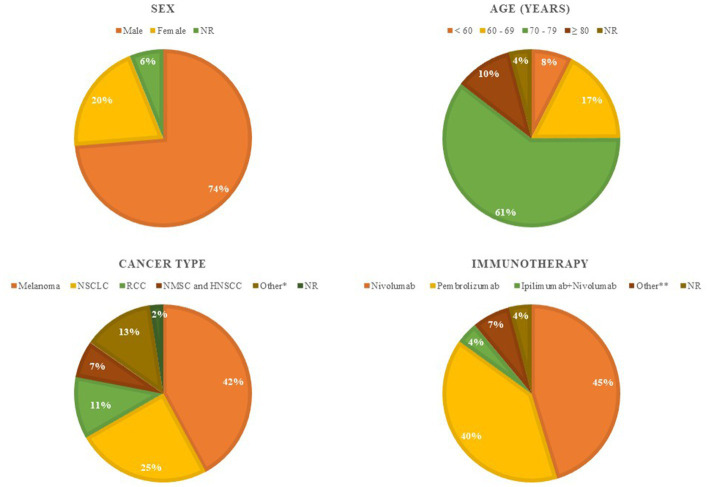
Cutaneous immune-related adverse events are frequently associated with immune checkpoint inhibitors (ICIs) administration in cancer patients. In fact, these monoclonal antibodies bind the cytotoxic T-lymphocyte antigen-4 and programmed cell death-1/ligand 1 leading to a non-specific activation of the immune system against both tumoral cells and self-antigens. The skin is the most frequently affected organ system appearing involved especially by inflammatory manifestations such as maculopapular, lichenoid, psoriatic, and eczematous eruptions. Although less common, ICI-induced autoimmune blistering diseases have also been reported, with an estimated overall incidence of less than 5%. Bullous pemphigoid-like eruption is the predominant phenotype, while lichen planus pemphigoides, pemphigus vulgaris, and mucous membrane pemphigoid have been described anecdotally. Overall, they have a wide range of clinical presentations and often overlap with each other leading to a delayed diagnosis. Achieving adequate control of skin toxicity in these cases often requires immunosuppressive systemic therapies and/or interruption of ICI treatment, presenting a therapeutic challenge in the context of cancer management. In this study, we present a case series from Italy based on a multicenter, retrospective, observational study, which included 45 patients treated with ICIs who developed ICI-induced bullous pemphigoid. In addition, we performed a comprehensive review to identify the cases reported in the literature on ICI-induced autoimmune bullous diseases. Several theories seeking their underlying pathogenesis have been reported and this work aims to better understand what is known so far on this issue.
Keywords: anti PD-1; anti PD-L1; bullous pemphigoid; cutaneous irAE; immunotherapy; lichen planus pemphigoides; mucous membrane pemphigoid; pemphigus.
Copyright © 2023 Merli, Accorinti, Romagnuolo, Marzano, Di Zenzo, Moro, Antiga, Maglie, Cozzani, Parodi, Gasparini, Sollena, De Simone, Caproni, Pisano, Fattore, Balestri, Sena, Vezzoli, Teoli, Ardigò, Vassallo, Michelerio, Satta, Dika, Melotti, Ribero and Quaglino.
Conflict of interest statement
The authors declare that the research was conducted in the absence of any commercial or financial relationships that could be construed as a potential conflict of interest.
Figures
References
LinkOut - more resources
Full Text Sources
Research Materials
