


Shifting Perspectives on the Challenges of Shared Decision Making in Mental Health Care
- PMID: 37550559
- PMCID: PMC10821819
- DOI: 10.1007/s10597-023-01170-6
Shifting Perspectives on the Challenges of Shared Decision Making in Mental Health Care
Abstract
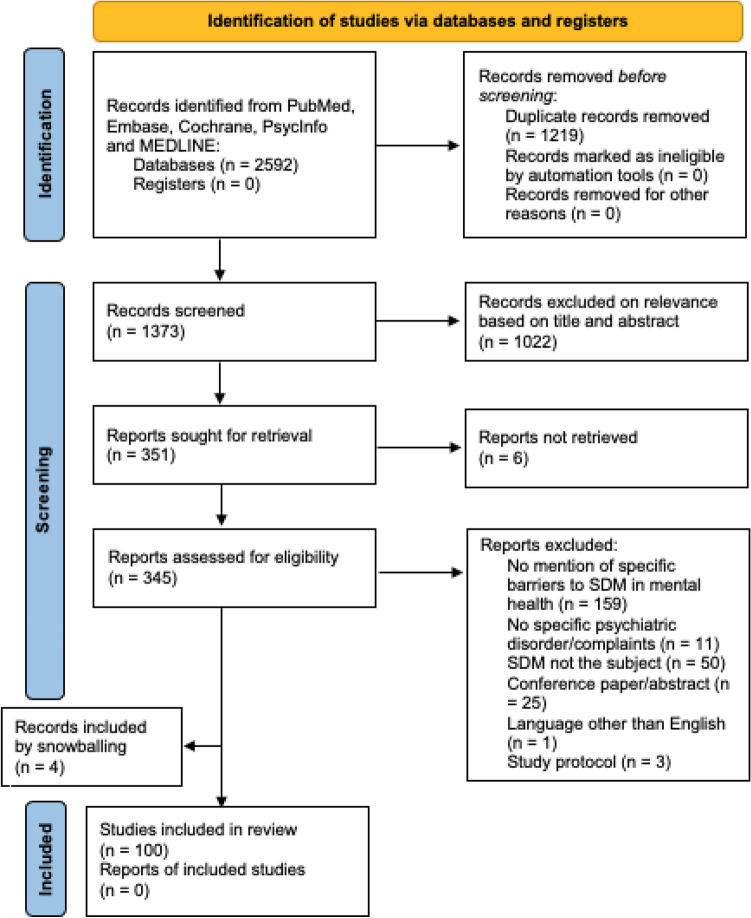
Although shared decision making (SDM) has become the most preferable way in doctor-patient communication, it is not fully implemented in mental health care likely due to the complex nature of psychiatric syndromes and treatments. In this review we provide a systematic overview of all perceived and reported barriers to SDM in the literature, acknowledging field-specific challenges, and offering perspectives to promote its wider use. We conducted a systematic search of the wider literature in different databases and included all publications mentioning specified barriers to SDM in psychiatric care. Relevant data and opinions were categorised into micro-, meso- and macro-level themes and put into clinical perspective. We derived 20 barriers to SDM from 100 studies and reports. Eight were on micro-level care delivery, seven involved meso-level issues, five concerned macro-level themes. The multitude of perceived and actual barriers to SDM underline the challenges its implementation poses in mental health care, some of which can be resolved while others are inherent to the nature of the care, with its long-term relationships, complex dynamics, and social consequences, all requiring a flexible approach. We present four perspectives to help change views on the potential of SDM in mental health care.
Keywords: Mental health; Patient-centred care; Recovery-oriented health care; Review; Shared decision making.
© 2023. The Author(s).
Conflict of interest statement
The authors have no conflicts of interest to declare.
Figures
References
Publication types
MeSH terms
LinkOut - more resources
Full Text Sources
Medical
