Perceived influence of medical school sexual health education on specialty selection in young urologists specializing in sexual dysfunction
- PMID: 37554536
- PMCID: PMC10406534
- DOI: 10.21037/tau-22-793
Perceived influence of medical school sexual health education on specialty selection in young urologists specializing in sexual dysfunction
Abstract
Background: To determine effects of sexual health curriculum (SHC) in medical school and mentorship on future specialty/subspecialty selection, we sought to evaluate the experiences of urology trainees and practicing urologists.
Methods: Residents, fellows, and practicing urologists completed a 15-question survey regarding their exposure to a SHC during medical school, topics covered, and the influence of mentors in their career choice. Summary statistics were used to identify trends based on survey responses.
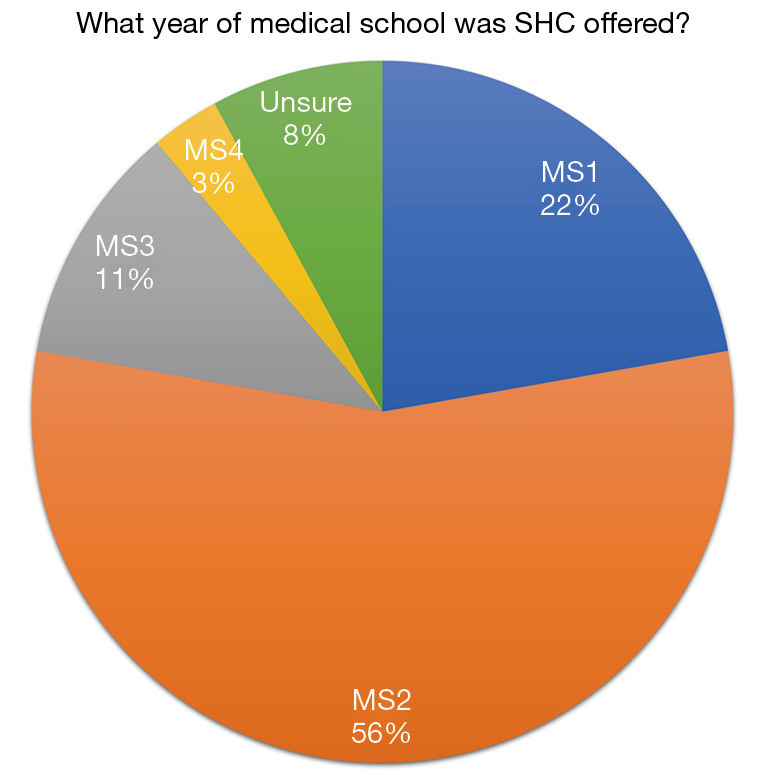
Results: Ninety-four respondents, primarily post-graduate training year 4 and 5 (46%), completed the survey. Approximately 50% recalled a dedicated SHC during medical school with 46% planning to pursue fellowship training in sexual medicine/reconstruction. Topics commonly covered included reproductive anatomy/physiology and sexual history-taking, while respondents rarely recalled topics such as sexual aids/toys and pornography. Only 25% felt their SHC provided an adequate fund of knowledge to address sexual health concerns in patients, and only 14% felt that exposure to a SHC influenced their decision to pursue urology. Individuals intending to pursue fellowship were more likely to have an attending mentor, a mentor with expertise in sexual dysfunction, and considered their mentor as important or very important in their decision to subspecialize (P<0.05).
Conclusions: Most urology trainees do not have strong exposure to a SHC during medical school and cite mentorship as a more important role in the decision to pursue subspecialty training. These data support the need for a standardized formal SHC and continued exposure to sexual health experts during training to ensure continued interest in sexual medicine/reconstruction fellowship.
Keywords: Sexual health curriculum (SHC); education; fellowship; mentorship.
2023 Translational Andrology and Urology. All rights reserved.
Conflict of interest statement
Conflicts of Interest: All authors have completed the ICMJE uniform disclosure form (available at https://tau.amegroups.com/article/view/10.21037/tau-22-793/coif). TK serves as an unpaid editorial board member of Translational Andrology and Urology from August 2022 to July 2024. The other authors have no conflicts of interest to declare.
Figures

References
-
- Abou Ghayda R, Bakare T, Ohlander S, et al. Mp19-19 andrology/male infertlity subspecialty exposure during US based urology residency training. J Urol 2018;199:e251. 10.1016/j.juro.2018.02.668 - DOI
LinkOut - more resources
Full Text Sources
Miscellaneous