


Dual phenotypic characteristics of P-selectin in a mouse model of hemorrhagic shock and hepatectomy
- PMID: 37554775
- PMCID: PMC10404689
- DOI: 10.1016/j.heliyon.2023.e18627
Dual phenotypic characteristics of P-selectin in a mouse model of hemorrhagic shock and hepatectomy
Abstract
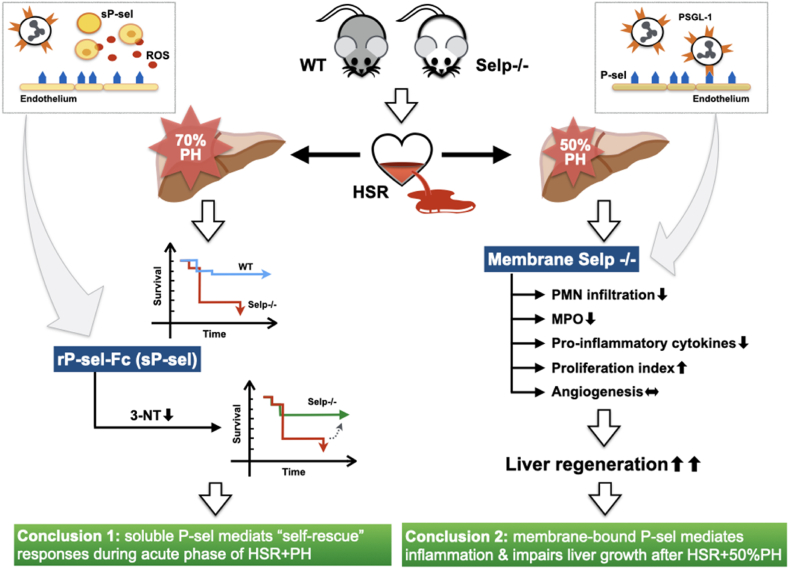
Background: Membrane-bound P-selectin induces endothelial adhesion of leucocytes and amplifies organ inflammations during major trauma, while soluble P-selectin (sP-sel) mediates survival rescue properties. This study characterized the differential effects of P-selectin in a "2-hit" model of hemorrhagic shock (HS) and partial hepatectomy (PH).
Materials and methods: HS was induced by withdrawing blood (0.3 mL) directly from the mouse femoral arteries. 70% or 50% of liver volumes were resected after inducing HS. Time of survival in P-selectin deficient (Selp -/-) mice treated with and without intraperitoneal injections of recombinant P-sel IgG-Fc fusion proteins (rP-sel-Fc, 1.5 mg/kg) were recorded for up to 72h after injury. In addition, liver regeneration at 72h after HS and 50% PH was assessed in wild-type and Selp -/- mice.
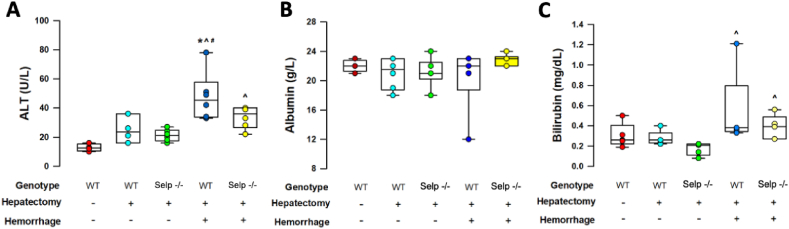
Results: Compared to wild-types, Selp -/- mice had significantly higher mortality rates post HS and 70% PH, as none of these animals survived up to 48h postoperatively. The survival curve was restored in Selp -/- mice pre-treated with rP-sel-Fc. In the HS followed by 50% PH experimental arm, liver remnant growth ratios were significantly higher in Selp -/- mice (15.7 ± 3.1 vs 11.7 ± 4.9, P = 0.040). The elevated serum concentrations of alanine aminotransferase post-PH were significantly reduced in Selp -/- mice. Hepatocyte proliferation indices (CYP7a1 and PCNA) expression were enhanced and myeloperoxidase activity in the regenerated remnant liver was reduced in the Selp -/- mice.
Conclusion: In critical conditions induced by HS and PH, P-selectin mediates two distinct phenotypic characteristics. Soluble-form circulating P-selectin improves survival in the acute stage of HS and extensive loss of liver parenchyma; membrane-bound P-selectin induces regional pro-inflammatory reactions in the remnant liver after the acute stage of two insults, thereby inhibiting hepatic regeneration. The results of this pre-clinical study may provide molecular mechanistic insight and clinical therapeutic applications of P-selectin in the acute and regenerative phases of traumatic hepatic injury.
Keywords: Hemorrhagic shock; Inflammation; Liver regeneration; P-selectin; Trauma.
© 2023 The Authors. Published by Elsevier Ltd.
Conflict of interest statement
The authors declare that they have no known competing financial interests or personal relationships that could have appeared to influence the work reported in this paper.
Figures




References
-
- Badger S.A., Barclay R., Campbell P., et al. Management of liver trauma. World J. Surg. 2009;33(12):2522–2537. - PubMed
-
- Peitzman A.B., Richardson J.D. Surgical treatment of injuries to the solid abdominal organs: a 50-year perspective from the Journal of Trauma. J. Trauma. 2010;69(5):1011–1021. - PubMed
-
- Gao J.M., Du D.Y., Zhao X.J., et al. Liver trauma: experience in 348 cases. World J. Surg. 2003;27(6):703–708. - PubMed
-
- Melloul E., Denys A., Demartines N. Management of severe blunt hepatic injury in the era of computed tomography and transarterial embolization: a systematic review and critical appraisal of the literature. J. Trauma Acute Care Surg. 2015;79(3):468–474. - PubMed
LinkOut - more resources
Full Text Sources
Research Materials
Miscellaneous
