


Mind body exercise improves cognitive function more than aerobic- and resistance exercise in healthy adults aged 55 years and older - an umbrella review
- PMID: 37558977
- PMCID: PMC10413530
- DOI: 10.1186/s11556-023-00325-4
Mind body exercise improves cognitive function more than aerobic- and resistance exercise in healthy adults aged 55 years and older - an umbrella review
Abstract
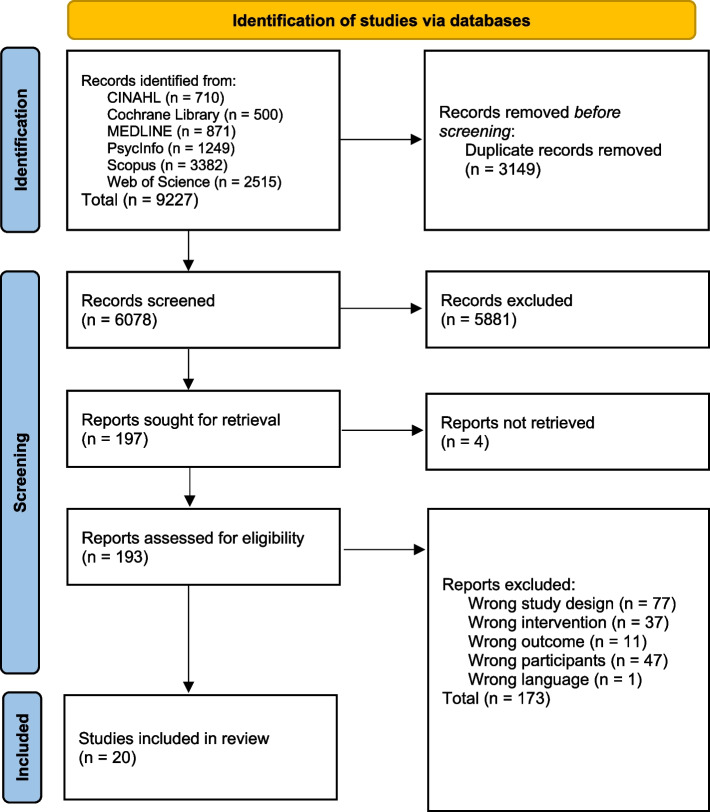
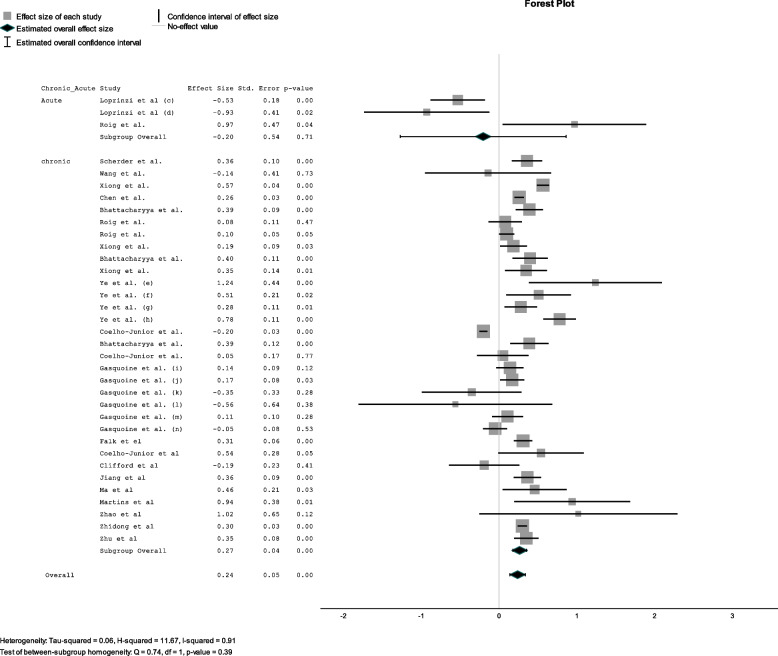
Exercise is often cited as a major factor contributing to improved cognitive functioning. As a result, the relationship between exercise and cognition has received much attention in scholarly literature. Systematic reviews and meta-analyses present varying and sometimes conflicting results about the extent to which exercise can influence cognition. The aim of this umbrella review was to summarize the effects of physical exercise on cognitive functions (global cognition, executive function, memory, attention, or processing speed) in healthy adults ≥ 55 years of age.Methods An umbrella review of systematic reviews with meta-analyses investigating the effect of exercise on cognition was performed. Databases (CINAHL, Cochrane Library, MEDLINE, PsycInfo, Scopus, and Web of Science) were searched from inception until June 2023 for reviews of randomized or non-randomised controlled trials. Full-text articles meeting the inclusion criteria were reviewed and methodological quality assessed. Overlap within included reviews was assessed using the corrected covered area method (CCA). A random effects model was used to calculate overall pooled effect size with sub-analyses for specific cognitive domains, exercise type and timing of exercise.Results Database searches identified 9227 reviews. A total of 20 met the inclusion criteria. They were based on 332 original primary studies. Overall quality of the reviews was considered moderate with most meeting 8 or more of the 16 AMSTAR 2 categories. Overall pooled effects indicated that exercise in general has a small positive effect on cognition (d = 0.22; SE = 0.04; p < 0.01). Mind-body exercise had the greatest effect with a pooled effect size of (d = 0.48; SE = 0.06; p < 0.001). Exercise had a moderate positive effect on global cognition (d = 0.43; SE = 0,11; p < 0,001) and a small positive effect on executive function, memory, attention, and processing speed. Chronic exercise was more effective than acute exercise. Variation across studies due to heterogeneity was considered very high.Conclusions Mind-body exercise has moderate positive effects on the cognitive function of people aged 55 or older. To promote healthy aging, mind-body exercise should be used over a prolonged period to complement other types of exercise. Results of this review should be used to inform the development of guidelines to promote healthy aging.Trial registration PROSPERO (CDR 42022312955).
Keywords: Cognitive function; Exercise; Meta-analysis; Older adults; Umbrella review.
© 2023. European Group for Research into Elderly and Physical Activity (EGRIPA).
Conflict of interest statement
The authors declare no financial or non-financial competing interests.
Figures


References
-
- World Health Organisation. Healthy ageing and functional ability. https://www.who.int/news-room/questions-and-answers/item/healthy-ageing-... (2020). Accessed 5 July 2023.
-
- Ciria LF, Román-Caballero R, Vadillo MA, Holgado D, Luque-Casado A, Perakakis P, et al. An umbrella review of randomized control trials on the effects of physical exercise on cognition. 10.1101/2022.02.15.480508. - PubMed
Publication types
LinkOut - more resources
Full Text Sources
Research Materials
Miscellaneous
