


The Reliability of Auto-Injectors in Clinical Use: A Systematic Review
- PMID: 37559861
- PMCID: PMC10409493
- DOI: 10.7759/cureus.41601
The Reliability of Auto-Injectors in Clinical Use: A Systematic Review
Abstract
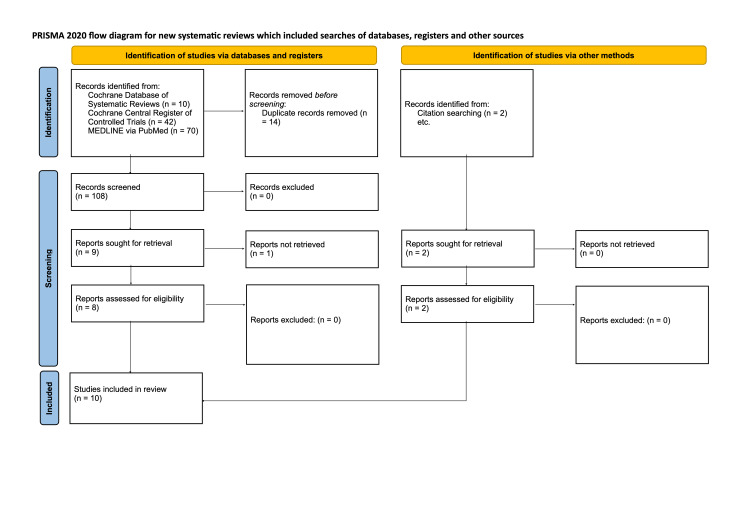
Auto-injectors are medical devices designed for the self-administration of injections by patients and for easy administration by healthcare professionals in emergency situations. Although they vary in design and application, auto-injectors are typically built around a spring-loaded syringe. Despite their widespread use in a variety of clinical settings, there have been limited attempts to assess their reliability. This systematic review investigates the reliability of auto-injectors, identifies common causes of failure, and summarizes the overall rate of malfunction. A systematic review of research published on the PubMed and Cochrane Library databases was performed in July 2022. The relevant studies were assessed for their methodological quality and risk of bias prior to extracting key study outcomes on auto-injector reliability. Finally, a summary rate covering all eligible studies was calculated. The search identified a total of 110 articles, of which ten were found to be suitable for inclusion. The risk of bias was low, and the methodological quality was high across the ten studies. Out of a total of 2,964 injections administered from an auto-injector, there were 12 device malfunctions, giving a summary rate of 0.40% (±0.23) auto-injector failures. The causes of malfunction varied in nature, with the majority of cases (58.3%) not being specified or not identified. This review has demonstrated that auto-injectors are reliable devices. Although further research on the nature of malfunctions is needed, the low rate of malfunctions supports training programs for healthcare professionals and patients on the optimum use and maintenance of auto-injectors. It provides a rationale for their continued development.
Keywords: auto-injector; clinical development; clinical trial; delivery; drug; injection; pharmaceutical; pharmacology.
Copyright © 2023, Dostal et al.
Conflict of interest statement
The authors have declared financial relationships, which are detailed in the next section.
References
-
- Self-injectable epinephrine for allergic emergencies. Davis JE. J Emerg Med. 2009;37:57–62. - PubMed
-
- What are the 'ideal' features of an adrenaline (epinephrine) auto-injector in the treatment of anaphylaxis? Frew AJ. Allergy. 2011;66:15–24. - PubMed
-
- Autoinjector device for rapid administration of drugs and antidotes in emergency situations and in mass casualty management. Vijayaraghavan R. https://journals.sagepub.com/doi/pdf/10.1177/0300060520926019. J Int Med Res. 2020;48:300060520926019. - PMC - PubMed
Publication types
LinkOut - more resources
Full Text Sources