


Effectiveness of music-based interventions for cognitive rehabilitation in Parkinson's disease: a systematic review of randomized controlled clinical trials
- PMID: 37561275
- PMCID: PMC10415237
- DOI: 10.1186/s41155-023-00259-x
Effectiveness of music-based interventions for cognitive rehabilitation in Parkinson's disease: a systematic review of randomized controlled clinical trials
Abstract
Background: Music-based interventions are promising for cognitive rehabilitation in Parkinson's disease; however, systematic reviews covering the topic are scarce.
Objective: To analyze the effectiveness of music-based interventions for cognitive rehabilitation in PD.
Method: Systematic review study based on PRISMA criteria. The descriptors Parkinson's disease, Parkinson's disease, idiopathic Parkinson's disease, music-based interventions, music therapy, music training, auditory stimulation, music, rhythm, rhythmic, cognition, and cognitive were used. Five databases were searched PubMed/MEDLINE, PsycInfo, Scopus, Web of Science, and Cochrane in May 2022. Only randomized controlled trials with no limit on publication date or language were included. Risk of bias was assessed following Cochrane Collaboration criteria for development of systematic intervention reviews.
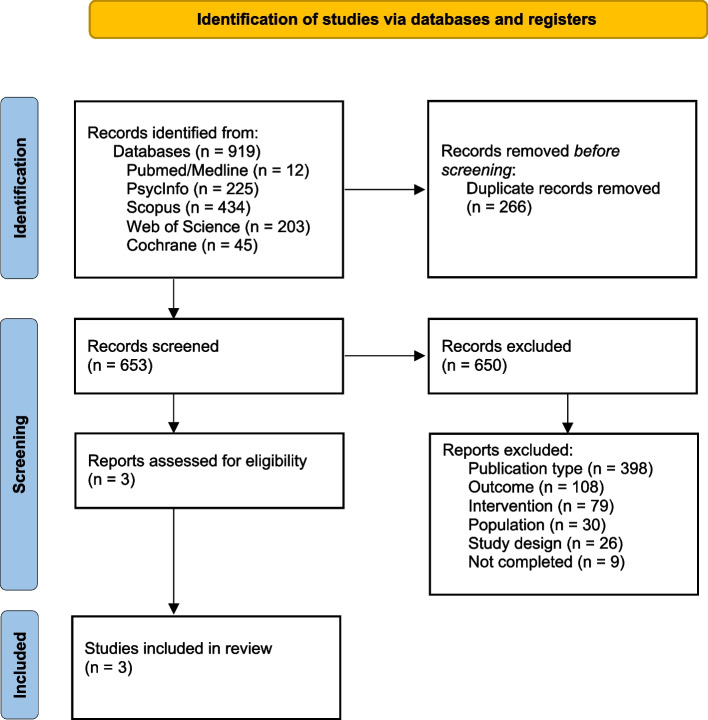
Results: Nine hundred nineteen articles were found by the descriptors; 266 were excluded for being repeated; 650 for not meeting the inclusion criteria. The remaining three articles were included and analyzed. The interventions consisted of practices with emphasis on rhythm and were conducted in groups. Risks of important biases were observed, such as lack of blinding in the allocation of participants and in the assessment of outcomes, as well as incomplete data for some outcomes.
Conclusion: Overall, the results showed no evidence of efficacy of music-based interventions for cognitive outcomes in PD.
Keywords: Cognition; Cognitive rehabilitation; Music therapy; Music-based interventions; Parkinson’s disease.
© 2023. Graduate Program in Psychology (Federal University of Rio Grande do Sul, Porto Alegre).
Conflict of interest statement
The authors declare that they have no conflicts of interest.
Figures


References
Publication types
Grants and funding
LinkOut - more resources
Full Text Sources