. 2023 Aug 11;8(1):296.
doi: 10.1038/s41392-023-01542-0.

Chronic pulmonary bacterial infection facilitates breast cancer lung metastasis by recruiting tumor-promoting MHCIIhi neutrophils

Affiliations

Chronic pulmonary bacterial infection facilitates breast cancer lung metastasis by recruiting tumor-promoting MHCIIhi neutrophils

Teng Ma et al. Signal Transduct Target Ther. .

Abstract

Breast cancer can metastasize to various organs, including the lungs. The immune microenvironment of the organs to be metastasized plays a crucial role in the metastasis of breast cancer. Infection with pathogens such as viruses and bacteria can alter the immune status of the lung. However, the effect of chronic inflammation caused by bacteria on the formation of a premetastatic niche within the lung is unclear, and the contribution of specific immune mediators to tumor metastasis also remains largely undetermined. Here, we used a mouse model revealing that chronic pulmonary bacterial infection augmented breast cancer lung metastasis by recruiting a distinct subtype of tumor-infiltrating MHCIIhi neutrophils into the lung, which exhibit cancer-promoting properties. Functionally, MHCIIhi neutrophils enhanced the lung metastasis of breast cancer in a cell-intrinsic manner. Furthermore, we identified CCL2 from lung tissues as an important environmental signal to recruit and maintain MHCIIhi neutrophils. Our findings clearly link bacterial-immune crosstalk to breast cancer lung metastasis and define MHCIIhi neutrophils as the principal mediator between chronic infection and tumor metastasis.


Conflict of interest statement

The authors declare no competing interests.

Figures
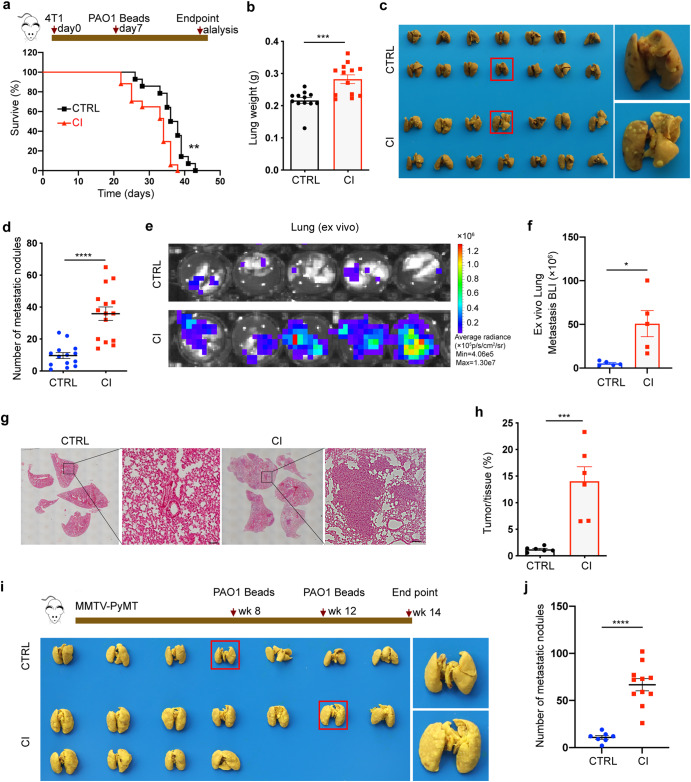
Fig. 1
Fig. 1
Chronic pulmonary P. aeruginosa infection promotes breast cancer lung metastasis. a Upper panel: Schematic diagram of spontaneous metastasis. Mouse mammary carcinoma 4T1 cells (2 × 105) were orthotopically implanted into mouse MFPs followed by tracheal injection of PBS or PAO1-Beads on day 7 after tumor bearing. Lower panel: Kaplan–Meier analysis of lung metastasis survival in PBS (n = 17) or PAO1-bead-treated (n = 14) mice [log-rank (Mantel–Cox test). PAO1-Beads agar bead-embedded PAO1, MFP mammary fat pad. b A mouse model was constructed as described above, and the mice were sacrificed at the endpoint. Weight of lungs excised from mice in different treatment groups at day 21 (n = 12–13 mice/group). c, d Lung images (c) and numbers of lung metastasis nodules (d) from CTRL (control) group and CI (chronic infection) group mice (n = 14–15 mice/group). e, f Representative images of ex vivo metastatic lungs (e) and ex vivo quantification of lung metastasis (f) from 4T1-luci-bearing mice with or without chronic pulmonary PAO1 infection (n = 5 mice/group). g, h Representative H&E pictures (g) and corresponding quantification (h) of lung tissues are shown to determine the tumor burden (n = 6 mice/group). Scale bar, 25 μm I, j Bright-field imaging (i) and number of metastatic nodules (j) in the lungs of MMTV-PyMT mice from the CTRL group (n = 7) and CI group at the endpoint (14 weeks of age) (n = 11). Scale bar, 50 μm. All data are presented as the mean ± SEM. Statistical significance was calculated using an unpaired t test. ****P < 0.0001; ***P < 0.001; **P < 0.01; *P < 0.05
Fig. 2
Fig. 2
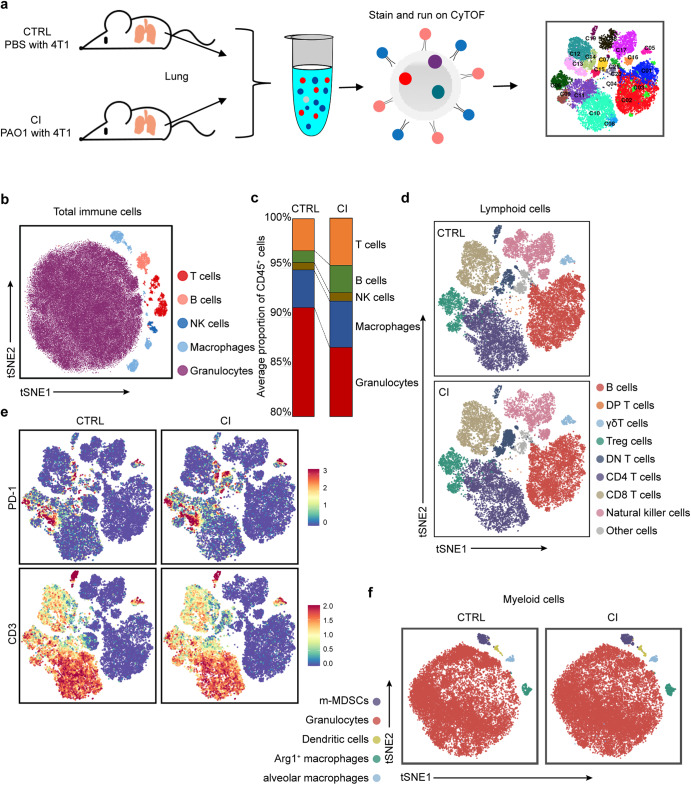
CyTOF profiling analyzes immune cells in chronically infected lung tissues. a Study design: Lungs were collected from 4T1-bearing mice with or without chronic PAO1 infection at the endpoint (21 days) and were analyzed by CyTOF. Unique immune subsets were identified by CyTOF analysis (n = 2 mice/group). b Two-dimensional t-SNE illustration of the merged CyTOF data from the lungs of both the CTRL group and CI group. c Frequency of immune lineages based on summation of Phenograph metaclusters. Composition of the CD45+ compartment showing average frequencies of major immune lineages in the lung tissue from the CTRL group and CI group (n = 2 mice/group). d viSNE analysis of lymphoid cells colored and labeled by Phenograph metacluster for the two groups. e Normalized expression of PD-1 in lung CD3+ cells shown by the viSNE plot for the CTRL and CI groups. f viSNE analysis of myeloid cells colored and labeled by Phenograph metacluster for the two groups
Fig. 3
Fig. 3
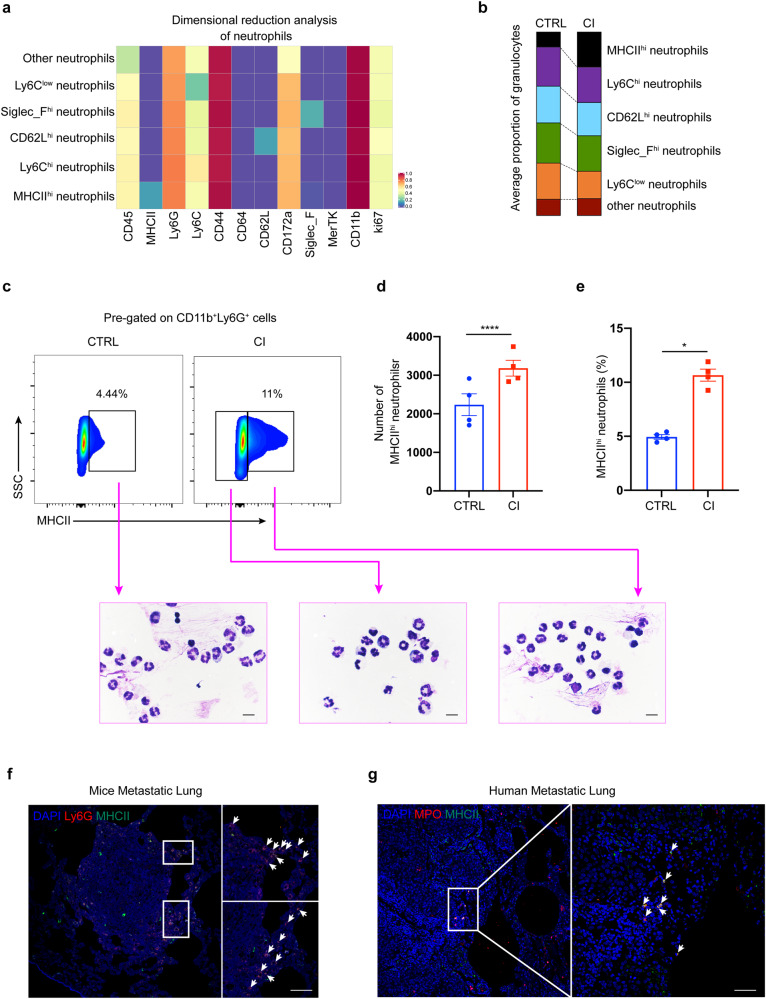
Identification of MHCIIhi neutrophils in the lung tissues of breast cancer-bearing mice. a Heatmap showing the differential expression of 12 neutrophil-related immune markers in the two groups. The immune subsets that represent these nodes based on their marker expression are noted. b The proportion of histogram showing the frequency of neutrophil subsets. c Flow cytometry-based detection (upper panel) of MHCIIhi or MHCIIlow neutrophils from the lung tissue of tumor-bearing mice with (lower right) or without chronic PAO1 infection (lower left). Plots are shown for gated live CD45+CD11b+Ly6G+ cells. Representative cytospin images (bottom) are from FACS (fluorescence-activated cell sorting)-sorted populations and Swiss-Giemsa staining. Scale bar, 10 μm. d, e Quantification (d) and frequency (e) of MHCIIhi neutrophils in (c), n = 4 mice/group. f Confocal immunofluorescent images of lung tissues from tumor-bearing mice with chronic PAO1 infection. Blue: DAPI; red: Ly6G; green: MHCII. Scale bar, 50 μm. g Confocal immunofluorescent images of lung tissues from patients with breast cancer. Blue: DAPI; red: MPO; green: MHCII. Scale bar, 50 μm. All data are presented as the mean ± SEM. Statistical significance was calculated using an unpaired t test. ****P < 0.0001; *P < 0.05
Fig. 4
Fig. 4
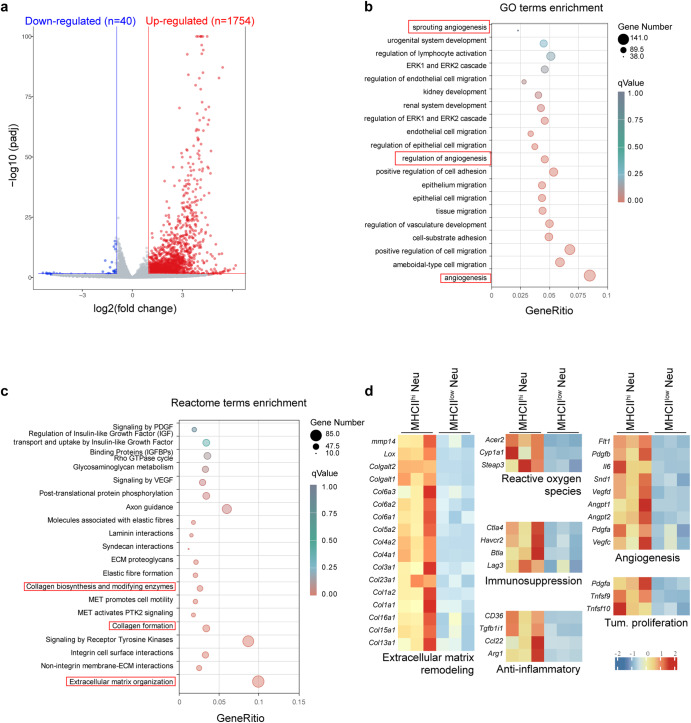
Transcriptome analysis of MHCIIhi and MHCIIlow neutrophils isolated from the lungs of tumor-bearing mice with chronic PAO1 infection. a Volcano plot showing differential gene expression between MHCIIhi and MHCIIlow neutrophils in the lungs of 4T1-bearing mice with chronic PAO1 infection. Genes with a fold change higher than 2 and a P value of <0.05 are highlighted in blue and red, denoting down- and upregulated genes, respectively, in MHCIIhi and MHCIIlow neutrophils. b GO enrichment in MHCIIhi and MHCIIlow neutrophils in the lungs of 4T1-bearing mice with chronic PAO1 infection. c Reactome pathway analysis of the enriched genes identified from MHCIIhi and MHCIIlow neutrophils in the lungs of 4T1-bearing mice with chronic PAO1 infection. d Average expression levels of genes involved in extracellular matrix remodeling, reactive oxygen species, immunosuppression, anti-inflammation, angiogenesis, and tumor proliferation in MHCIIhi and MHCIIlow neutrophils in the lungs of 4T1-bearing mice with chronic PAO1 infection
Fig. 5
Fig. 5
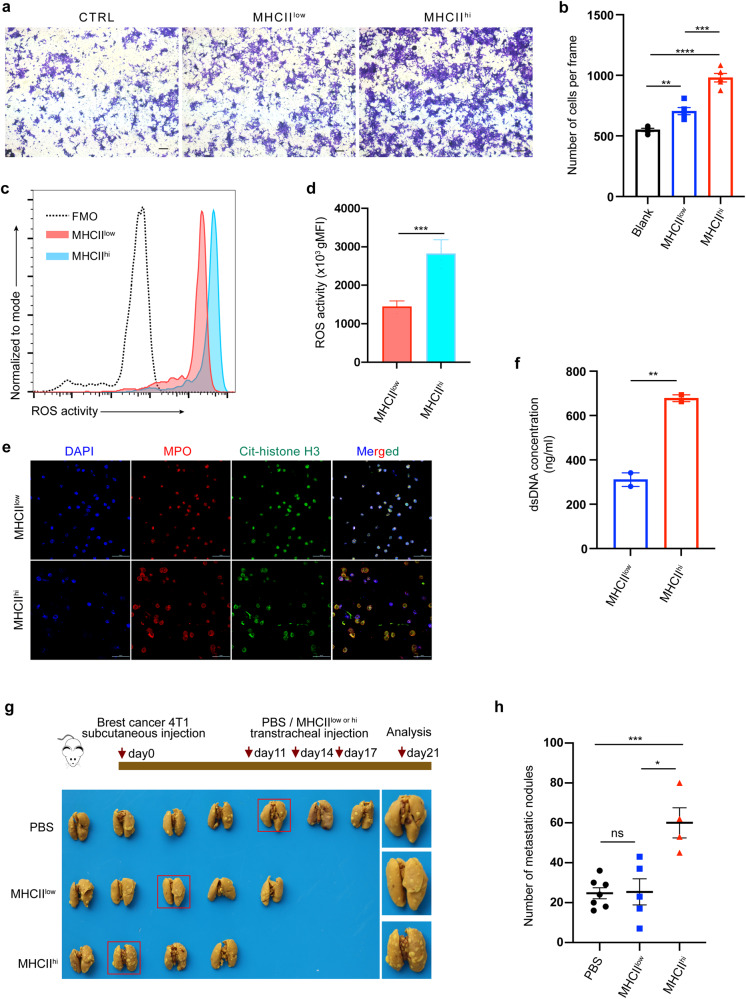
MHCIIhi neutrophils show tumor-promoting functions both in vitro and in vivo. a, b Representative images (a) displaying the effects of MHCIIhi and MHCIIlow neutrophils on 4T1 cell migration evaluated using Transwell assays. 4T1 cells were added to the upper chamber, MHCIIhi or MHCIIlow neutrophils were added to the bottom chamber (8 μm pores), and the cells that transmigrated into the lower chamber were counted (b). n = 3. Scale bar, 200 μm. c, d Representative histogram (c) and quantification of the geometric mean fluorescence intensity (gMFI) (d) of ROS activity, measured by rhodamine 123 fluorescence (oxidized dihydrorhodamine 123) using flow cytometry, in MHCIIhi and MHCIIlow neutrophils sorted by FACS (n = 4 mice/group). e Representative images of LPS-triggered NET formation in vitro. MHCIIhi and MHCIIlow neutrophils sorted by FACS were treated with 100 μg/mg LPS for 3 h and then stained with DAPI (blue), anti-H3cit (green) and MPO (red) for NET formation identification in vitro. Experiments were repeated 3 times, and n = 3 replicates in each experiment. Scale bar, 50 μm. f Concentration of dsDNA (cell-free DNA) in cultured supernatants from MHCIIhi or MHCIIlow neutrophils treated with 100 μg/mg LPS for 3 h. g Bright-field imaging of metastatic nodules in the lungs of tumor-bearing mice infused with PBS, MHCIIhi or MHCIIlow neutrophils for the indicated times. The control PBS, MHCIIhi or MHCIIlow neutrophils were instilled into mice via the trachea on the 11th, 14th, and 17th days after 4T1 cell inoculation (n = 4–7 mice/group). h Number of metastatic nodules in the lungs derived from (g). All data are presented as the mean ± SEM. Statistical values were calculated using one-way ANOVA (b, h) or an unpaired t test (d, f). ns not significant; ****P < 0.0001; ***P < 0.001; **P < 0.01; *P < 0.05
Fig. 6
Fig. 6
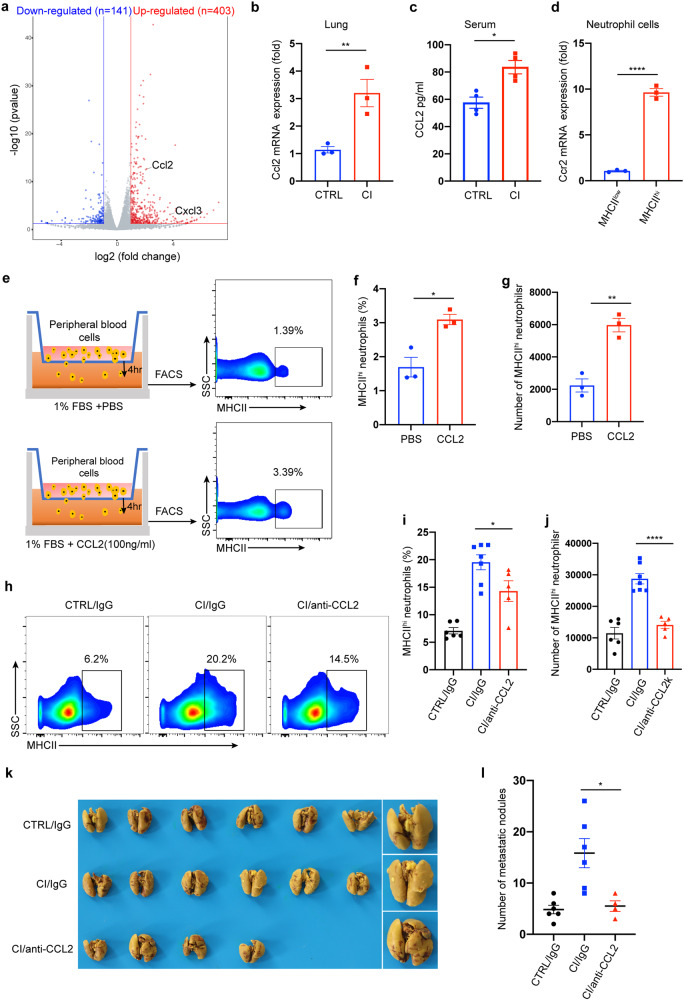
Chronical pulmonary infection-derived CCL2 recruits MHCIIhi neutrophils into the lung. a Volcano plot showing differential gene expression between lung tissue of tumor-free mice with or without chronic PAO1 infection. Genes with a false discovery rate (FDR) of <5% and an absolute fold change (FC) of >2 are highlighted in blue and red, denoting down- and upregulated genes, respectively, in the lung tissues from the two groups. n = 2 mice/group. b, c 4T1-bearing mice were treated with or without chronic PAO1 infection. Real-time PCR was performed on total RNA extracted from the lungs of mice to analyze Ccl2 gene expression (b), and the CCL2 protein levels from the serum of mice were measured by ELISA (c). d The levels of Ccr2 mRNA in MHCIIhi or MHCIIlow neutrophils in the lung were measured by real-time PCR. eg Experimental design of the Transwell migration assay. All blood cells except erythrocytes derived from tumor-bearing mice were added to the top chamber (1 × 106 cells), and the chemoattractant CCL2 (100 ng/ml) or control PBS was added to the bottom chamber (e). After incubation for 4 h, the cells harvested from the lower chamber were analyzed using flow cytometry. The proportion (f) and number (g) of MHCIIhi neutrophils. hj Representative dot plots showing the exchange in the proportion of MHCIIhi neutrophils in the lung tissue of mice after neutralizing CCL2 (h). After the establishment of 4T1-bearing mouse models with or without chronic PAO1 infection, neutralizing antibody against CCL2 or isotype control (IgG) at 40 μg per mouse was instilled into the mouse via the trachea. The mice were sacrificed 2 days after the dose (day 18), and the proportion (i) and number (j) of MHCIIhi neutrophils in the lungs of mice were determined by FACS analysis. k, l Bright-field imaging of metastatic nodules in the lungs of tumor-bearing mice after neutralizing CCL2 (k). After the establishment of 4T1-bearing mouse models with or without chronic PAO1 infection, the CCL2-neutralizing antibody and isotype control at 40 μg per mouse were instilled into the lungs of mice on days 11, 14, and 17. On day 21, the mice were sacrificed, and the metastatic nodules in the lung were counted (i). n = 4–6 mice/group. All data are presented as the mean ± SEM. Statistical values were calculated using one-way ANOVA (b, c, d, f, g, l) or an unpaired t test (i, j). ns not significant; ****P < 0.0001; **P < 0.01; *P < 0.05
Fig. 7
Fig. 7
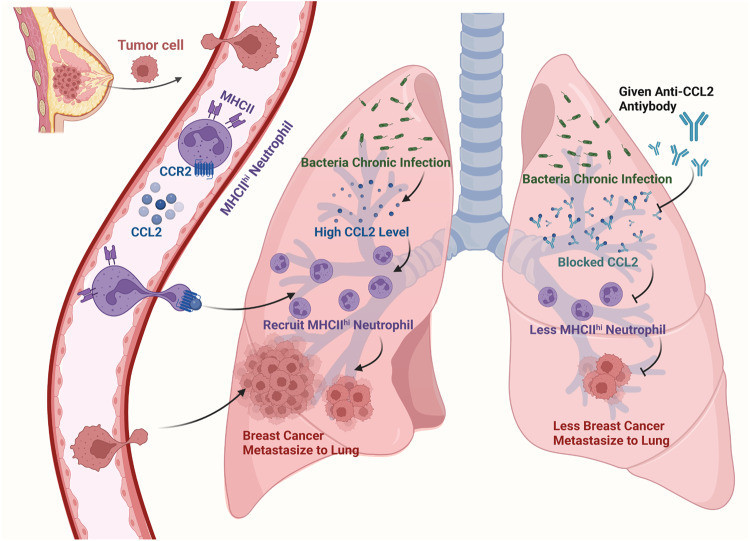
Schematic representation of the proposed mechanism of chronic pulmonary bacterial infection-induced lung metastasis. Schematic was created with BioRender (www.biorender.com)

References

    1. Quail DF, et al. Obesity alters the lung myeloid cell landscape to enhance breast cancer metastasis through IL5 and GM-CSF. Nat. Cell. Biol. 2017;19:974–987. doi: 10.1038/ncb3578. - DOI - PMC - PubMed
    1. Tyagi A, et al. Nicotine promotes breast cancer metastasis by stimulating N2 neutrophils and generating pre-metastatic niche in lung. Nat. Commun. 2021;12:474. doi: 10.1038/s41467-020-20733-9. - DOI - PMC - PubMed
    1. Du P, et al. Chronic stress promotes EMT-mediated metastasis through activation of STAT3 signaling pathway by miR-337-3p in breast cancer. Cell Death Dis. 2020;11:761. doi: 10.1038/s41419-020-02981-1. - DOI - PMC - PubMed
    1. van Elsland, D. & Neefjes, J. Bacterial infections and cancer. EMBO R.19, e46632 (2018). - PMC - PubMed
    1. Scanu T, et al. Salmonella manipulation of host signaling pathways provokes cellular transformation associated with gallbladder carcinoma. Cell Host Microbe. 2015;17:763–774. doi: 10.1016/j.chom.2015.05.002. - DOI - PubMed

Publication types