


Childhood cerebral adrenoleukodystrophy (CCALD) in France: epidemiology, natural history, and burden of disease - A population-based study
- PMID: 37563635
- PMCID: PMC10416383
- DOI: 10.1186/s13023-023-02843-x
Childhood cerebral adrenoleukodystrophy (CCALD) in France: epidemiology, natural history, and burden of disease - A population-based study
Abstract
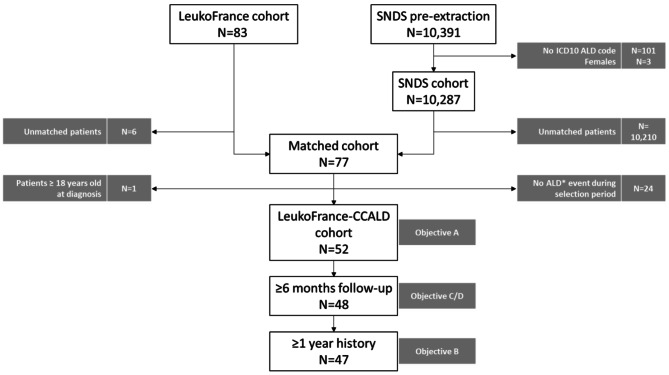
Background: X-linked adrenoleukodystrophy (ALD) is a rare metabolic and neurodegenerative disorder belonging to the group of leukodystrophies, with an estimated incidence around 1:25 000 newborns worldwide, mostly among men. Childhood Cerebral ALD (CCALD) is the most severe form with a poor prognosis if not properly treated during the first years of life. Currently, only allogeneic hematopoietic stem cell transplantation (allo-HSCT) is widely available for CCALD treatment. To date, there is a lack of data regarding CCALD epidemiology, natural history, and current management in France. This knowledge is crucial for the development of new therapies such as gene therapies. In this context, the French National Health Data System (SNDS) is a particularly indicated database to collect information meeting these needs. A non-interventional, national, real-life, retrospective study was performed using secondary data from the national ALD registry (LEUKOFRANCE) and SNDS. CCALD patients detected between 2009 and 2018 and successfully matched between LEUKOFRANCE and SNDS were included in this study. Index date was defined as the first CCALD event detected during study period. Subgroups of patients with sufficient follow-up (6 months) and history (1 year) available around index date were analyzed to assess CCALD burden and natural history.
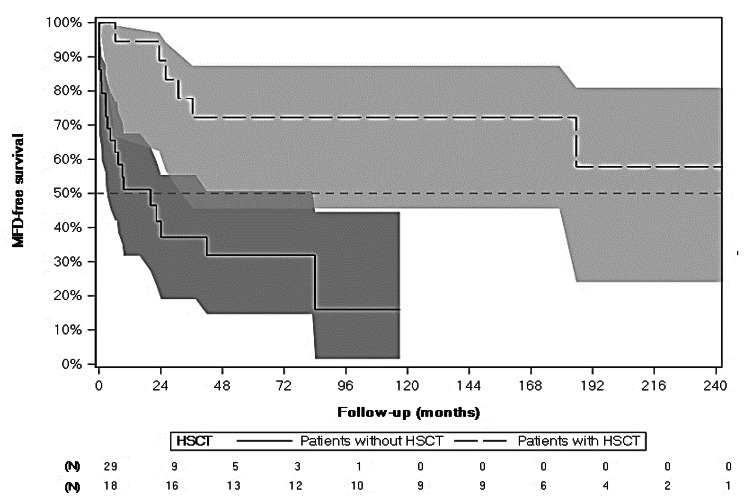
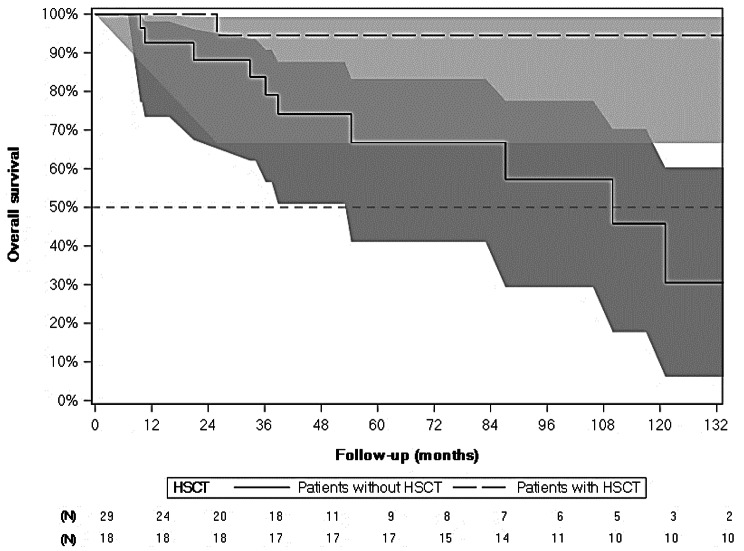
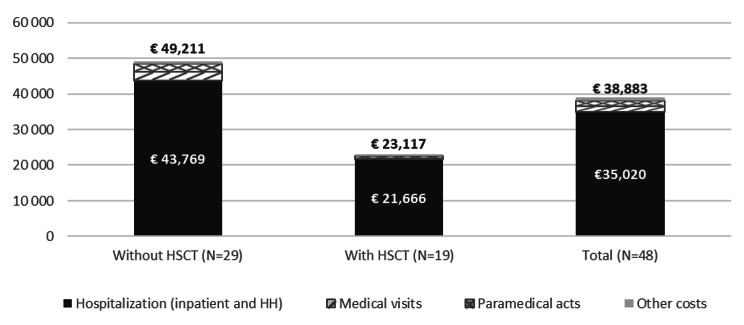
Results: 52 patients were included into the matched cohort. Median annual incidence of CCALD was estimated at 4 patients. Median age at CCALD diagnosis was 7.0 years. Among patients without allo-HSCT, five-year overall survival was 66.6%, with 93.3% of them presenting at least one CCALD symptom and 62.1% presenting a least one major functional disability (MFD). Among patients with allo-HSCT, five-year overall survival was 94.4%, with only 11.1% of patients presenting CCALD symptoms, and 16.7% of presenting a MFD. Mean annualized costs were almost twice as important among patients without allo-HSCT, with 49,211€, 23,117€, respectively. Costs were almost exclusively represented by hospitalizations.
Conclusions: To the best of our knowledge, this is the most up to date study analyzing CCALD epidemiology, clinical and economic burden in France. The necessity of a precocious management with HSCT highlight the potential benefits of including an expanded screening program among newborns, coupled with family screenings when a mutation is detected.
Keywords: Adrenoleukodystrophy; CCALD; Care management; Claims; Epidemiology; HSCT; Health cost; Neurodegenerative diseases; Registry; SNDS.
© 2023. Institut National de la Santé et de la Recherche Médicale (INSERM).
Conflict of interest statement
CS has no conflict of interest to be disclosed. SH has no conflict of interest to be disclosed. AC has been employed by bluebird bio during this study and until October 2021. FBi has been employed by bluebird bio during this study and until January 2022. LC and FBu are employees of stève consultants, which has a research consultancy contract with Bluebird Bio. SB is the executive director of stève consultants, which has a research consultancy contract with Bluebird Bio. OBT has no conflict of interest to be disclosed.
Figures
References
Publication types
MeSH terms
LinkOut - more resources
Full Text Sources
