


Hysteroscopy in the new media: quality and reliability analysis of hysteroscopy procedures on YouTube™
- PMID: 37568070
- PMCID: PMC10520162
- DOI: 10.1007/s00404-023-07172-9
Hysteroscopy in the new media: quality and reliability analysis of hysteroscopy procedures on YouTube™
Abstract
Background: Hysteroscopy plays a crucial role in diagnosing and managing various intrauterine pathologies. However, its execution can be influenced by patients' perception and understanding, which are often shaped by digital resources such as YouTubeTM. Given its popularity and accessibility, YouTubeTM has the potential to greatly influence patients' knowledge and expectations about this procedure, highlighting the need for accurate and reliable information.
Purpose: This study aims to assess the reliability and quality of hysteroscopy information available to patients on YouTubeTM. Understanding the nature of information patients' access can help address their fears and potential misunderstandings about the procedure, consequently reducing the likelihood of suspension or postponement due to anxiety.
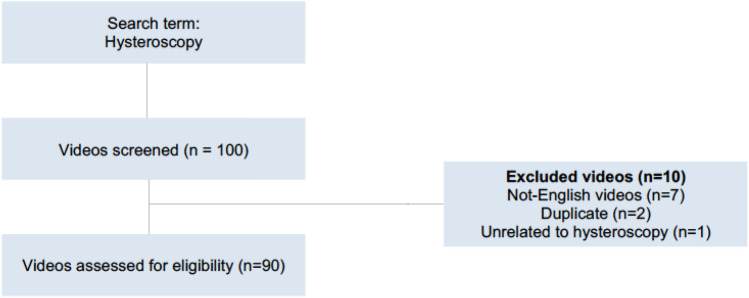
Methods: A comprehensive analysis of YouTubeTM was conducted, simulating the search process of a patient seeking information about hysteroscopy. The study evaluated the reliability and quality of 90 out of the first 100 hysteroscopy-related videos on YouTubeTM, scored by four gynecologists-two experienced hysteroscopists and two trainees. The videos were assessed for reliability and quality using the mDISCERN and Global Quality Scale (GQS) scores.
Results: The average mDISCERN and GQS scores for the evaluated videos were below the optimal three points, highlighting the lack of fluency, comprehensiveness, and reliability of the available information. Notably, while videos produced by experts, including doctors and professional channels, had higher scores, they still fell short of the minimum score of 3. These videos also were not considered more suitable for either patients or trainees. Videos that were assessed as reliable (mDISCERN ≥ 3) were observed to be longer and were more frequently produced by doctors. These videos were suggested more to trainees rather than patients. Similarly, videos deemed as fluent and comprehensive (GQS ≥ 3) were longer and were more often recommended to patients.
Conclusions: While YouTubeTM is a widely used source of medical information, the quality and reliability of hysteroscopy videos on the platform are poor. The strategic use of selected, high-quality hysteroscopy videos can enhance procedure success and alleviate patient fears. However, the unsupervised discovery of information by patients could potentially lead to procedure failure or an elevated level of stress due to misleading or incorrect information.
Keywords: GQS; Hysteroscopy; Web information; YouTube; mDISCERN.
© 2023. The Author(s).
Conflict of interest statement
The authors have no relevant financial or non-financial interests to disclose.
Figures
References
Publication types
MeSH terms
LinkOut - more resources
Full Text Sources
