


Changes in Antibiotic Resistance of Acinetobacter baumannii and Pseudomonas aeruginosa Clinical Isolates in a Multi-Profile Hospital in Years 2017-2022 in Wroclaw, Poland
- PMID: 37568422
- PMCID: PMC10420100
- DOI: 10.3390/jcm12155020
Changes in Antibiotic Resistance of Acinetobacter baumannii and Pseudomonas aeruginosa Clinical Isolates in a Multi-Profile Hospital in Years 2017-2022 in Wroclaw, Poland
Abstract
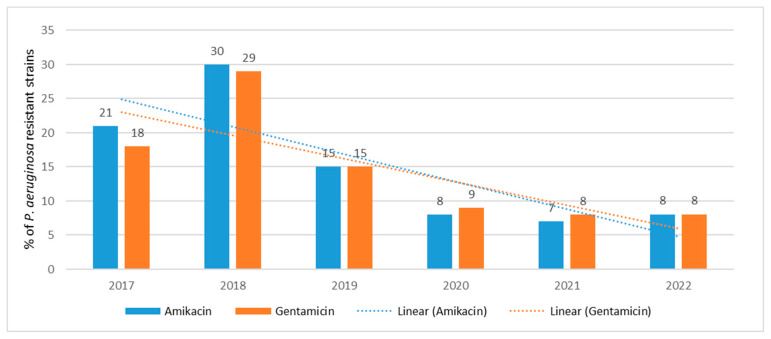
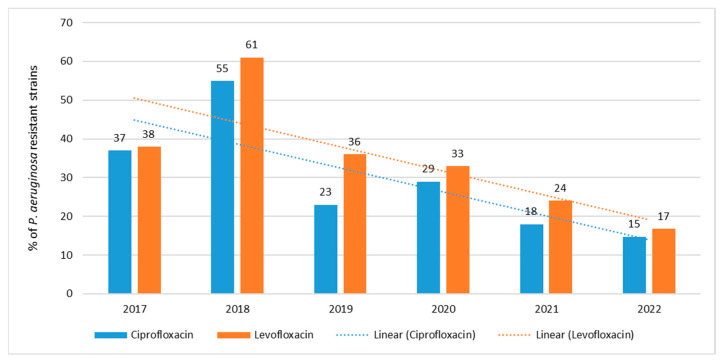
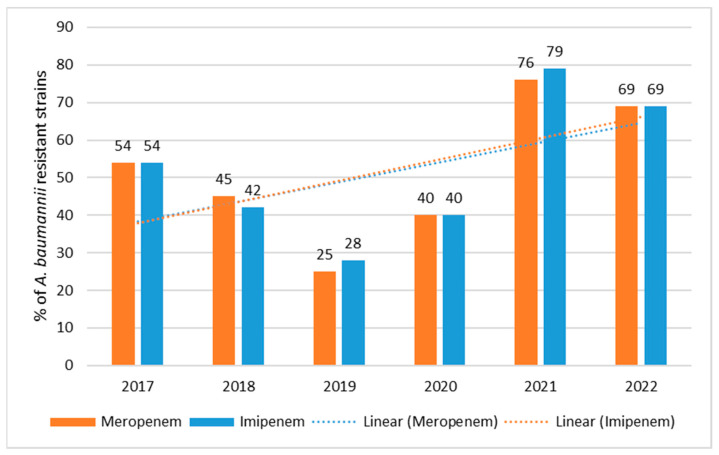
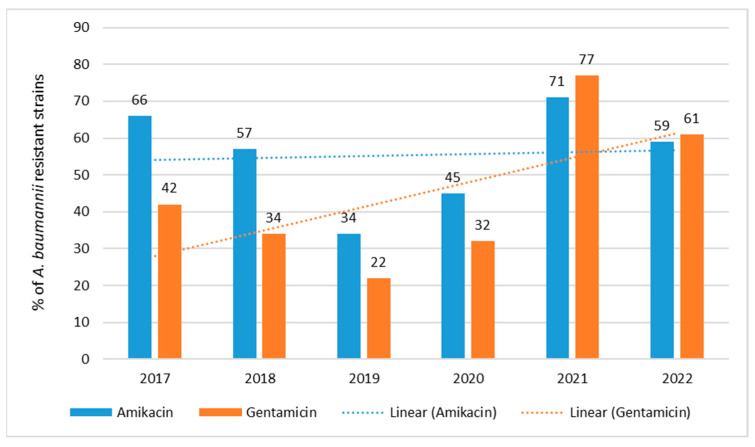
In recent years, we have witnessed increasing drug resistance among bacteria, which is associated with the use and availability of an increasing number of broad-spectrum antimicrobials, as well as with their irrational and excessive use. The present study aims to analyze changes in the drug resistance of Gram-negative Pseudomonas aeruginosa and Acinetobacter baumannii, isolated from infections in a multi-profile hospital over a five-year period (from 2017 to 2022). Among the practical results of the evaluation of these data will be the possibility to determine changes in susceptibility to the antibiotics used in the hospital. This, in turn, will help propose new therapeutic options, especially for empirical therapy, which is essential in severe infections. Analysis of the use of different antibiotic groups has made it possible to identify the causes of increasing resistance in the analyzed Gram-negative bacilli. The highest antibiotic use was observed in the hospital between 2020 and 2022, most probably due to the COVID-19 pandemic and the higher number of patients in severe condition requiring hospitalization. Unfortunately, during the period analyzed, the number of multi-resistant strains of A. baumannii was successively increasing; this seems to be related to the increased use, especially during the pandemic period, of broad-spectrum antibiotics, mainly penicillins with inhibitors, third-generation cephalosporins and carbapenems.
Keywords: carbapenems; multidrug resistance strains; non-fermenting bacilli.
Conflict of interest statement
The authors declare no conflict of interest.
Figures
References
-
- Rocha A.J., de Oliveira Barsottini M.R., Rocha R.R., Laurindo M.V., de Moraes F.L.L., da Rocha S.L. Pseudomonas Aeruginosa: Virulence Factors and Antibiotic Resistance Genes. Rev. Hum. Anim. Health. 2019;62:e19180503. doi: 10.1590/1678-4324-2019180503. - DOI
Grants and funding
LinkOut - more resources
Full Text Sources
