Review
. 2023 Jul 28;15(15):3837.
doi: 10.3390/cancers15153837.

Precision Medicine: Disease Subtyping and Tailored Treatment

Affiliations
Review

Precision Medicine: Disease Subtyping and Tailored Treatment

Richard C Wang et al. Cancers (Basel). .

Abstract

The genomics-based concept of precision medicine began to emerge following the completion of the Human Genome Project. In contrast to evidence-based medicine, precision medicine will allow doctors and scientists to tailor the treatment of different subpopulations of patients who differ in their susceptibility to specific diseases or responsiveness to specific therapies. The current precision medicine model was proposed to precisely classify patients into subgroups sharing a common biological basis of diseases for more effective tailored treatment to achieve improved outcomes. Precision medicine has become a term that symbolizes the new age of medicine. In this review, we examine the history, development, and future perspective of precision medicine. We also discuss the concepts, principles, tools, and applications of precision medicine and related fields. In our view, for precision medicine to work, two essential objectives need to be achieved. First, diseases need to be classified into various subtypes. Second, targeted therapies must be available for each specific disease subtype. Therefore, we focused this review on the progress in meeting these two objectives.

Keywords: big data analytics; biomarkers; electronic health record; functional precision medicine; multiomics; pharmaco-omics; precision medicine; subtyping; tailored treatment; targeted therapy.


Conflict of interest statement

The authors declare no conflict of interest.

Figures
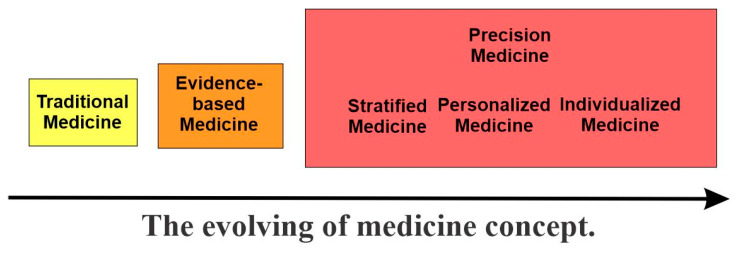
Figure 1
Figure 1
The evolution of the medicine concept.
Figure 2
Figure 2
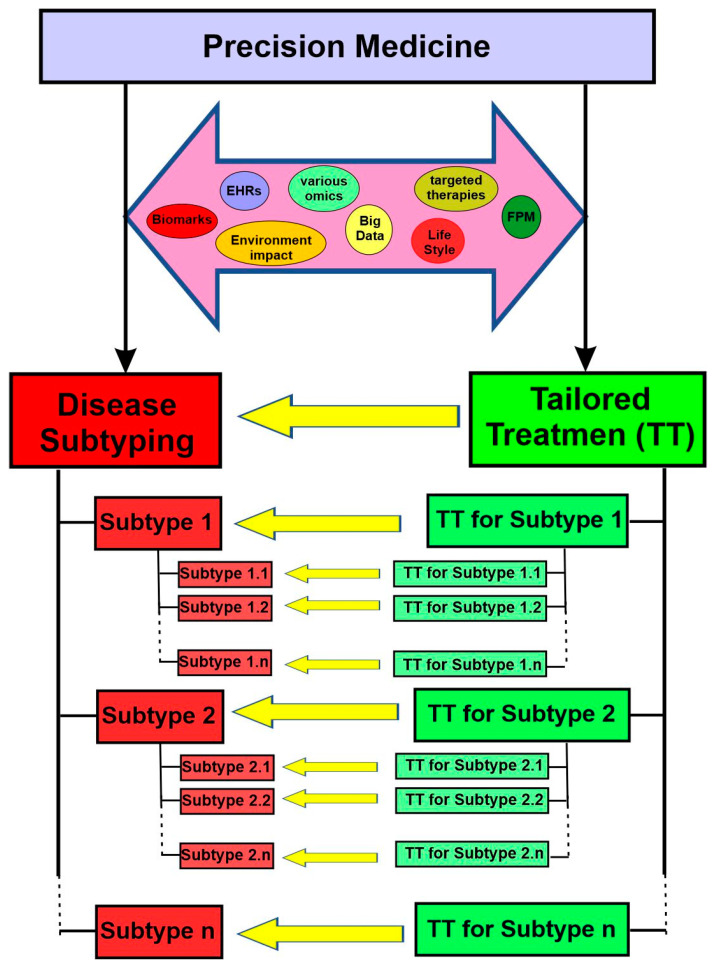
Central tenets and objectives of precision medicine. The current “precision medicine” model is proposed to precisely classify patients into subgroups sharing a common biological basis of diseases for more effective tailored treatment (TT) to achieve improved outcomes. With rapid progress in various omics, targeted therapies, functional precision medicine (FPM) models, comprehensive electron health records (EHRs), and big data analytics in the last two decades, we are able to divide many common diseases into subtypes and sub-subtypes and are able to develop tailored medicine for many of those sub-subtypes. With continued efforts, we will achieve more accurate and precise treatment for individual patients.
Figure 3
Figure 3
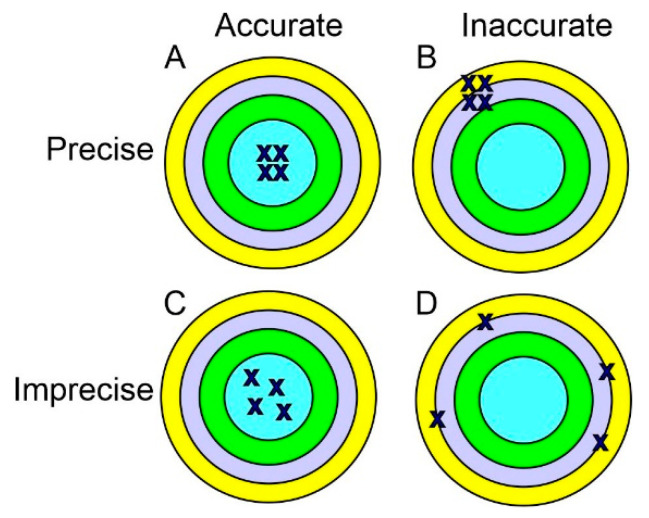
Precision medicine, as defined, explicitly includes the concepts of both precision and accuracy. (A) Precise and accurate, the goal of precision medicine. (B) Precise but inaccurate. (C) Accurate but imprecise. (D) Inaccurate and imprecise.
Figure 4
Figure 4
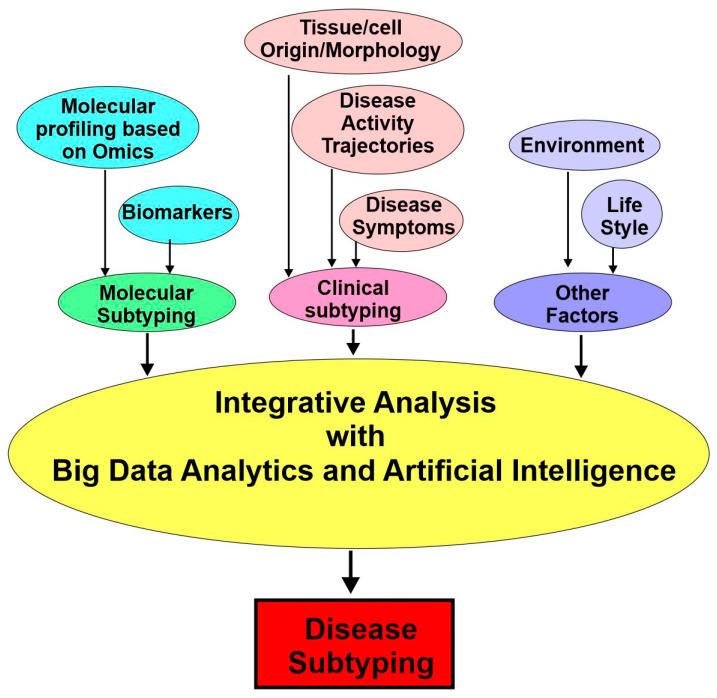
Disease subtyping. Diseases can be subtyped using various approaches, including molecular subtyping with various biomarkers and data from diverse omics; clinical subtyping based on EHRs; and environmental, social, and behavioral factors. In precision medicine, all these diverse data surrounding an individual’s health will be carefully integrated and analyzed by big data analytics and artificial intelligence to achieve the final subtyping.
Figure 5
Figure 5
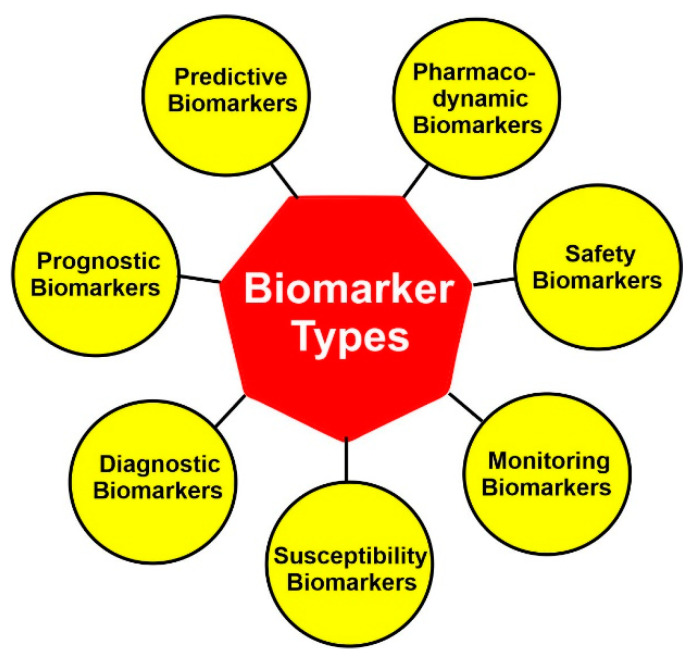
Various types of biomarkers.
Figure 6
Figure 6
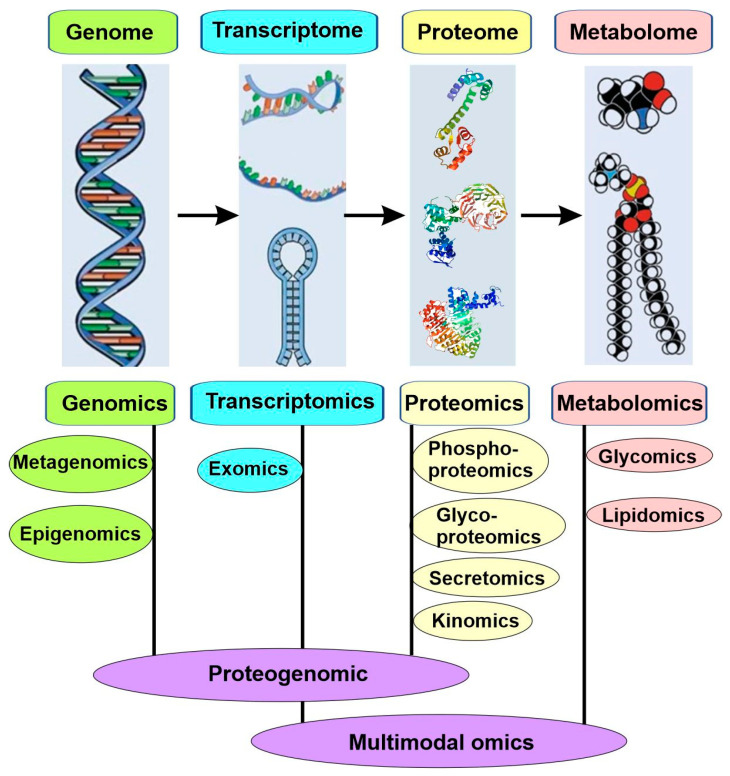
Various types of omics.
Figure 7
Figure 7
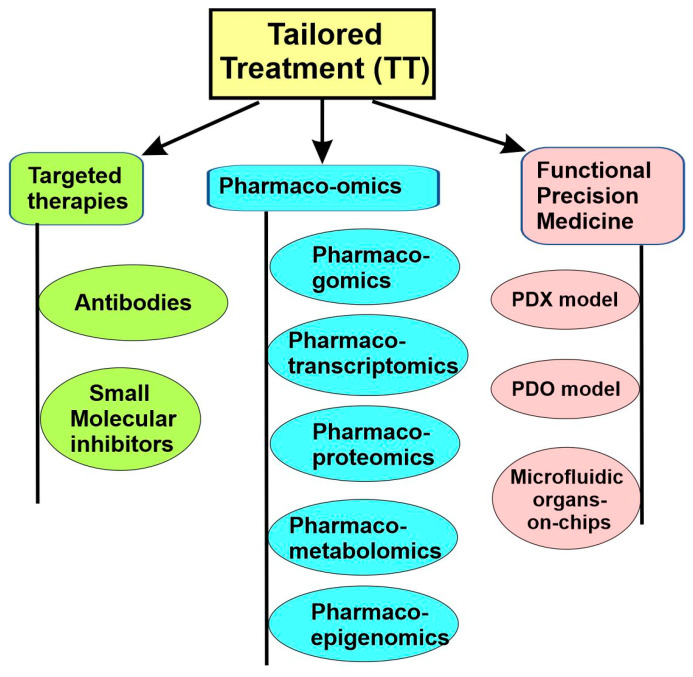
Tailored treatment (TT). TT is achieved through the following strategies and approaches. First, the development of a targeted therapy that specifically targets identified molecular subtypes. Second, pharmaco-omics to identify the right drugs and right dosages tailored to the individual based on the person’s particular genetic/molecular makeup. Third, functional precision medicine (FPE), which is based on the direct exposure of tissues derived from affected individuals to different drugs.
Figure 8
Figure 8
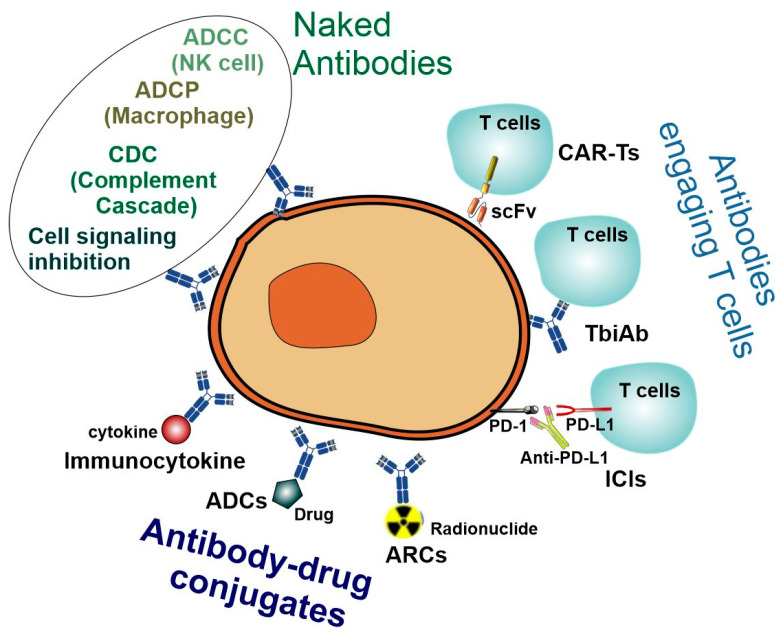
The antibody-based cancer therapies can be broken down into three categories based on their different mechanisms of action: (i) naked antibodies based on the natural properties of IgG, including ADCC, ADCP, CDC, and the inhibition of cell signaling; (ii) engineered antibodies engaging cytotoxic T cells, including immune checkpoint inhibitors (ICIs), T-cell-engaging bispecific antibody (T-biAb), and chimeric antigen receptor T cells (CAR-Ts) using single-chain variable fragment (scFv); and (iii) antibody conjugates that deliver cytotoxic payloads, including antibody–drug conjugates (ADCs), antibody–radionuclide conjugates (ARCs), and immunocytokines.
Figure 9
Figure 9
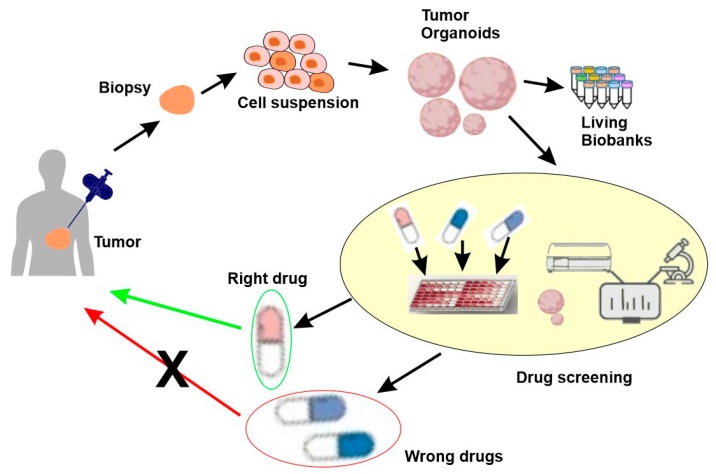
Patient-derived organoids (PDOs) for individualized tumor response testing. Tissue from a patient’s tumor is obtained through diagnostic biopsy and is then enzymatically and mechanically dissociated into a single-cell suspension. It is then embedded in a basement membrane extract drop and grown in specialized culture medium to form organoids. Following the confirmation of the tumor histology, the formed organoids will be deposited into living biobanks and be used for drug screens. Various read-outs can be obtained to define the PDO drug screen response (including organoid size, viability, and coculture cytokine measurements). Effective drugs identified through the screening are then used to treat the patient.

References

    1. Misale S., Bozic I., Tong J., Peraza-Penton A., Lallo A., Baldi F., Lin K.H., Truini M., Trusolino L., Bertotti A., et al. Vertical suppression of the EGFR pathway prevents onset of resistance in colorectal cancers. Nat. Commun. 2015;6:8305. doi: 10.1038/ncomms9305. - DOI - PMC - PubMed
    1. Litman T. Personalized medicine-concepts, technologies, and applications in inflammatory skin diseases. APMIS. 2019;127:386–424. doi: 10.1111/apm.12934. - DOI - PMC - PubMed
    1. Sackett D.L. Evidence-based medicine. Semin. Perinatol. 1997;21:3–5. doi: 10.1016/S0146-0005(97)80013-4. - DOI - PubMed
    1. Djulbegovic B., Guyatt G.H. Progress in evidence-based medicine: A quarter century on. Lancet. 2017;390:415–423. doi: 10.1016/S0140-6736(16)31592-6. - DOI - PubMed
    1. Masic I., Miokovic M., Muhamedagic B. Evidence based medicine—New approaches and challenges. Acta. Inform. Med. 2008;16:219–225. doi: 10.5455/aim.2008.16.219-225. - DOI - PMC - PubMed

LinkOut - more resources