


Effect of Malaria on Blood Levels of Vitamin E: A Systematic Review and Meta-Analysis
- PMID: 37571409
- PMCID: PMC10421180
- DOI: 10.3390/nu15153472
Effect of Malaria on Blood Levels of Vitamin E: A Systematic Review and Meta-Analysis
Abstract
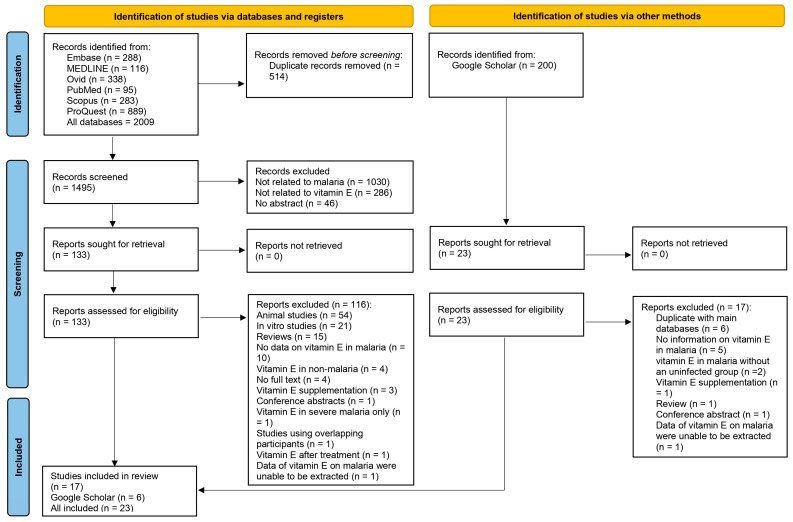
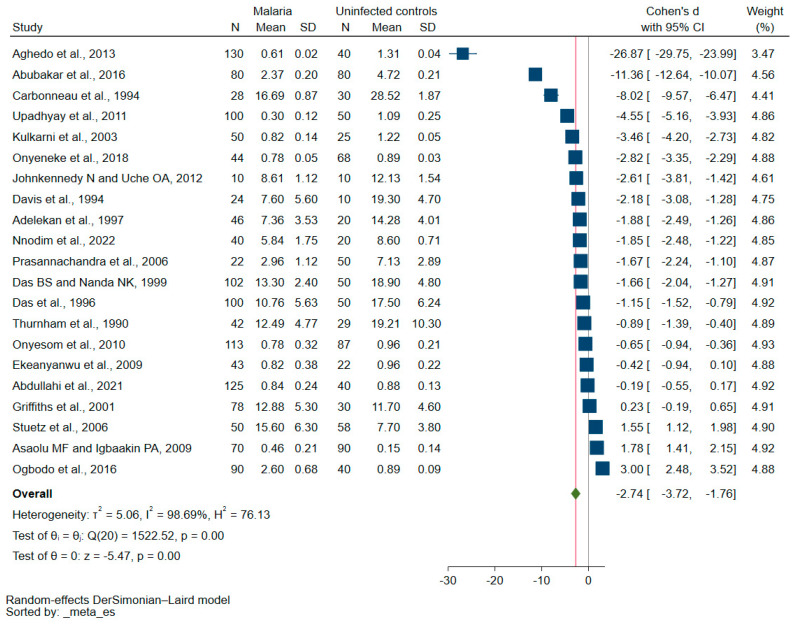
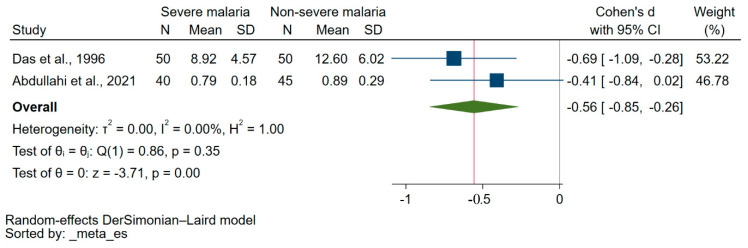
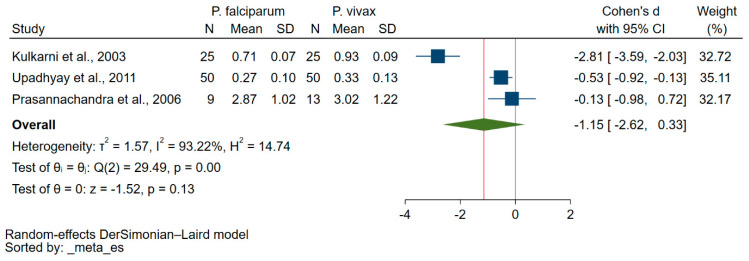
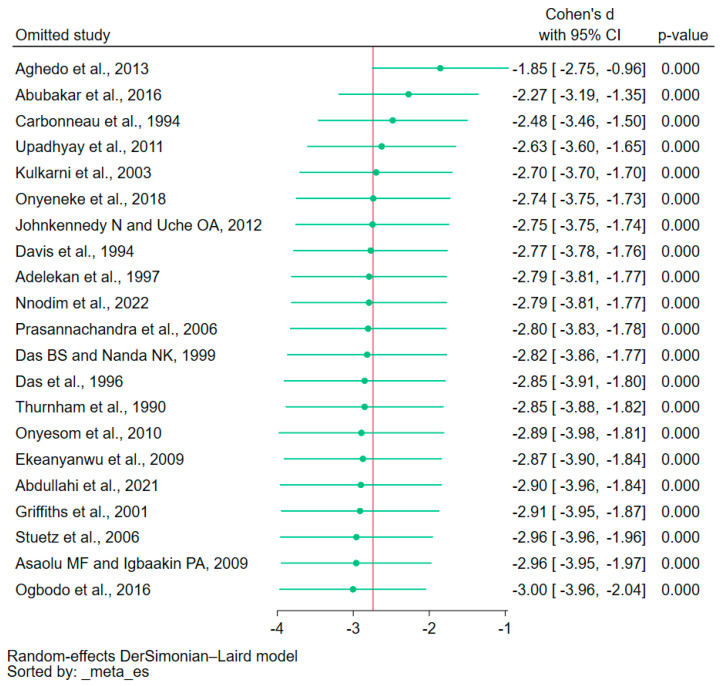
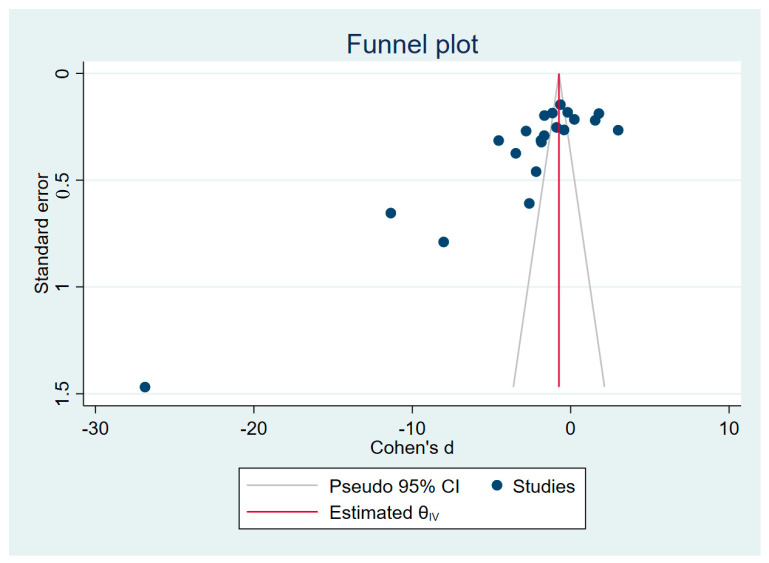
Vitamin E has an antioxidant property and is associated with protection against malaria. The current study used systematic review and meta-analysis approaches examining the variance in blood levels of vitamin E in malaria patients as compared with uninfected individuals. The protocol for the systematic review was registered with PROSPERO (CRD4202341481). Searches for pertinent studies were carried out on Embase, MEDLINE, Ovid, PubMed, Scopus, ProQuest, and Google Scholar. The combined effect estimate (Cohen's d) of the difference in vitamin E levels in malaria patients as compared with uninfected individuals was estimated using the random effects model. The searches yielded 2009 records, and 23 studies were included in the systematic review. The majority of the studies (80%) found that vitamin E levels were significantly lower in malaria patients than those who were not infected. Overall, the results revealed a significant reduction in blood levels of vitamin E in malaria patients when compared with uninfected individuals (p < 0.01, Cohen's d: -2.74, 95% CI: -3.72-(-1.76), I2: 98.69%, 21 studies). There was a significant reduction in blood levels of vitamin E in patients suffering from severe malaria, in comparison with those experiencing less severe forms of the disease (p < 0.01, Cohen's d: -0.56, 95% CI: -0.85-(-0.26), I2: 0%, 2 studies), but no variation in blood levels of vitamin E among patients suffering from either P. falciparum or P. vivax malaria (p = 0.13, Cohen's d: -1.15, 95% CI: -2.62-0.33, I2: 93.22%, 3 studies). In summary, the present study strongly suggests that vitamin E levels are significantly reduced in malaria patients, with a more pronounced decrease observed in cases of severe malaria. However, the type of malaria parasite, specifically P. falciparum or P. vivax, did not appear to influence the levels of vitamin E. This study highlights the potential role of vitamin E in the pathogenesis of malaria and suggests that improved vitamin E status might be beneficial for improving disease outcomes.
Keywords: Plasmodium; antioxidant; malaria; meta-analysis; systematic review; tocopherol; vitamin E.
Conflict of interest statement
The authors declare no conflict of interest.
Figures
References
-
- Crutcher J.M., Hoffman S.L. Medical Microbiology. University of Texas Medical Branch at Galveston; Galveston, TX, USA: 1996.
-
- WHO World Malaria Report 2022. [(accessed on 23 June 2023)];2022 Available online: https://www.who.int/teams/global-malaria-programme/reports/world-malaria....
Publication types
MeSH terms
Substances
LinkOut - more resources
Full Text Sources
Medical
