Distinction between rhinitis alone and rhinitis with asthma using interactomics
- PMID: 37573373
- PMCID: PMC10423213
- DOI: 10.1038/s41598-023-39987-6
Distinction between rhinitis alone and rhinitis with asthma using interactomics
Abstract
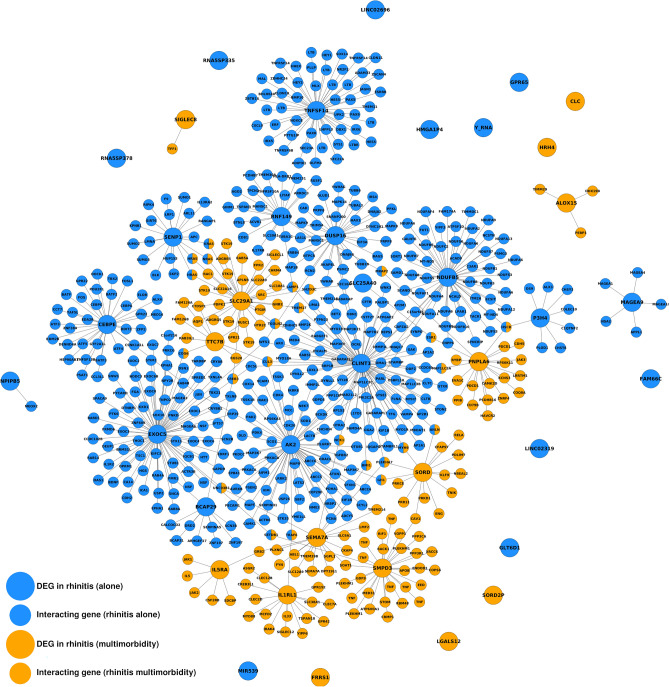
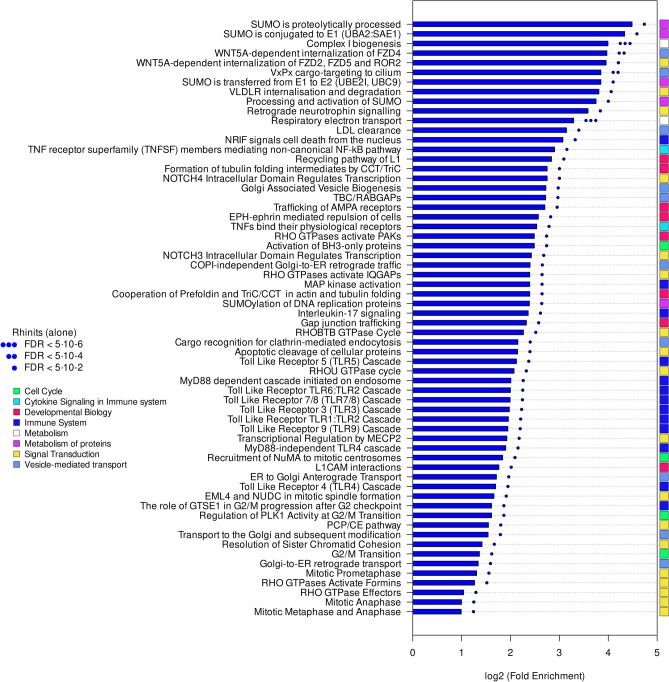
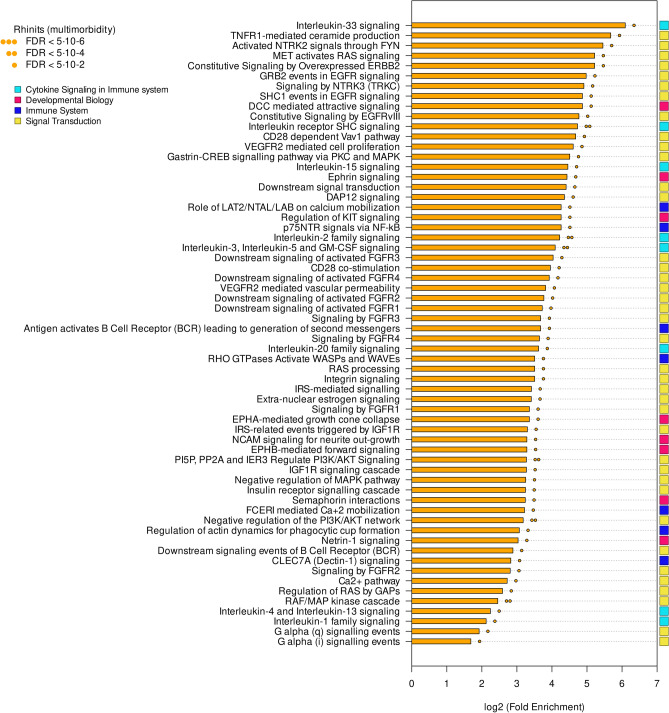
The concept of "one-airway-one-disease", coined over 20 years ago, may be an over-simplification of the links between allergic diseases. Genomic studies suggest that rhinitis alone and rhinitis with asthma are operated by distinct pathways. In this MeDALL (Mechanisms of the Development of Allergy) study, we leveraged the information of the human interactome to distinguish the molecular mechanisms associated with two phenotypes of allergic rhinitis: rhinitis alone and rhinitis in multimorbidity with asthma. We observed significant differences in the topology of the interactomes and in the pathways associated to each phenotype. In rhinitis alone, identified pathways included cell cycle, cytokine signalling, developmental biology, immune system, metabolism of proteins and signal transduction. In rhinitis and asthma multimorbidity, most pathways were related to signal transduction. The remaining few were related to cytokine signalling, immune system or developmental biology. Toll-like receptors and IL-17-mediated signalling were identified in rhinitis alone, while IL-33 was identified in rhinitis in multimorbidity. On the other hand, few pathways were associated with both phenotypes, most being associated with signal transduction pathways including estrogen-stimulated signalling. The only immune system pathway was FceRI-mediated MAPK activation. In conclusion, our findings suggest that rhinitis alone and rhinitis and asthma multimorbidity should be considered as two distinct diseases.
© 2023. Springer Nature Limited.
Conflict of interest statement
DA reports personal fees from MASK-AIR SAS, outside the submitted work. JB reports personal fees from Cipla, Menarini, Mylan, Novartis, Purina, Sanofi-Aventis, Teva, Uriach, other from KYomed-Innov, other from Mask-air-SAS, outside the submitted work. JCC reports other from GSK, other from Merck, other from Pharmavite, outside the submitted work. GHK reports grants from Netherlands Lung Foundation, TEVA, VERTEX, GSK, Ubbo Emmius Foundation, European Union, Zon MW (Vici Grant), outside the submitted work; and GHK participated in advisory boards to GSK, AZ and Pure-IMS (Money to institution). The other authors have no COIs to disclose, outside the submitted work.
Figures