


Fetal metabolic adaptations to cardiovascular stress in twin-twin transfusion syndrome
- PMID: 37575192
- PMCID: PMC10415929
- DOI: 10.1016/j.isci.2023.107424
Fetal metabolic adaptations to cardiovascular stress in twin-twin transfusion syndrome
Abstract
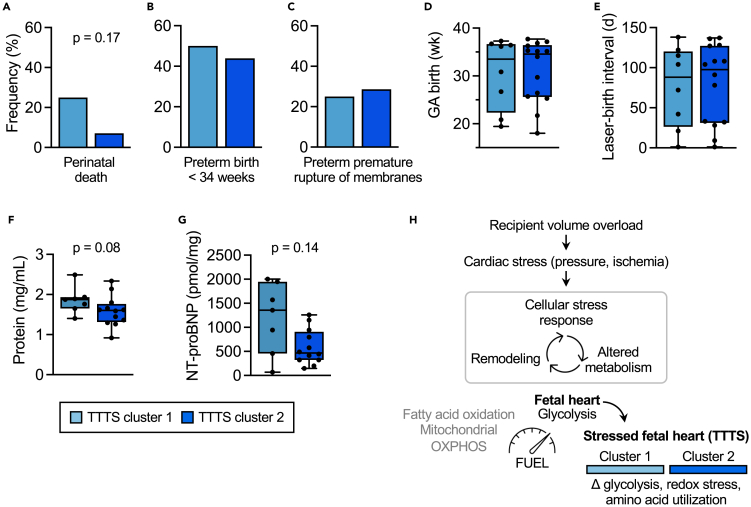
Monochorionic-diamniotic twin pregnancies are susceptible to unique complications arising from a single placenta shared by two fetuses. Twin-twin transfusion syndrome (TTTS) is a constellation of disturbances caused by unequal blood flow within the shared placenta giving rise to a major hemodynamic imbalance between the twins. Here, we applied TTTS as a model to uncover fetal metabolic adaptations to cardiovascular stress. We compared untargeted metabolomic analyses of amniotic fluid samples from severe TTTS cases vs. singleton controls. Amniotic fluid metabolites demonstrated alterations in fatty acid, glucose, and steroid hormone metabolism in TTTS. Among TTTS cases, unsupervised principal component analysis revealed two distinct clusters of disease defined by levels of glucose metabolites, amino acids, urea, and redox status. Our results suggest that the human fetal heart can adapt to hemodynamic stress by modulating its glucose metabolism and identify potential differences in the ability of individual fetuses to respond to cardiovascular stress.
Keywords: Biology of human development; Cardiovascular medicine; Developmental anatomy; Health sciences.
© 2023 The Authors.
Conflict of interest statement
Dr. Papanna reported receiving personal fees from UpToDate.
Figures


References
-
- Wohlmuth C., Agarwal A., Stevens B., Johnson A., Moise K.J., Papanna R., Donepudi R., Bell C.S., Averiss I.E., Gardiner H.M. Fetal ventricular strain in uncomplicated and selective growth-restricted monochorionic diamniotic twin pregnancies and cardiovascular response in pre-twin-twin transfusion syndrome. Ultrasound Obstet. Gynecol. 2020;56:694–704. doi: 10.1002/uog.21911. - DOI - PMC - PubMed
Grants and funding
LinkOut - more resources
Full Text Sources
