


The Minnesota first-responder AED project: Aiming to increase survival in out-of-hospital cardiac arrest
- PMID: 37576444
- PMCID: PMC10416018
- DOI: 10.1016/j.resplu.2023.100437
The Minnesota first-responder AED project: Aiming to increase survival in out-of-hospital cardiac arrest
Abstract
There are 350,000 out-of-hospital cardiac arrest (OHCA) cases annually in the United States of America. Using automated external defibrillators (AEDs) has increased survival in cardiac arrests (CA) with an initial shockable rhythm. Thus, guidelines recommend complete geographical coverage with AEDs. To fill in the gaps in Minnesota, the Center for Resuscitation Medicine at the University of Minnesota raised an $18.8 million grant from the Helmsley Charitable Trust to supply law enforcement first responders with AEDs and, thus, increase survival rates after OHCA by reducing the time to first shock. This report elaborates on the decision-making, fundraising, and logistic strategy required to reach statewide AED coverage.
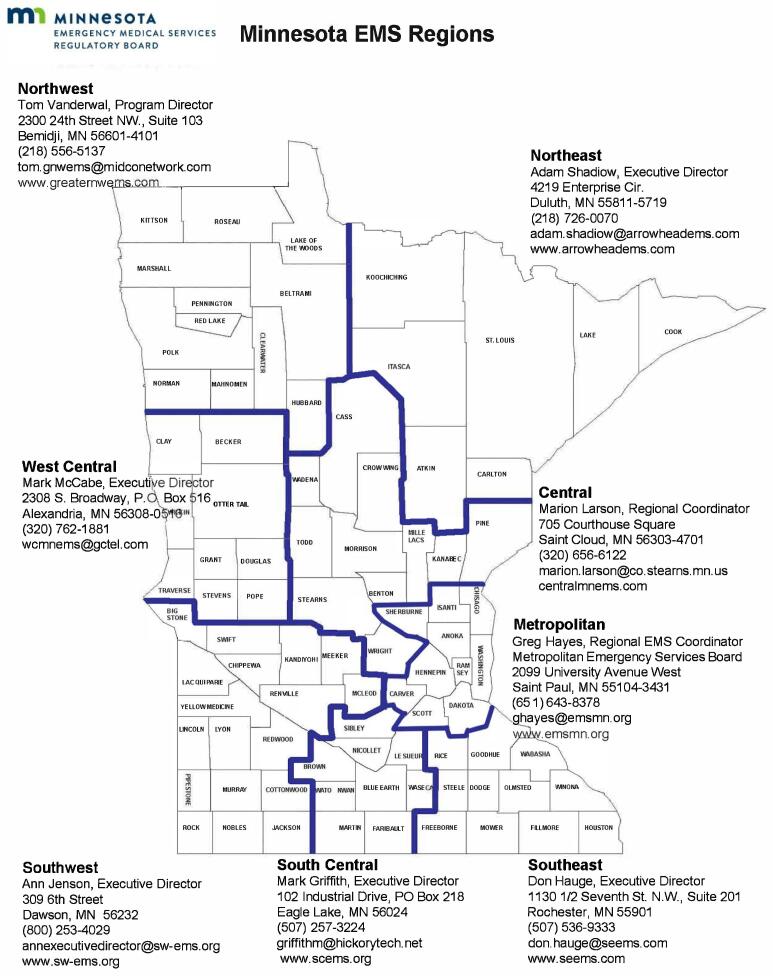
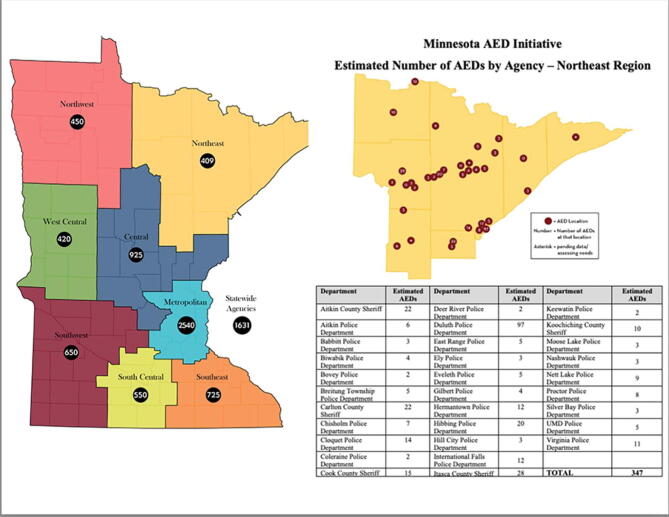
Methods: The baseline need for AEDs was analyzed using a questionnaire sent out to state law enforcement agencies, state patrols, city and county agencies, and tribal agencies in 2021. Furthermore, OHCA cases of 2021 were reviewed. The combination of this information led to an action plan to equip and train all agencies throughout the state's eight regions with AEDs.
Results: The electronic survey was initially sent out to 358 agencies. The initial response rate was 77% (n = 276). This resulted in a total need of 8300 AEDs to be deployed over three years (2022-2025). As of 2023, over 4769 AEDs have been distributed, covering 237 sites.
Conclusion: By equipping first responders with AED systems, the Center for Resuscitation Medicine aims to shorten the gap in statewide AED coverage, thus increasing the chances of survival after OHCA.
Keywords: AED; EMS; First responder; OHCA.
© 2023 The Author(s).
Conflict of interest statement
Prof. Yannopoulus reports a relationship with Leona M and Harry B Helmsley Charitable Trust that includes: funding grants.
Figures
References
-
- Benjamin E.J., Virani S.S., Callaway C.W., et al. Heart disease and stroke statistics—2018 update: a report from the American Heart Association. Circulation. 2018;137:e67–e492. - PubMed
-
- Lurie K.G., Nemergut E.C., Yannopoulos D., Sweeney M. The physiology of cardiopulmonary resuscitation. Anesth Analg. 2016;122:767–783. - PubMed
-
- Cobb L.A., Fahrenbruch C.E., Olsufka M., Copass M.K. Changing incidence of out-of-hospital ventricular fibrillation, 1980–2000. Jama. 2002;288:3008–3013. - PubMed
-
- Becker L., Gold L.S., Eisenberg M., White L., Hearne T., Rea T. Ventricular fibrillation in King County, Washington: a 30-year perspective. Resuscitation. 2008;79:22–27. - PubMed
LinkOut - more resources
Full Text Sources
Research Materials
Miscellaneous
