Bighorn sheep associations: understanding tradeoffs of sociality and implications for disease transmission
- PMID: 37576510
- PMCID: PMC10416771
- DOI: 10.7717/peerj.15625
Bighorn sheep associations: understanding tradeoffs of sociality and implications for disease transmission
Abstract
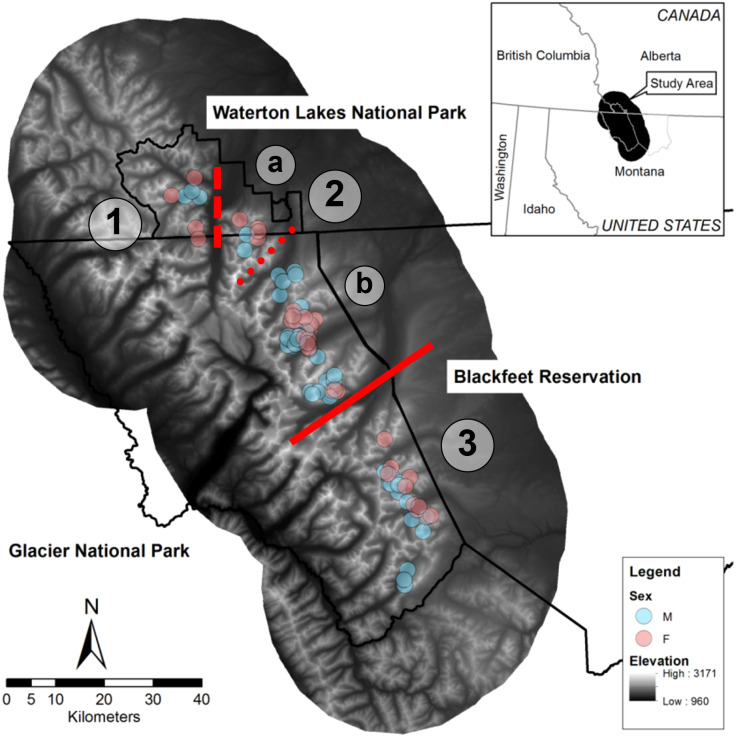
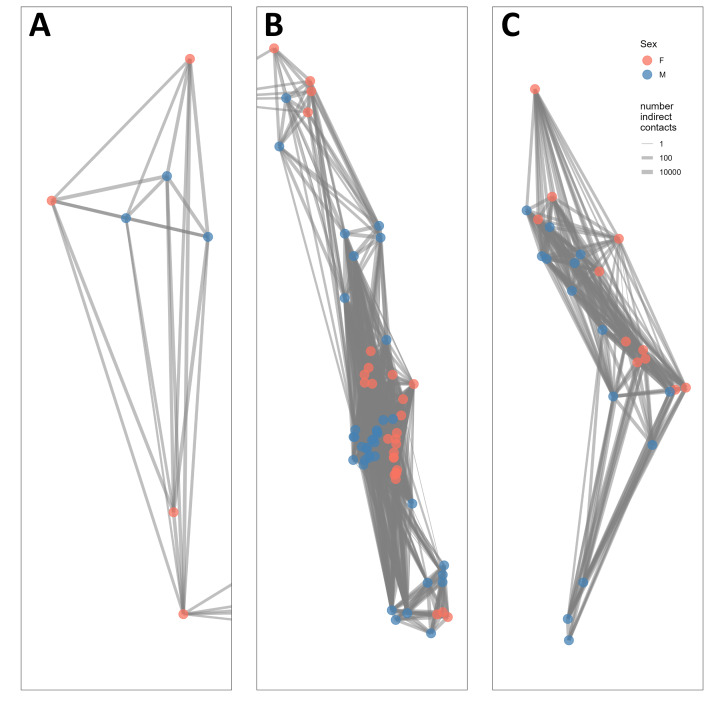
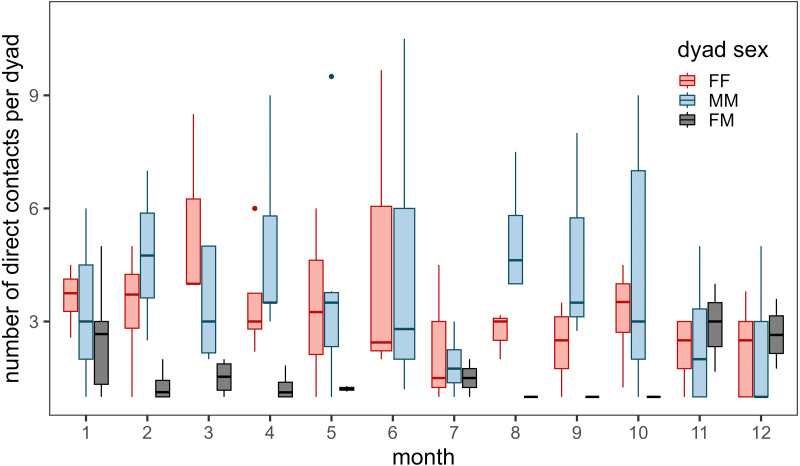
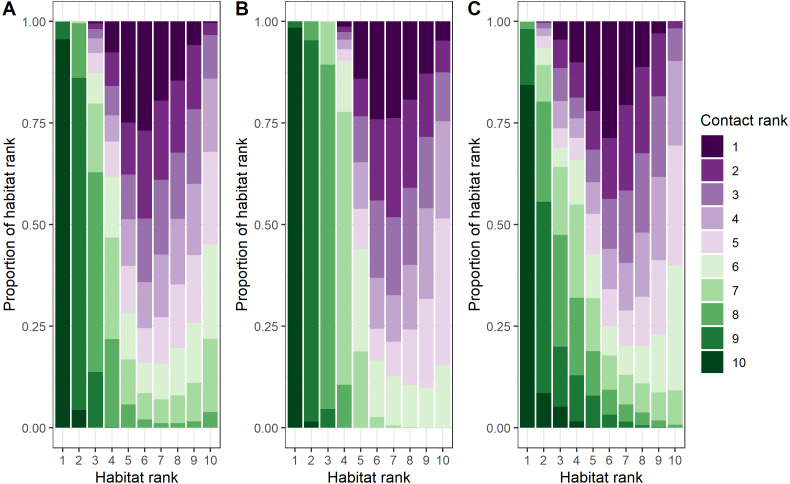
Sociality directly influences mating success, survival rates, and disease, but ultimately likely evolved for its fitness benefits in a challenging environment. The tradeoffs between the costs and benefits of sociality can operate at multiple scales, resulting in different interpretations of animal behavior. We investigated the influence of intrinsic (e.g., relatedness, age) and extrinsic factors (e.g., land cover type, season) on direct contact (simultaneous GPS locations ≤ 25 m) rates of bighorn sheep (Ovis canadensis) at multiple scales near the Waterton-Glacier International Peace Park. During 2002-2012, male and female bighorn were equipped with GPS collars. Indirect contact (GPS locations ≤ 25 m regardless of time) networks identified two major breaks whereas direct contact networks identified an additional barrier in the population, all of which corresponded with prior disease exposure metrics. More direct contacts occurred between same-sex dyads than female-male dyads and between bighorn groups with overlapping summer home ranges. Direct contacts occurred most often during the winter-spring season when bighorn traveled at low speeds and when an adequate number of bighorn were collared in the area. Direct contact probabilities for all dyad types were inversely related to habitat quality, and differences in contact probability were driven by variables related to survival such as terrain ruggedness, distance to escape terrain, and canopy cover. We provide evidence that probabilities of association are higher when there is greater predation risk and that contact analysis provides valuable information for understanding fitness tradeoffs of sociality and disease transmission potential.
Keywords: Contact; Dilution effect; Glacier National Park; Habitat selection; Landscape of fear; Landscape of peril; Many eyes hypothesis; Ovis canadensis; Respiratory disease.
©2023 Tosa et al.
Conflict of interest statement
The authors declare there are no competing interests.
Figures
References
-
- Altizer S, Nunn CL, Thrall PH, Gittleman JL, Antonovics J, Cunningham AA, Dobson AP, Ezenwa V, Jones KE, Pedersen AB, Poss M, Pulliam JRC. Social organization and parasite risk in mammals: integrating theory and empirical studies. Annual Review of Ecology, Evolution, and Systematics. 2003;34(1):517–547. doi: 10.1146/annurev.ecolsys.34.030102.151725. - DOI
-
- Anderson RM, May RM, Joysey K, Mollison D, Conway GR, Cartwell R, Thompson HV, Dixon B. The invasion, persistence and spread of infectious diseases within animal and plant communities (and discussion) Philosophical Transactions of the Royal Society B: Biological Sciences. 1986;314(1167):533–570. doi: 10.1098/rstb.1986.0072. - DOI - PubMed
-
- Arnold W. The evolution of marmot sociality: II. Costs and benefits of joint hibernation. Behavioral Ecology and Sociobiology. 1990;27(4):239–246.
-
- Ayotte JB, Parker KL, Arocena JM, Gillingham MP. Chemical composition of lick soils: functions of soil ingestion by four ungulate species. Journal of Mammalogy. 2006;87(5):878–888. doi: 10.1644/06-MAMM-A-055R1.1. - DOI
Publication types
MeSH terms
LinkOut - more resources
Full Text Sources