


Diminished emotion recognition with reduced face gaze in complex situation in individuals with broad autism phenotype
- PMID: 37577162
- PMCID: PMC10413062
- DOI: 10.1016/j.ijchp.2023.100399
Diminished emotion recognition with reduced face gaze in complex situation in individuals with broad autism phenotype
Abstract
Background/objective: Individuals with broad autism phenotype (BAP) showed a diminished ability to recognize emotion. This study aims to examine whether their decline in emotion recognition ability could be more clearly identified as task complexity increased and whether their decline could be influenced by their eye-gaze patterns.
Method: 41 individuals with BAP and 40 healthy controls performed two types of emotion recognition tasks. After confirming conditions wherein the BAP group did not perform well compared to the control group, we compared gaze proportion on faces and context between groups when performing the conditions.
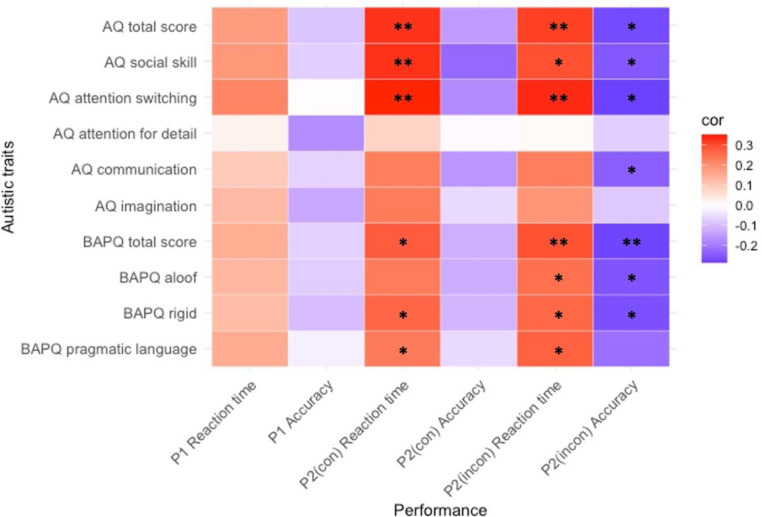
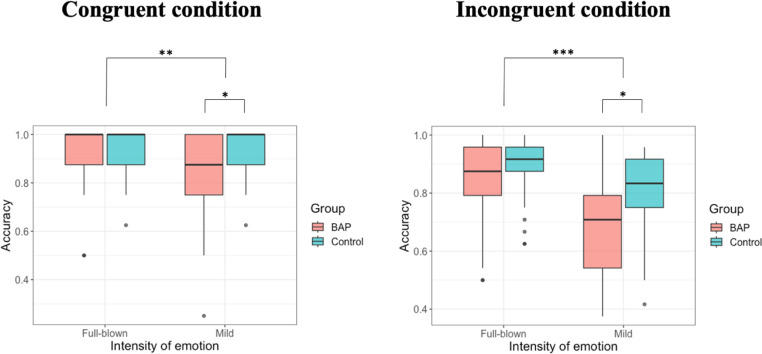
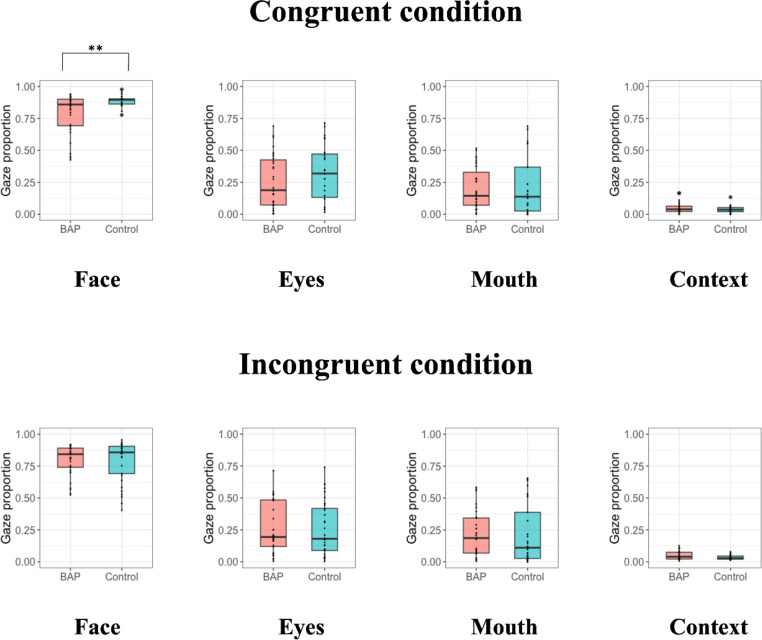
Results: The more difficult the task, the clearer the significant relationships between the level of autistic traits and emotion recognition ability. The BAP group showed lower accuracy compared to the control group when a face with mild emotional intensity was presented with context. In terms of gaze proportion, the BAP group looked less at faces when recognizing emotions compared to the control group.
Conclusion: These findings indicate that diminished emotion recognition ability in individuals with BAP may be influenced by face gaze.
Keywords: Autism spectrum disorder; Broad autism phenotype; Emotion recognition; Eye-tracking; Weak central coherence theory.
© 2023 The Authors.
Conflict of interest statement
The authors declare that they have no known competing financial interests or personal relationships that could have appeared to influence the work reported in this paper.
Figures
References
-
- Baron-Cohen S., Wheelwright S., Skinner R., Martin J., Clubley E. The autism-spectrum quotient (AQ): Evidence from asperger syndrome/high-functioning autism, malesand females, scientists and mathematicians. Journal of Autism and Developmental Disorders. 2001;31(1):5–17. doi: 10.1023/A:1005653411471. - DOI - PubMed
LinkOut - more resources
Full Text Sources
