[Preprint]. 2023 Aug 2:rs.3.rs-3214507.
doi: 10.21203/rs.3.rs-3214507/v1.

Antigenic diversity and dengue disease risk

Affiliations

Antigenic diversity and dengue disease risk

Lin Wang et al. Res Sq. .

Abstract

Many pathogens continuously change their protein structure in response to immune-driven selection, resulting in weakened protection. In addition, for some pathogens such as dengue virus, poorly targeted immunity is associated with increased risk of severe disease, through a mechanism known as antibody-dependent enhancement. However, it remains a mystery whether the antigenic distance between an individual's first infection and subsequent exposures dictate disease risk, explaining the observed large-scale differences in dengue hospitalisations across years. Here we develop an inferential framework that combines detailed antigenic and genetic characterisation of viruses, and hospitalised cases from 21 years of surveillance in Bangkok, Thailand to identify the role of the antigenic profile of circulating viruses in determining disease risk. We find that the risk of hospitalisation depends on both the specific order of infecting serotypes and the antigenic distance between an individual's primary and secondary infections, with risk maximised at intermediate antigenic distances. These findings suggest immune imprinting helps determine dengue disease risk, and provides a pathway to monitor the changing risk profile of populations and to quantifying risk profiles of candidate vaccines.


Conflict of interest statement

Competing interests Material has been reviewed by the Walter Reed Army Institute of Research. There is no objection to its presentation and publication. The views expressed are those of the authors, and do not necessarily reflect the official views of the National Institutes of Health, the U.S. Departments of the Army, Navy, or Air Force, the U.S. Department of Defense, or the U.S. Government.

Figures
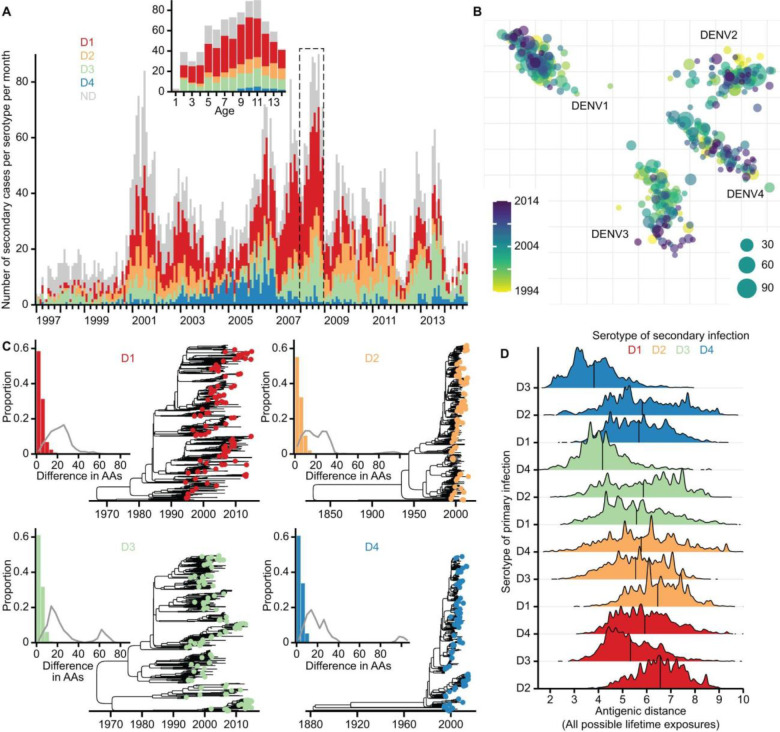
Figure 1.
Figure 1.. Long-term hospital-based dengue case data along with the antigenic and genetic characterisation of dengue viruses in Bangkok, Thailand.
(A) Monthly number of secondary dengue cases hospitalised in the Queen Sirikit National Institute of Child Health in Bangkok, Thailand, from 1997 to 2014. Infecting age and year were known for each case, with 69.7% of cases diagnosed with the infecting serotype. The inset illustrates the aggregation of the original case linelist data into the serotype and age-specific case counts per year. Table S7 summarises the age groups analysed for each year. (B) Two-dimensional antigenic map of 2,594 Thailand viruses across four serotypes, coloured by year of isolation. Each coloured circle indicates one of the 348 dengue viruses antigenically characterised using PRNT assay. The size of each circle indicates the number of sequenced viruses placed onto the corresponding map location. Serotype clusters are labelled. Each grid square side in any direction represents one unit of antigenic distance, which is equivalent to a twofold dilution of antiserum in the PRNT assay. (C) Time-calibrated maximum clade credibility phylogenies built with sequenced viruses from each serotype. Coloured circles at the tips of each phylogeny indicate viruses selected for antigenic characterisation. In the inset, coloured bars indicate the distribution of the amino acid (AA) differences across the whole genome of each sequenced virus as compared to its genetically closest virus used for antigenic characterisation, while the grey curve indicates the same distribution but compares each sequenced virus to an antigenically characterised virus randomly selected from those of the same serotype. (D) Distribution of antigenic distances separating viruses that are possibly responsible for an individual’s primary and secondary infections, which is stratified by the serotypes of the possible primary and secondary infecting viruses (i.e., serotype pair) and coloured by the identity of the secondary serotype. Vertical line in each distribution indicates the corresponding mean antigenic distance. Figures S7, A to B, present the same distributions but use antigenic distance data derived from the original 3D antigenic map and the 3D antigenic map enhanced with sequenced viruses, respectively.
Figure 2.
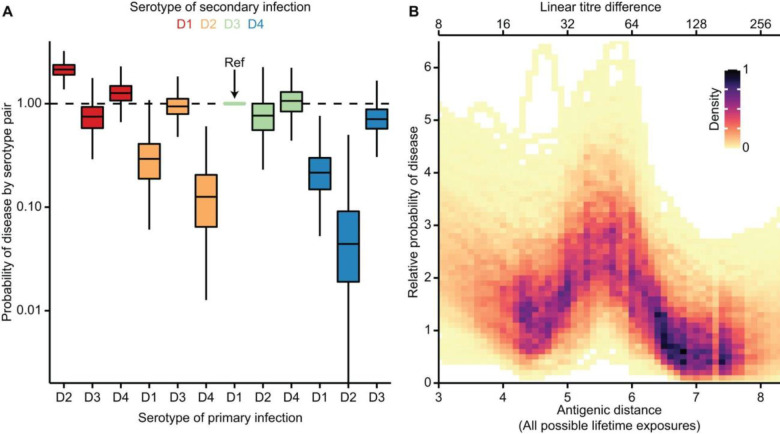
Figure 2.. Probability of disease following a secondary infection.
(A) Probability of disease by serotype pair. Primary DENV-1 followed by secondary DENV-3 serves as the reference for comparison. In each boxplot, the central horizontal line, edges of box, and whiskers indicate the median, interquartile range (IQR), and 1.5 * IQR of the posterior distribution, respectively. Colour indicates the identity of the secondary serotype. (B) Relationship between the relative probability of disease and the antigenic distance between the two viruses that are responsible for an individual’s primary and secondary infections. Colour indicates the density of the data points in the posterior estimates, using all antigenic distance data for 13,170,100 pairwise potential primary and secondary infecting viruses. Darker colour indicates higher density.
Figure 3.
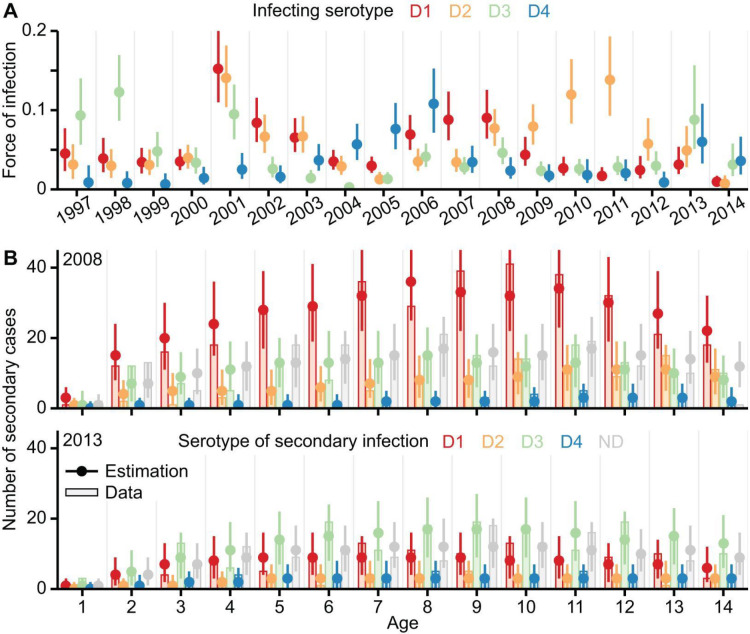
Figure 3.. Estimated transmission intensity and model validation.
(A) Annual force of infection by serotype, estimated using the full model. Dots and error bars indicate the median and 95% credible interval (CrI) of the posterior estimates, coloured by the infecting serotype. (B) Reconstruction of the yearly hospitalised secondary dengue cases by serotype and age. Results for 2008 and 2013, two years with distinct serotype patterns, are shown to illustrate the adequacy of model estimations. Figure S5 provides results for each year from 1997 to 2014. Vertical bars show the serotype and age-specific counts of secondary cases observed in our surveillance hospital. Dots and error bars indicate the median and 95% CrI of the corresponding case counts estimated by simulating the infection histories of individuals using posteriors inferred from the full model (Methods). The observed and estimated case counts are coloured by the identity of the secondary serotype. D1 to D4 indicate the secondary cases of each serotype. ND indicates cases without serotype information.
Figure 4.
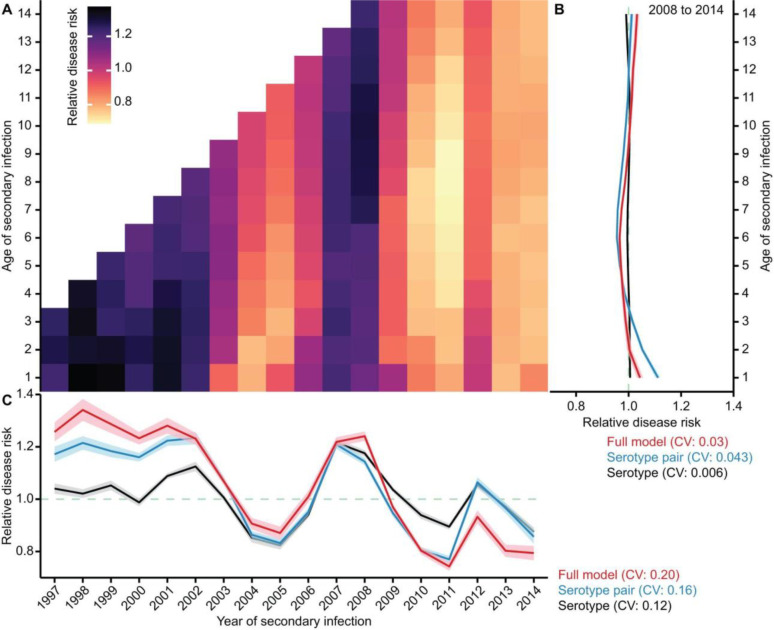
Figure 4.. Evolution of population disease risk.
(A) Relative disease risk by year and age with respect to the overall average of disease risks across all years and ages in the study. The estimation averages over 2,000 stochastic simulation realisations of the infection histories of individuals in Bangkok, using 40 randomly selected posteriors inferred from the full model. In each year from 1997 to 2007, older age groups without antigenic distance data were excluded from the analysis (Table S7). Colour in the heat map corresponds to the disease risk, which is estimated by adjusting the marginal probability of hospitalisation with the marginal probability of secondary infection for each cohort of individuals based on their year and age of secondary infections (Methods). (B) Mean relative disease risk for individuals of each age across years from 2008 to 2014. (C) Mean relative disease risk for individuals acquiring secondary infection in each year, which averages the estimated relative disease risk over different ages in the same year. In (B) and (C), colours indicate the estimates using different models, with the line and shaded regions indicating the respective mean and 95% confidence interval.

References

    1. Mykytyn A. Z. et al. Antigenic cartography of SARS-CoV-2 reveals that Omicron BA.1 and BA.2 are antigenically distinct. Sci. Immunol. 7, eabq4450, doi:10.1126/sciimmunol.abq4450 (2022). - DOI - PMC - PubMed
    1. Bedford T. et al. Integrating influenza antigenic dynamics with molecular evolution. Elife 3, e01914, doi:10.7554/eLife.01914 (2014). - DOI - PMC - PubMed
    1. Grenfell B. T. et al. Unifying the epidemiological and evolutionary dynamics of pathogens. Science 303, 327–332, doi:10.1126/science.1090727 (2004). - DOI - PubMed
    1. Shepard D. S., Undurraga E. A., Halasa Y. A. & Stanaway J. D. The global economic burden of dengue: a systematic analysis. Lancet Infect. Dis. 16, 935–941, doi:10.1016/S1473-3099(16)00146-8 (2016). - DOI - PubMed
    1. Cattarino L., Rodriguez-Barraquer I., Imai N., Cummings D. A. T. & Ferguson N. M. Mapping global variation in dengue transmission intensity. Sci. Transl. Med. 12, doi:10.1126/scitranslmed.aax4144 (2020). - DOI - PubMed

Publication types

LinkOut - more resources