


Cancer-Specific Survival of Patients with Non-Muscle-Invasive Bladder Cancer: A Population-Based Analysis
- PMID: 37578604
- PMCID: PMC10562346
- DOI: 10.1245/s10434-023-14051-9
Cancer-Specific Survival of Patients with Non-Muscle-Invasive Bladder Cancer: A Population-Based Analysis
Abstract
Background and purpose: Non-muscle-invasive bladder cancer (NMIBC) constitutes a heterogeneous group of tumors with different prognoses. This population-based study aimed to report real-world cancer-specific survival (CSS) of NMIBC and create a prognostic nomogram based on the identified risk factors.
Methods: The Surveillance, Epidemiology, and End Results database was searched for patients diagnosed with NMIBC from 2004 to 2015, who underwent transurethral resection of the bladder tumor. The dataset was divided into development and validation cohorts. Factors associated with CSS were identified using Cox proportional hazards and used to develop a prognostic nomogram.
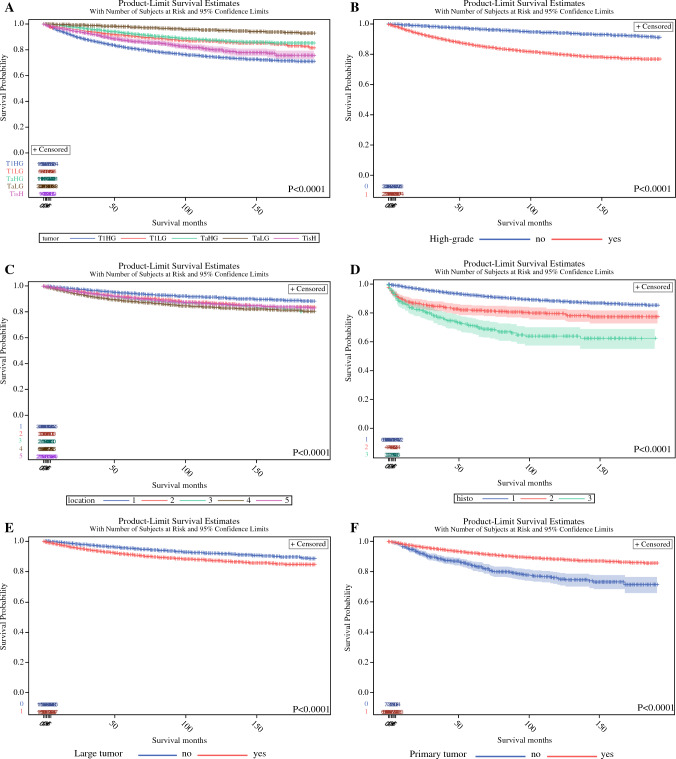
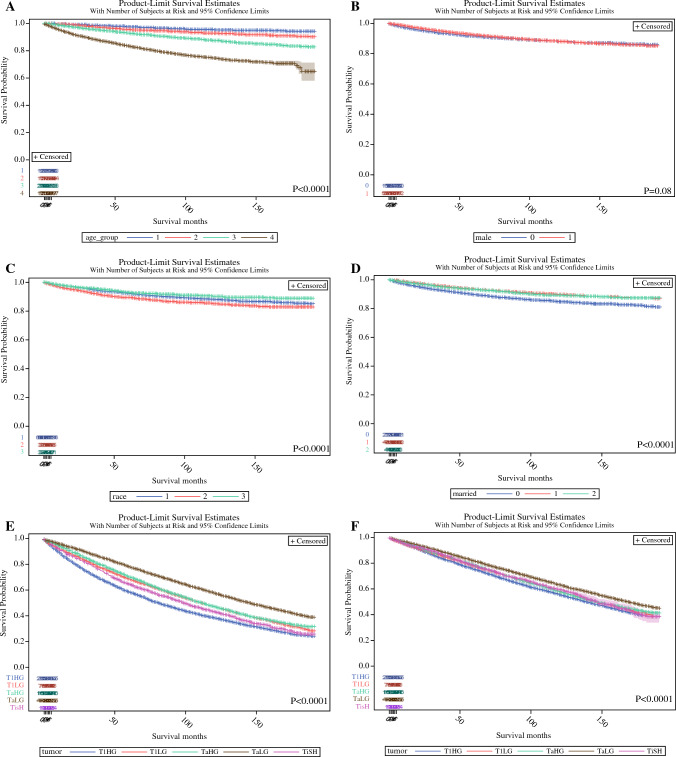
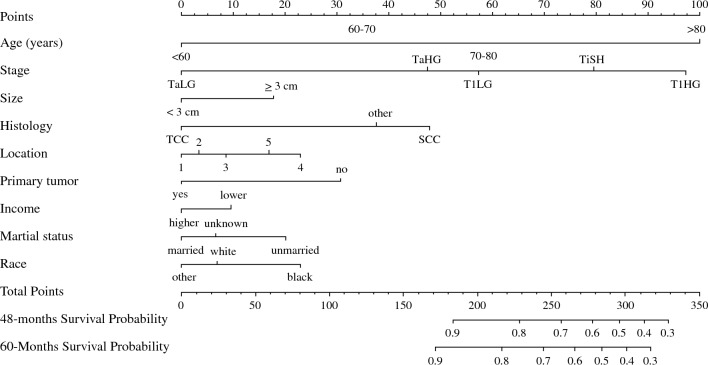
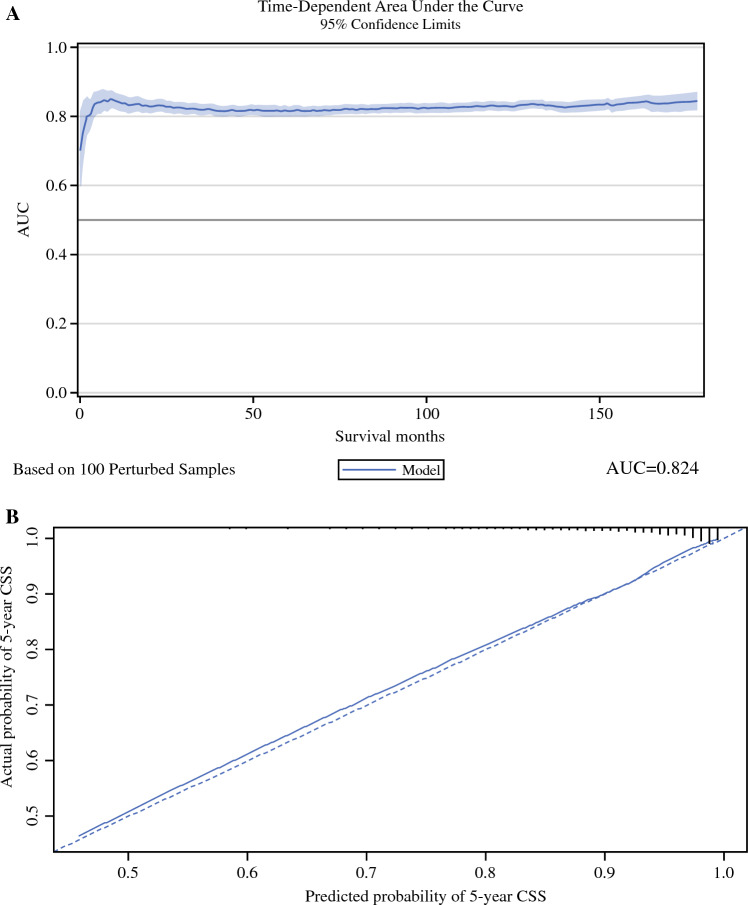
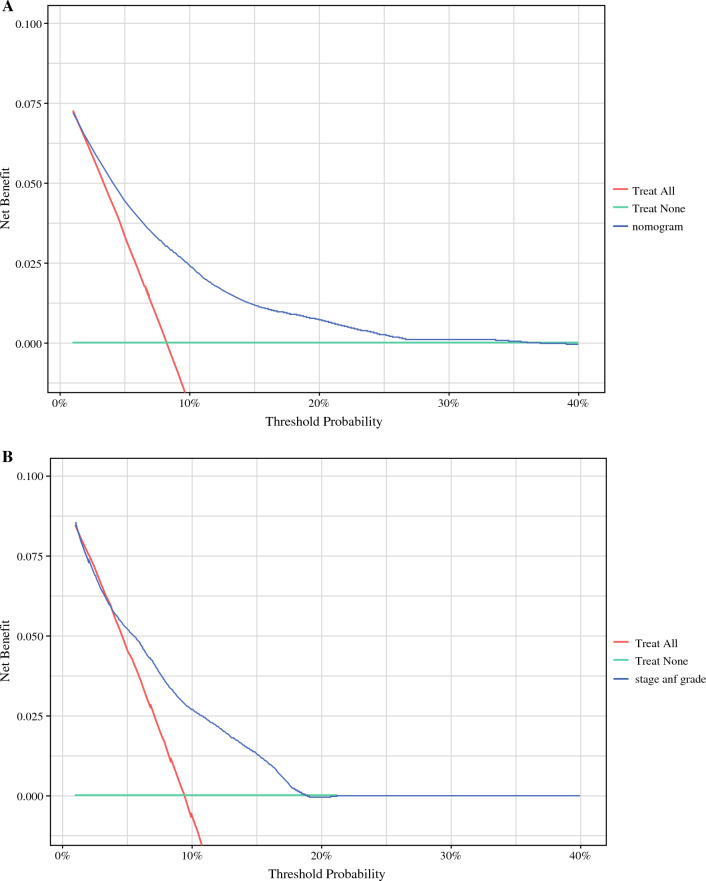
Results: In total, 98,238 patients with NMIBC were included. At the median follow-up of 124 months (IQR 81-157 months), cancer-specific mortality (CSM) was highest for T1HG (19.52%), followed by Tis (15.56%), similar for T1LG and TaHG (10.88% and 9.23%, respectively), and lowest for TaLG (3.76%). Multivariable Cox regression for CSS prediction was utilized to develop a nomogram including the following risk factors: tumor T category and grade, age, tumor size and location, histology type, primary character, race, income, and marital status. In the validation cohort, the model was characterized by an AUC of 0.824 and C-index that reached 0.795.
Conclusions: To conclude, NMIBC is associated with a significant risk of long-term CSM especially, but not only, in patients with T1HG. Rarely diagnosed TaHG and T1LG tumors should be regarded as high-risk due to approximately 10% CSM. T category, grading, and age remain the most powerful determinants of CSS in NMIBC, but sociodemographic factors might also influence its prognosis.
Keywords: Age; Cancer-specific survival; Nomogram; Non-muscle-invasive bladder cancer; Stage.
© 2023. The Author(s).
Conflict of interest statement
The authors declare no conflict of interest.
Figures
Comment in
-
Comment on: Cancer-Specific Survival of Patients with Non-Muscle-Invasive Bladder Cancer.Ann Surg Oncol. 2023 Dec;30(13):8791-8792. doi: 10.1245/s10434-023-14355-w. Epub 2023 Sep 30. Ann Surg Oncol. 2023. PMID: 37777686 No abstract available.
References
-
- Sylvester RJ, van der Meijden APM, Oosterlinck W, et al. Predicting recurrence and progression in individual patients with stage Ta T1 bladder cancer using EORTC risk tables: a combined analysis of 2596 patients from seven EORTC trials. Eur Urol. 2006;49(3):466–465. doi: 10.1016/j.eururo.2005.12.031. - DOI - PubMed
-
- Cambier S, Sylvester RJ, Collette L, et al. EORTC nomograms and risk groups for predicting recurrence, progression, and disease-specific and overall survival in non-muscle-invasive stage Ta-T1 urothelial bladder cancer patients treated with 1–3 years of maintenance bacillus calmette-guérin. Eur Urol. 2016;69(1):60–69. doi: 10.1016/j.eururo.2015.06.045. - DOI - PubMed
MeSH terms
LinkOut - more resources
Full Text Sources
Medical
