Review
. 2023 Jul 18:33:469-482.
doi: 10.1016/j.omtn.2023.07.018. eCollection 2023 Sep 12.

25 years of maturation: A systematic review of RNAi in the clinic

Affiliations
Review

25 years of maturation: A systematic review of RNAi in the clinic

Ida Juhl Corydon et al. Mol Ther Nucleic Acids. .

Abstract

The year 2023 marks the 25th anniversary of the discovery of RNAi. RNAi-based therapeutics enable sequence-specific gene knockdown by eliminating target RNA molecules through complementary base-pairing. A systematic review of published and ongoing clinical trials was performed. Web of Science, PubMed, and Embase were searched from January 1, 1998, to December 30, 2022 for clinical trials using RNAi. Following inclusion, data from the articles were extracted according to a predefined protocol. A total of 90 trials published in 81 articles were included. In addition, ongoing clinical trials were retrieved from ClinicalTrials.gov, resulting in the inclusion of 48 trials. We investigated how maturation of RNAi-based therapeutics and developments in delivery platforms, administration routes, and potential targets shape the current landscape of clinically applied RNAi. Notably, most contemporary clinical trials used either N-acetylgalactosamine delivery and subcutaneous administration or lipid nanoparticle delivery and intravenous administration. In conclusion, RNAi therapeutics have gained great momentum during the past decade, resulting in five approved therapeutics targeting the liver for treatment of severe diseases, and the trajectory depicted by the ongoing trials emphasizes that even more RNAi-based medicines also targeting extra-hepatic tissues are likely to be available in the years to come.

Keywords: LNP; MT: Oligonucleotides: Therapies and Applications; N-acetylgalactosamine; RNA interference; RNAi; clinical trials; miR-shRNA; shRNA; siRNA; systematic review.


Conflict of interest statement

The authors declare no competing interests.

Figures
None
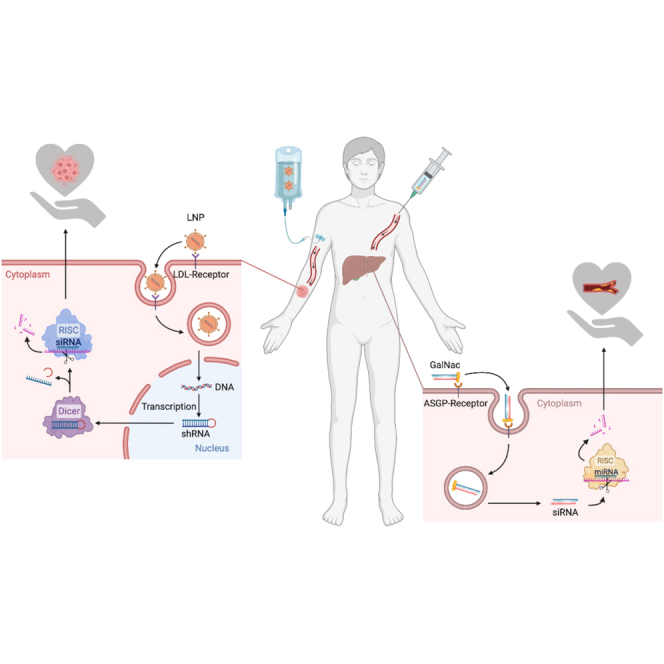
Graphical abstract
Figure 1
Figure 1
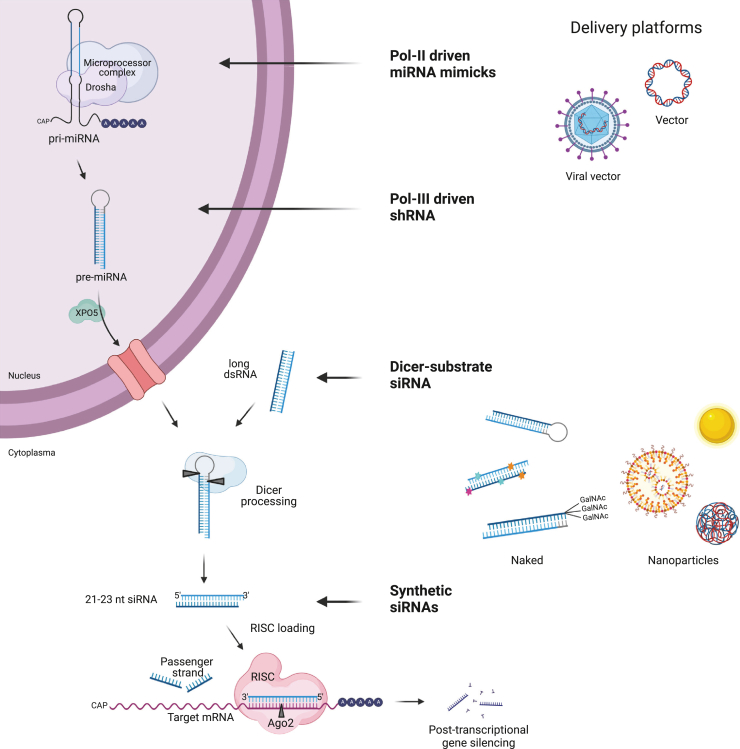
The RNAi mechanism and entry points of RNAi therapeutics The left-hand side shows the RNAi pathway and formation of siRNAs. The right-hand side shows different entry points for DNA-based or RNA-based RNAi therapeutics that enters the cell and are loaded into RISC to mediate homology-dependent degradation of target mRNA. Delivery platforms for DNA-based therapeutics include viral and non-viral vectors encoding Pol II driven miRNA mimics or Pol III-driven shRNA. RNAi-based therapeutics are delivered naked as GalNAc-conjugated, modified, or unmodified Dicer-substrate siRNA or synthetic siRNAs or complexed in nanoparticles (gold, lipid, or polymer based). Created using BioRender.com.
Figure 2
Figure 2
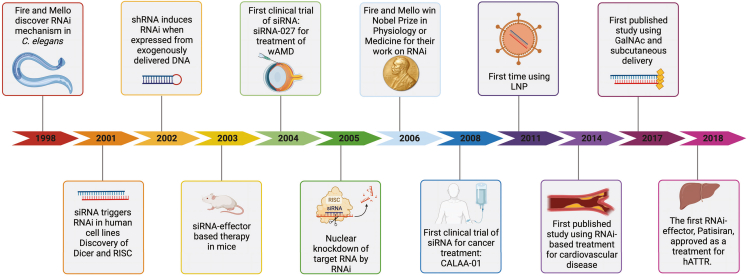
Milestones in the development of RNAi-based therapeutics Timeline of important milestones since the discovery of the RNAi mechanism in 1998: 1998, 2001,, 2002, 2003, 2004,, 2005, 2006, 2008,, 2011,∗ 2014, 2017, 2018.,, siRNA, short-interfering RNA; RISC, RNA-inducing silencing complex; shRNA, short hairpin RNA; wAMD, wet age-related macular degeneration; LNP, lipid nanoparticle; GalNAc, N-acetylgalactosamine. The asterisks before or after numbers indicate that the study mentioned is included in the published clinical trials analyzed in this systematic review. Created using BioRender.com.
Figure 3
Figure 3
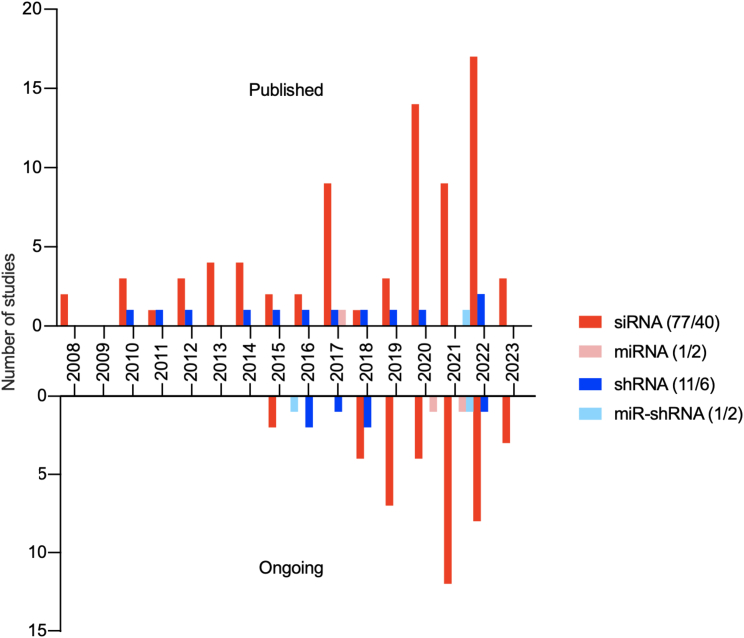
Types of RNAi therapeutics Frequency distribution of RNAi-based drugs (siRNA, miRNA, shRNA, and miR-shRNA) used in the published and ongoing clinical trials from 2008 to 2023 and 2015 to 2023, respectively. Color-coded annotations for the distribution are included.
Figure 4
Figure 4
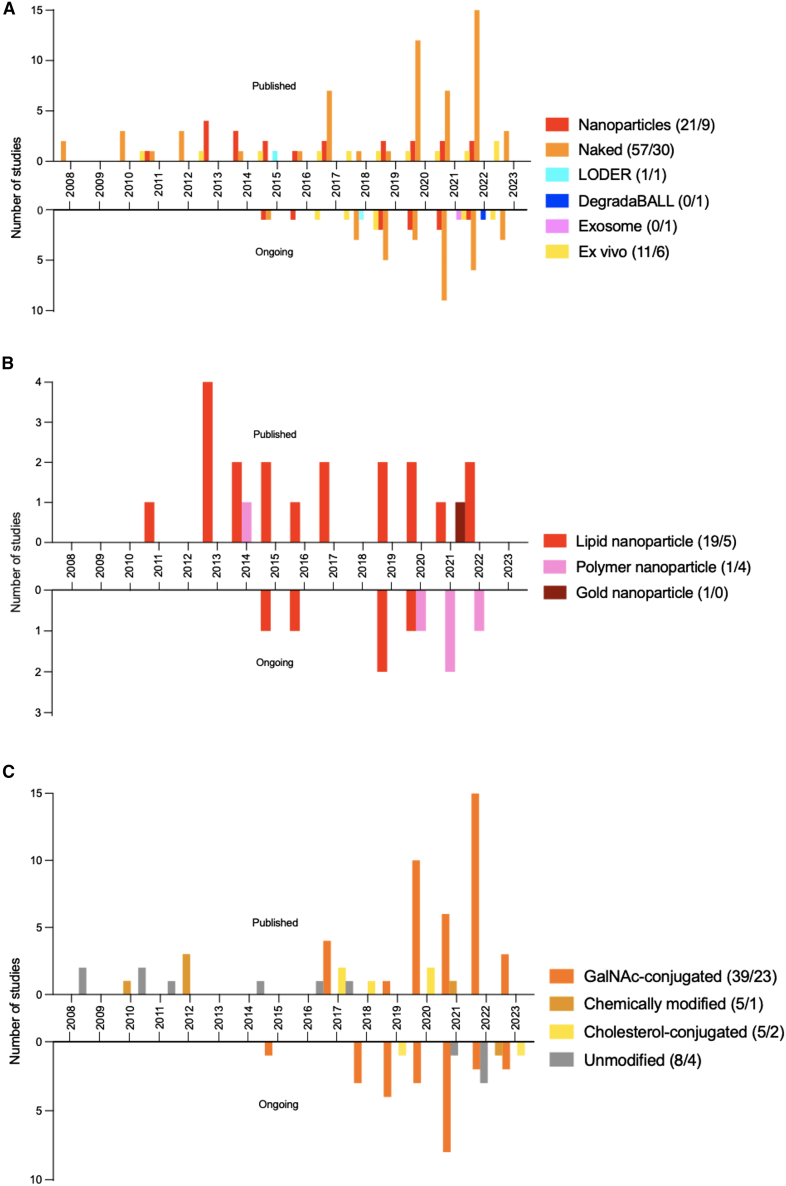
Delivery platforms of RNAi therapeutics (A) Frequency distribution of methods used to deliver RNAi therapeutics to the target tissue used in the published and ongoing clinical trials from 2008 to 2023 and 2015 to 2023, respectively. See Table S4 for explanation of the “Ex vivo” category. (B) Frequency distribution of the types of NP types delivered in the published and ongoing clinical trials from 2008 to 2023 and 2015 to 2023, respectively. (C) Frequency distribution of the type of naked RNAi molecules used in the published and ongoing clinical trials from 2008 to 2023 and 2015 to 2023, respectively. Color-coded annotations are included for every distribution.
Figure 5
Figure 5
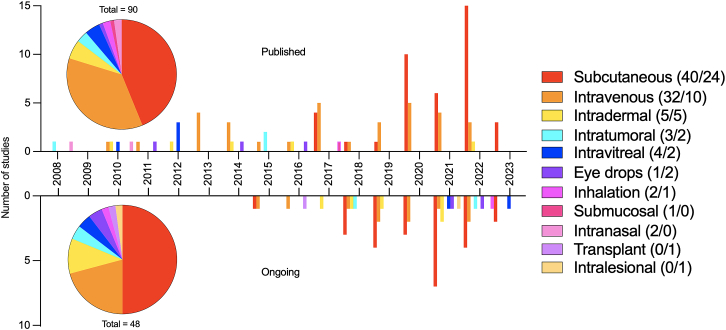
Administration of RNAi therapeutics Frequency distribution of the types of administration routes used in the published and ongoing clinical trials from 2008 to 2023 and 2015 to 2023, respectively. Pie charts showing the overall distribution of the types of administration routes used in the published and ongoing clinical trials. Color-coded annotations are included for every distribution.
Figure 6
Figure 6
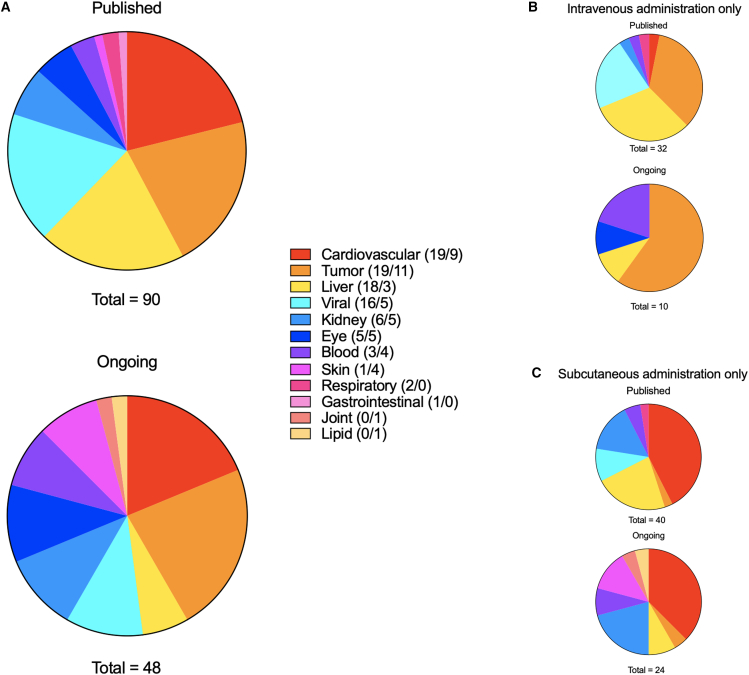
Disease etiology (A) Overall distribution of the types of RNAi-treated diseases in the published and ongoing clinical trials, from 2008 to 2023 and 2015 to 2023, respectively. (B) Overall distribution of the types of RNAi-treated diseases using i.v. administration in the published and ongoing clinical trials, from 2008 to 2023 and 2015 to 2023, respectively. (C) Overall distribution of the types of RNAi-treated diseases using s.c. administration in the published and ongoing clinical trials from 2008 to 2023 and 2015 to 2023, respectively. Diseases are grouped by etiology. Color-coded annotations are included for every distribution.
Figure 7
Figure 7
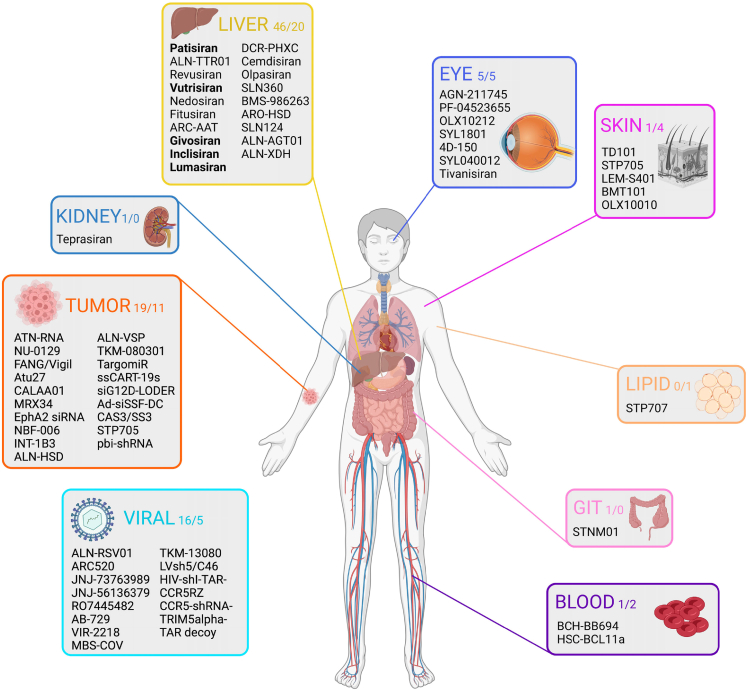
Tissues targeted by the RNAi therapeutics Overall distribution of tissues targeted by the RNAi therapeutics in the published and ongoing clinical trials, from 2008 to 2023 and 2015 to 2023, respectively. The names of the RNAi therapeutics are included in the organ box together with the number of RNAi therapeutics found to target the specific organ in the published and ongoing clinical trials. The color of the border of the organ boxes correlates with the color-coded annotations in Figure 6. The five FDA- and EMA-approved therapeutical RNAi-based drugs are highlighted in bold. Inspired by Hu et al. Created using BioRender.com.
Figure 8
Figure 8
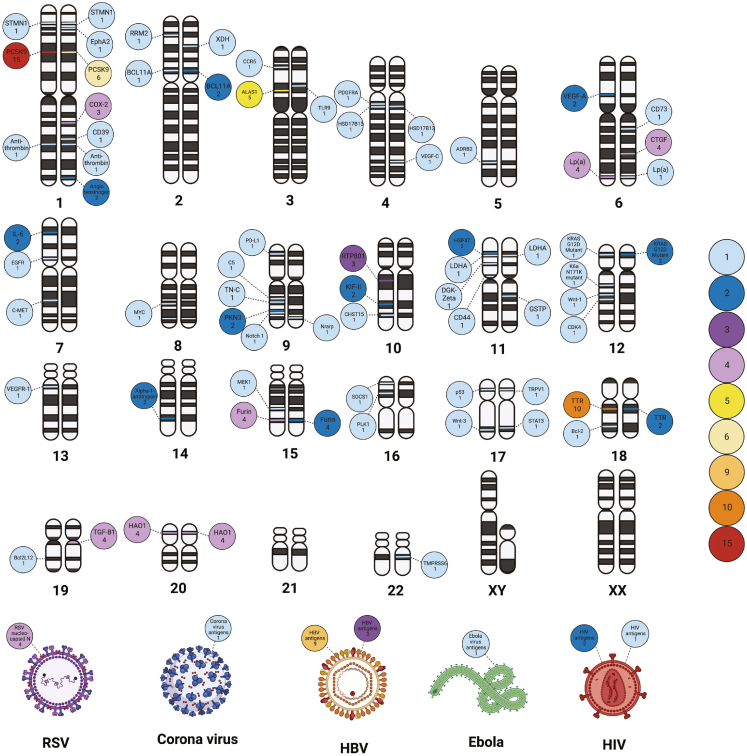
Genome distribution of target loci Heatmap showing the chromosomal location of genes targeted by RNAi therapeutics in the published (circles on the left chromosome) and ongoing clinical trials (circles on the right chromosome). Viral targets are shown below (circles on the left and right side of viruses depict the target in the published and ongoing clinical trials, respectively). Color-coded annotations are included on the right hand. Red refers to the highest number of studies targeting the mRNA of the given protein, whereas light blue refers to the lowest number of studies targeting the mRNA of the given protein (e.g., PCSK9 located on chromosome 1 encodes the PCSK9 protein. It is targeted 15 and 6 times in the published and ongoing clinical trials). Created using BioRender.com.

References

    1. Fire A., Xu S., Montgomery M.K., Kostas S.A., Driver S.E., Mello C.C. Potent and specific genetic interference by double-stranded RNA in Caenorhabditis elegans. Nature. 1998;391:806–811. - PubMed
    1. Alsing S., Doktor T.K., Askou A.L., Jensen E.G., Ahmadov U., Kristensen L.S., Andresen B.S., Aagaard L., Corydon T.J. VEGFA-targeting miR-agshRNAs combine efficacy with specificity and safety for retinal gene therapy. Mol. Ther. Nucleic Acids. 2022;28:58–76. - PMC - PubMed
    1. Hammond S.M., Boettcher S., Caudy A.A., Kobayashi R., Hannon G.J. Argonaute2, a link between genetic and biochemical analyses of RNAi. Science. 2001;293:1146–1150. - PubMed
    1. Liu J., Carmell M.A., Rivas F.V., Marsden C.G., Thomson J.M., Song J.J., Hammond S.M., Joshua-Tor L., Hannon G.J. Argonaute2 is the catalytic engine of mammalian RNAi. Science. 2004;305:1437–1441. - PubMed
    1. Bernstein E., Caudy A.A., Hammond S.M., Hannon G.J. Role for a bidentate ribonuclease in the initiation step of RNA interference. Nature. 2001;409:363–366. - PubMed