


The effect of ketamine on affective modulation of the startle reflex and its resting-state brain correlates
- PMID: 37587171
- PMCID: PMC10432502
- DOI: 10.1038/s41598-023-40099-4
The effect of ketamine on affective modulation of the startle reflex and its resting-state brain correlates
Erratum in
-
Author Correction: The effect of ketamine on affective modulation of the startle reflex and its resting-state brain correlates.Sci Rep. 2023 Sep 22;13(1):15836. doi: 10.1038/s41598-023-42343-3. Sci Rep. 2023. PMID: 37739990 Free PMC article. No abstract available.
Abstract
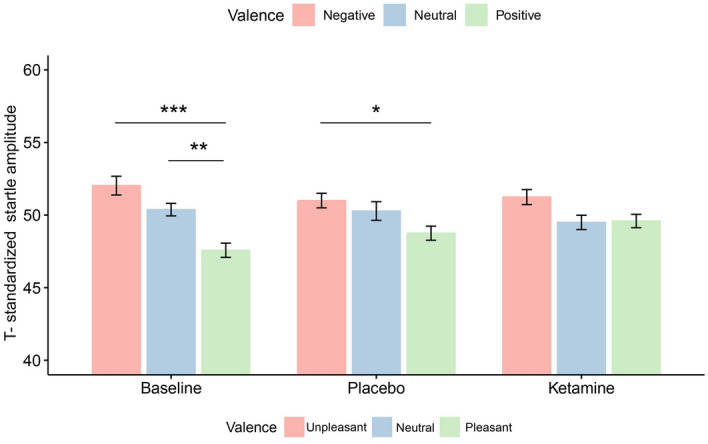
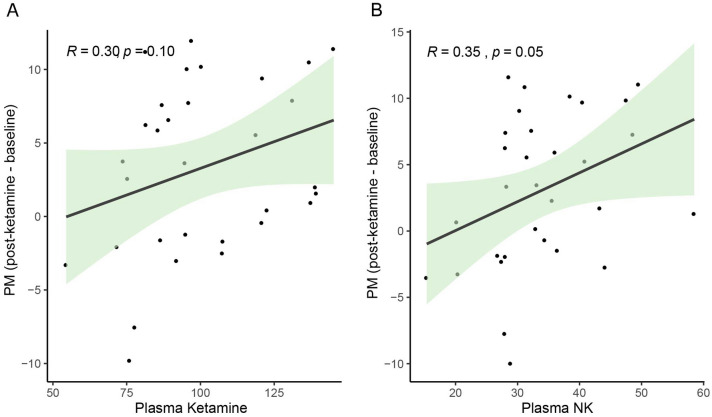
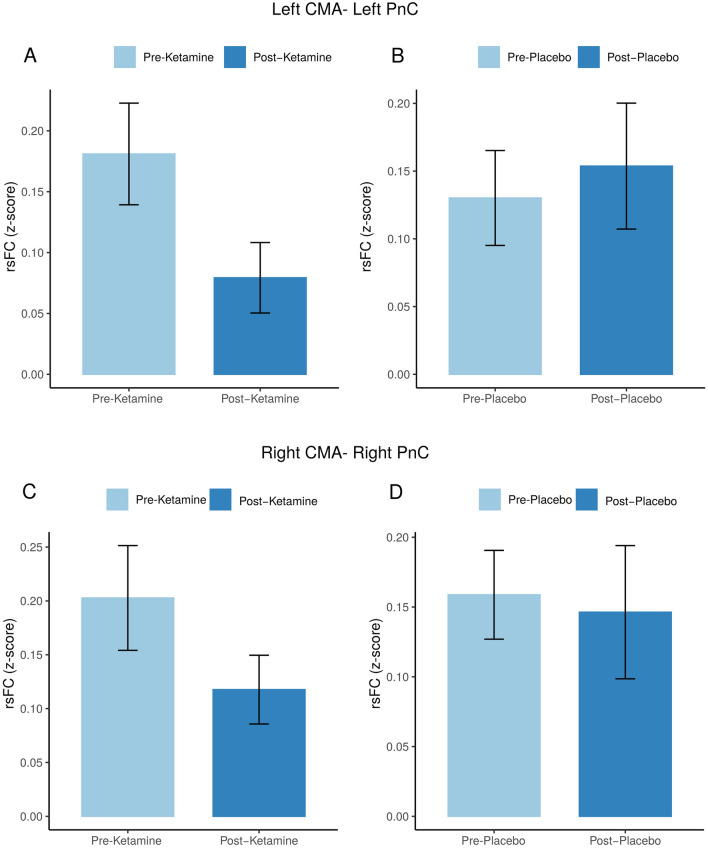
Ketamine is a rapid-acting antidepressant that also influences neural reactivity to affective stimuli. However, the effect of ketamine on behavioral affective reactivity is yet to be elucidated. The affect-modulated startle reflex paradigm (AMSR) allows examining the valence-specific aspects of behavioral affective reactivity. We hypothesized that ketamine alters the modulation of the startle reflex during processing of unpleasant and pleasant stimuli and weakens the resting-state functional connectivity (rsFC) within the modulatory pathway, namely between the centromedial nucleus of the amygdala and nucleus reticularis pontis caudalis. In a randomized, double-blind, placebo-controlled, cross-over study, thirty-two healthy male participants underwent ultra-high field resting-state functional magnetic resonance imaging at 7 T before and 24 h after placebo and S-ketamine infusions. Participants completed the AMSR task at baseline and one day after each infusion. In contrast to our hypothesis, ketamine infusion did not impact startle potentiation during processing of unpleasant stimuli but resulted in diminished startle attenuation during processing of pleasant stimuli. This diminishment significantly correlated with end-of-infusion plasma levels of ketamine and norketamine. Furthermore, ketamine induced a decrease in rsFC within the modulatory startle reflex pathway. The results of this first study on the effect of ketamine on the AMSR suggest that ketamine might attenuate the motivational significance of pleasant stimuli in healthy participants one day after infusion.
© 2023. Springer Nature Limited.
Conflict of interest statement
MW is a member of the following advisory boards and gave presentations to the following companies: Bayer AG, Germany; Boehringer Ingelheim, Germany; and Biologische Heilmittel Heel GmbH, Germany. MW has further conducted studies with institutional research support from HEEL and Janssen Pharmaceutical Research for a clinical trial (IIT) on ketamine in patients with MDD, unrelated to this investigation. MW did not receive any financial compensation from the companies mentioned above. All other authors report no biomedical financial interests or other potential conflicts of interest.
Figures
References
-
- Sterpenich V, Vidal S, Hofmeister J, Michalopoulos G, Bancila V, Warrot D, et al. Increased reactivity of the mesolimbic reward system after ketamine injection in patients with treatment-resistant major depressive disorder. Anesthesiology. 2019;130:923–935. doi: 10.1097/ALN.0000000000002667. - DOI - PubMed
Publication types
MeSH terms
Substances
LinkOut - more resources
Full Text Sources
