


Measuring disability in multiple sclerosis: the WHODAS 2.0
- PMID: 37589773
- PMCID: PMC10522513
- DOI: 10.1007/s11136-023-03470-6
Measuring disability in multiple sclerosis: the WHODAS 2.0
Abstract
Introduction: Reliable measurement of disability in multiple sclerosis (MS) using a comprehensive, patient self-reported scale, such as the World Health Organization Disability Assessment Schedule (WHODAS) 2.0, would be of clinical and research benefit.
Methods: In the Trajectories of Outcome in Neurological Conditions-MS study, WHODAS 2.0 (WHODAS-36 items for working, WHODAS-32 items if not working, WHODAS-12 items short-form) was examined using Rasch analysis in 5809 people with MS.
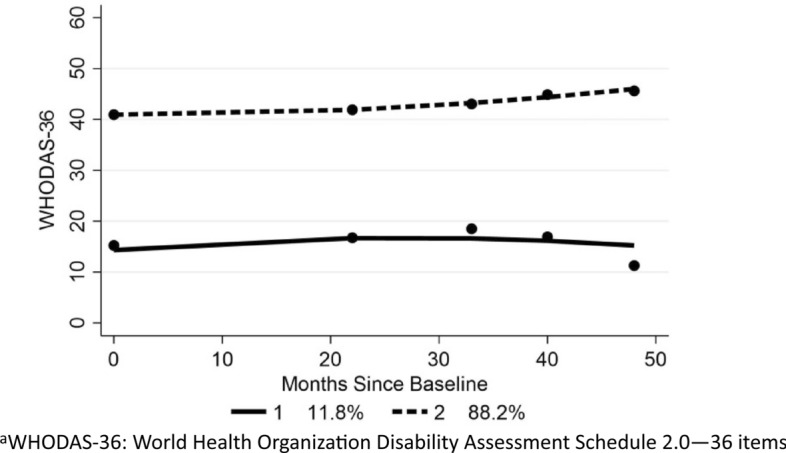
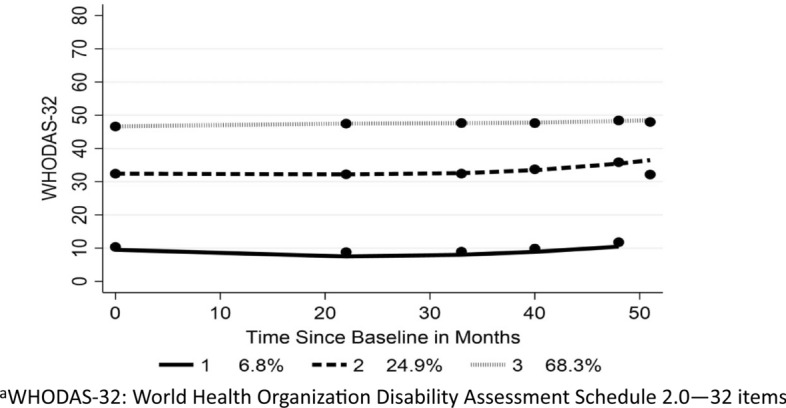
Results: The 36- and 32-item parallel forms, and the cognitive and physical domains, showed reliability consistent with individual or group use. The 12-item short-form is valid for group use only. Interval level measurement for parametric statistics can be derived from all three scales which showed medium to strong effect sizes for discrimination across characteristics such as age, subtype, and disease duration. Smallest detectable difference for each scale was < 6 on the standardised metric of 0-100 so < 6% of the total range. There was no substantial differential item functioning (DIF) by age, gender, education, working full/part-time, or disease duration; the finding of no DIF for time or sample supports the use of WHODAS 2.0 for longitudinal studies, with the 36- and 32-item versions and the physical and cognitive domains valid for individual patient follow-up.
Conclusions: Disability in MS can be comprehensively measured at interval level by the WHODAS 2.0, and validly monitored over time. Routine use of this self-reported measure in clinical and research practice would give valuable information on the trajectories of disability of individuals and groups.
Keywords: Assessment; Disability; Multiple sclerosis; Patient reported outcome measure; Rasch; Trajectories of Outcome in Neurological Conditions (TONiC); World Health Organization Disability Assessment Schedule 2.0.
© 2023. The Author(s).
Conflict of interest statement
The author(s) declared no potential conflict of interest with respect to the research, authorship, and/or publication of this article.
Figures

References
MeSH terms
Grants and funding
LinkOut - more resources
Full Text Sources
Medical
