


The MARS PETCARE BIOBANK protocol: establishing a longitudinal study of health and disease in dogs and cats
- PMID: 37592253
- PMCID: PMC10433631
- DOI: 10.1186/s12917-023-03691-4
The MARS PETCARE BIOBANK protocol: establishing a longitudinal study of health and disease in dogs and cats
Abstract
Background: The veterinary care of cats and dogs is increasingly embracing innovations first applied to human health, including an increased emphasis on preventative care and precision medicine. Large scale human population biobanks have advanced research in these areas; however, few have been established in veterinary medicine. The MARS PETCARE BIOBANK™ (MPB) is a prospective study that aims to build a longitudinal bank of biological samples, with paired medical and lifestyle data, from 20,000 initially healthy cats and dogs (10,000 / species), recruited through veterinary hospitals over a ten-year period. Here, we describe the MPB protocol and discuss its potential as a platform to increase understanding of why and how diseases develop and how to advance personalised veterinary healthcare.
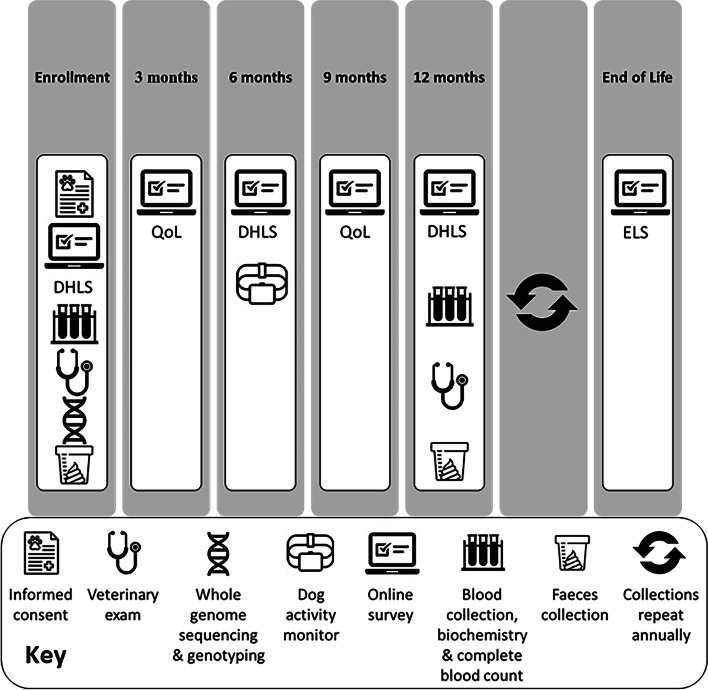
Methods: At regular intervals, extensive diet, health and lifestyle information, electronic medical records, clinicopathology and activity data are collected, genotypes, whole genome sequences and faecal metagenomes analysed, and blood, plasma, serum, and faecal samples stored for future research.
Discussion: Proposed areas for research include the early detection and progression of age-related disease, risk factors for common conditions, the influence of the microbiome on health and disease and, through genome wide association studies, the identification of candidate loci for disease associated genetic variants. Genomic data will be open access and research proposals for access to data and samples will be considered. Over the coming years, the MPB will provide the longitudinal data and systematically collected biological samples required to generate important insights into companion animal health, identifying biomarkers of disease, supporting earlier identification of risk, and enabling individually tailored interventions to manage disease.
Keywords: Biomarker; Canine; Cohort; Disease; Feline; Genomic; Longitudinal; Microbiome; Prospective; Repository; Risk factors.
© 2023. BioMed Central Ltd., part of Springer Nature.
Conflict of interest statement
All authors were employees of Mars Petcare business units during the development of the study.
Figures
References
-
- American Pet Products Association. National Pet Owners Survey Statistics: Pet ownership and annual expenses. 2021–2022 Survey 2022. https://www.americanpetproducts.org/pubs_survey.asp. (16 April 2023, date last accessed).
-
- Association of Pet Food Manufacturers. Pet population 2021. https://www.ukpetfood.org/information-centre/statistics/uk-pet-populatio.... (16 April 2023, date last accessed).
-
- Robinson N, Dean R, Brennan M, Belshaw Z. The importance of preventative healthcare: what 10 years of research from the Centre for Evidence-based Veterinary Medicine reveals. Companion Animal. 2022;27(3):11–15. doi: 10.12968/coan.2021.0052. - DOI
MeSH terms
LinkOut - more resources
Full Text Sources
Miscellaneous
