


Clinical longevity of intracoronal restorations made of gold, lithium disilicate, leucite, and indirect resin composite: a systematic review and meta-analysis
- PMID: 37597003
- PMCID: PMC10492736
- DOI: 10.1007/s00784-023-05050-x
Clinical longevity of intracoronal restorations made of gold, lithium disilicate, leucite, and indirect resin composite: a systematic review and meta-analysis
Abstract
Objectives: The aim of this systematic review and meta-analysis is to assess the comparative clinical success and survival of intracoronal indirect restorations using gold, lithium disilicate, leucite, and indirect composite materials.
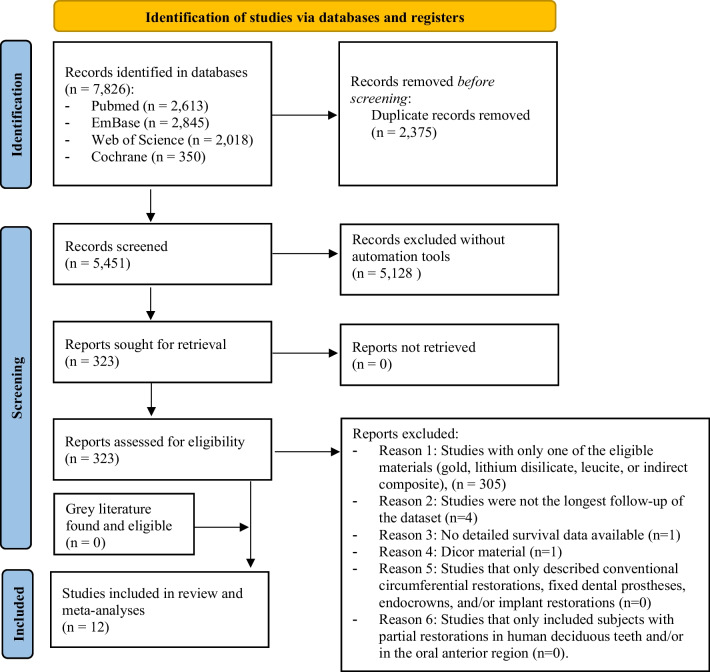
Material and methods: This systematic review and meta-analysis were conducted following the Cochrane Handbook for Systematic Reviews of Interventions and PRISMA guidelines. The protocol for this study was registered in PROSPERO (registration number: CRD42021233185). A comprehensive literature search was conducted across various databases and sources, including PubMed/Medline, Embase, Cochrane Library, Web of Science, ClinicalTrials.gov, and gray literature. A total of 7826 articles were screened on title and abstract. Articles were not excluded based on the vitality of teeth, the language of the study, or the observation period. The risk difference was utilized for the analyses, and a random-effects model was applied. All analyses were conducted with a 95% confidence interval (95% CI). The calculated risk differences were derived from the combined data on restoration survival and failures obtained from each individual article. The presence of heterogeneity was assessed using the I2 statistic, and if present, the heterogeneity of the data in the articles was evaluated using the non-parametric chi-squared statistic (p < 0.05).
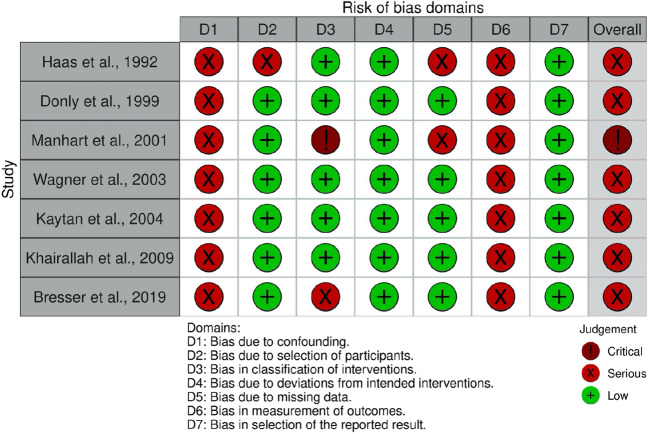
Results: A total of 12 eligible studies were selected, which included 946 restorations evaluated over a minimum observation period of 1 year and a maximum observation period of 7 years. Results of the meta-analysis indicated that intracoronal indirect resin composite restorations have an 18% higher rate of failure when compared to intracoronal gold restorations over 5-7 years of clinical service (risk difference = - 0.18 [95% CI: - 0.27, - 0.09]; p = .0002; I2 = 0%). The meta-analysis examining the disparity in survival rates between intracoronal gold and leucite restorations could not be carried out due to methodological differences in the studies.
Conclusions: According to the currently available evidence, medium-quality data indicates that lithium disilicate and indirect composite materials demonstrate comparable survival rates in short-term follow-up. Furthermore, intracoronal gold restorations showed significantly higher survival rates, making them a preferred option over intracoronal indirect resin-composite restorations. Besides that, the analysis revealed no statistically significant difference in survival rates between leucite and indirect composite restorations. The short observation period, limited number of eligible articles, and low sample size of the included studies were significant limitations.
Clinical significance: Bearing in mind the limitations of the reviewed literature, this systematic review and meta-analysis help clinicians make evidence-based decisions on how to restore biomechanically compromised posterior teeth.
Keywords: Adhesive; Inlay; Intracoronal restoration; Onlay; Partial.
© 2023. The Author(s).
Conflict of interest statement
The authors declare no competing interests.
Figures




References
-
- Al-Fouzan A, Tashkandi E (2013) Volumetric measurements of removed tooth structure associated with various preparation designs. Int J Prosthodont 26:545–548. 10.11607/ijp.3321 - PubMed
-
- Manhart J, Chen HY, Hamm G, Hickel R. Review of the clinical survival of direct and indirect restorations in posterior teeth of the permanent dentition. Oper Dent. 2004;29:481–508. - PubMed
Publication types
MeSH terms
Substances
LinkOut - more resources
Full Text Sources
