


Sample size requirements are not being considered in studies developing prediction models for binary outcomes: a systematic review
- PMID: 37598153
- PMCID: PMC10439652
- DOI: 10.1186/s12874-023-02008-1
Sample size requirements are not being considered in studies developing prediction models for binary outcomes: a systematic review
Abstract
Background: Having an appropriate sample size is important when developing a clinical prediction model. We aimed to review how sample size is considered in studies developing a prediction model for a binary outcome.
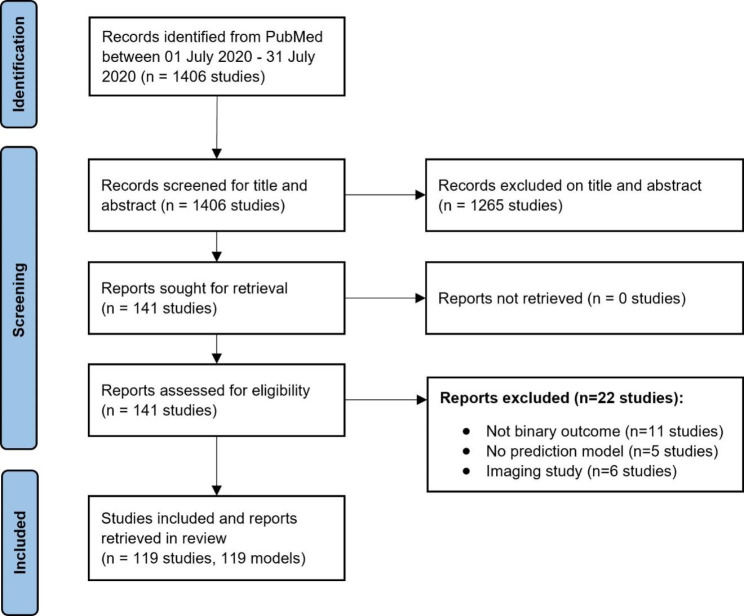
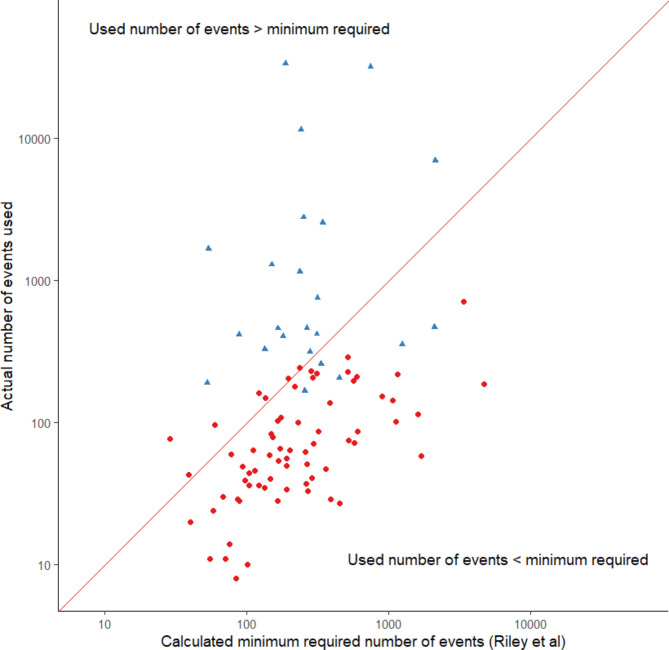
Methods: We searched PubMed for studies published between 01/07/2020 and 30/07/2020 and reviewed the sample size calculations used to develop the prediction models. Using the available information, we calculated the minimum sample size that would be needed to estimate overall risk and minimise overfitting in each study and summarised the difference between the calculated and used sample size.
Results: A total of 119 studies were included, of which nine studies provided sample size justification (8%). The recommended minimum sample size could be calculated for 94 studies: 73% (95% CI: 63-82%) used sample sizes lower than required to estimate overall risk and minimise overfitting including 26% studies that used sample sizes lower than required to estimate overall risk only. A similar number of studies did not meet the ≥ 10EPV criteria (75%, 95% CI: 66-84%). The median deficit of the number of events used to develop a model was 75 [IQR: 234 lower to 7 higher]) which reduced to 63 if the total available data (before any data splitting) was used [IQR:225 lower to 7 higher]. Studies that met the minimum required sample size had a median c-statistic of 0.84 (IQR:0.80 to 0.9) and studies where the minimum sample size was not met had a median c-statistic of 0.83 (IQR: 0.75 to 0.9). Studies that met the ≥ 10 EPP criteria had a median c-statistic of 0.80 (IQR: 0.73 to 0.84).
Conclusions: Prediction models are often developed with no sample size calculation, as a consequence many are too small to precisely estimate the overall risk. We encourage researchers to justify, perform and report sample size calculations when developing a prediction model.
Keywords: Methodology; Prediction model; Sample size.
© 2023. BioMed Central Ltd., part of Springer Nature.
Conflict of interest statement
The authors declare no conflict of interest.
Figures
References
Publication types
MeSH terms
Grants and funding
LinkOut - more resources
Full Text Sources
Miscellaneous
