


Trends and Disparities in Firearm Deaths Among Children
- PMID: 37599647
- PMCID: PMC10471507
- DOI: 10.1542/peds.2023-061296
Trends and Disparities in Firearm Deaths Among Children
Abstract
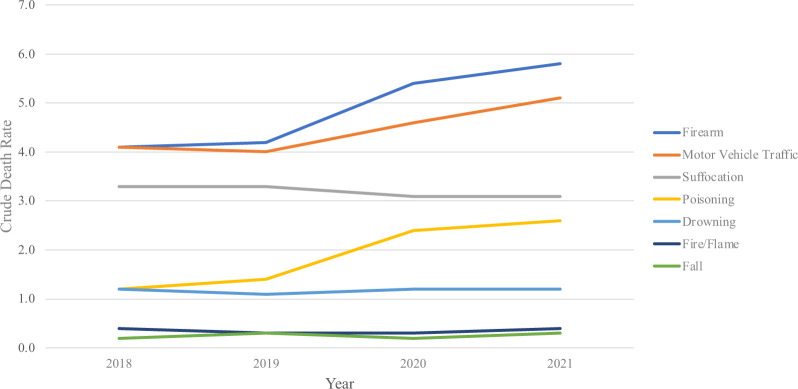
Background and objectives: In 2020, firearm injuries became the leading cause of death among US children and adolescents. This study aimed to evaluate new 2021 data on US pediatric firearm deaths and disparities to understand trends compared with previous years.
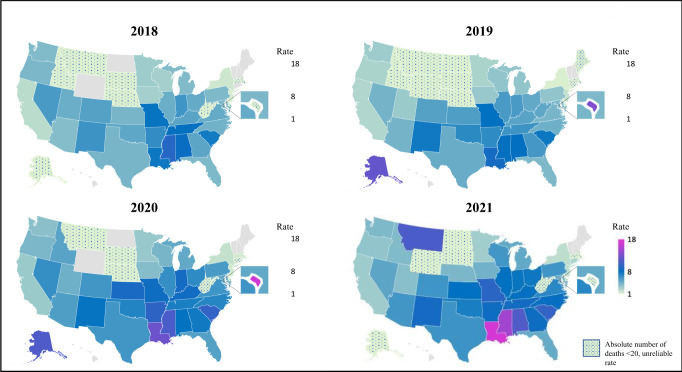
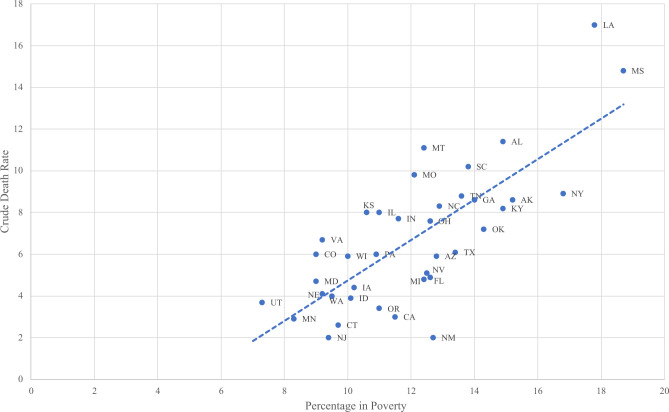
Methods: Centers for Disease Control and Prevention Wide-ranging Online Data for Epidemiologic Research was queried for firearm mortalities in children/adolescents from 2018 to 2021. Absolute mortality, death rates, and characteristics were reported. Death rates were defined per 100 000 persons in that population per year. Death rates across states were illustrated via geographic heat maps, and correlations with state poverty levels were calculated.
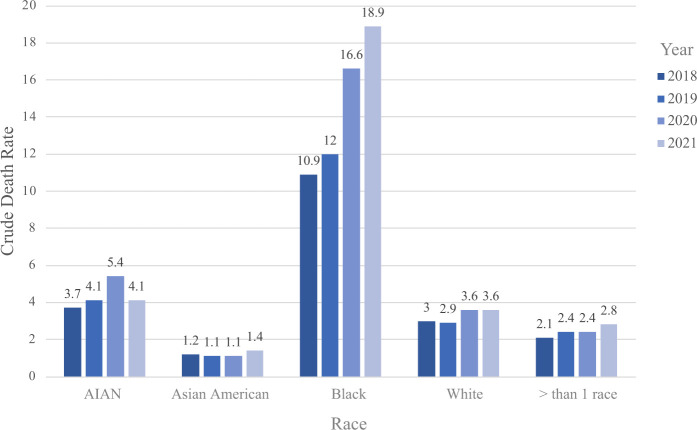
Results: In 2021, firearms continued to be the leading cause of death among US children. From 2018 to 2021, there was a 41.6% increase in the firearm death rate. In 2021, among children who died by firearms, 84.8% were male, 49.9% were Black, 82.6% were aged 15 to 19 years, and 64.3% died by homicide. Black children accounted for 67.3% of firearm homicides, with a death rate increase of 1.8 from 2020 to 2021. White children accounted for 78.4% of firearm suicides. From 2020 to 2021, the suicide rate increased among Black and white children, yet decreased among American Indian or Alaskan Native children. Geographically, there were worsening clusters of firearm death rates in Southern states and increasing rates in Midwestern states from 2018 to 2021. Across the United States, higher poverty levels correlated with higher firearm death rates (R = 0.76, P < .001).
Conclusions: US pediatric firearm deaths increased in 2021, above the spike in 2020, with worsening disparities. Implementation of prevention strategies and policies among communities at highest risk is critical.
Conflict of interest statement
Figures
References
Publication types
MeSH terms
Grants and funding
LinkOut - more resources
Full Text Sources
Medical
