


Topical repellents for malaria prevention
- PMID: 37602418
- PMCID: PMC10440788
- DOI: 10.1002/14651858.CD015422.pub2
Topical repellents for malaria prevention
Abstract
Background: Insecticide-based interventions, such as long-lasting insecticide-treated nets (LLINs) and indoor residual spraying (IRS), remain the backbone of malaria vector control. These interventions target mosquitoes that prefer to feed and rest indoors, but have limited capacity to prevent transmission that occurs outdoors or outside regular sleeping hours. In low-endemicity areas, malaria elimination will require that these control gaps are addressed, and complementary tools are found. The use of topical repellents may be particularly useful for populations who may not benefit from programmatic malaria control measures, such as refugees, the military, or forest goers. This Cochrane Review aims to measure the effectiveness of topical repellents to prevent malaria infection among high- and non-high-risk populations living in malaria-endemic regions.
Objectives: To assess the effect of topical repellents alone or in combination with other background interventions (long-lasting insecticide-treated nets, or indoor residual spraying, or both) for reducing the incidence of malaria in high- and non-high-risk populations living in endemic areas.
Search methods: We searched the following databases up to 11 January 2023: the Cochrane Infectious Diseases Group Specialised Register; CENTRAL (in the Cochrane Library); MEDLINE; Embase; CAB Abstracts; and LILACS. We also searched trial registration platforms and conference proceedings; and contacted organizations and companies for ongoing and unpublished trials.
Selection criteria: We included randomized controlled trials (RCTs) and cluster-randomized controlled trials (cRCTs) of topical repellents proven to repel mosquitoes. We also included non-randomized studies that complied with pre-specified inclusion criteria: controlled before-after studies (CBA), controlled interrupted time series (ITS), and controlled cross-over trials.
Data collection and analysis: Four review authors independently assessed trials for inclusion, and extracted the data. Two authors independently assessed the risk of bias (RoB) using the Cochrane RoB 2 tool. A fifth review author resolved any disagreements. We analysed data by conducting a meta-analysis, stratified by whether studies included populations considered to be at high-risk of developing malaria infection (for example, refugees, forest goers, or deployed military troops). We combined results from cRCTs with RCTs by adjusting for clustering and presented results using forest plots. We used the GRADE framework to assess the certainty of the evidence. We only included data on Plasmodium falciparum infections in the meta-analysis.
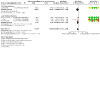
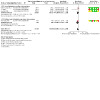
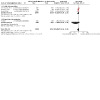
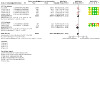
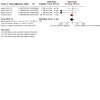
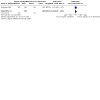
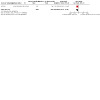
Main results: Thirteen articles relating to eight trials met the inclusion criteria and were qualitatively described. We included six trials in the meta-analysis (five cRCTs and one RCT). Effect on malaria incidence Topical repellents may slightly reduce P falciparum infection and clinical incidence when both outcomes are considered together (incidence rate ratio (IRR) 0.74, 95% confidence interval (CI) 0.56 to 0.98; 3 cRCTs and 1 RCT, 61,651 participants; low-certainty evidence); but not when these two outcomes were considered independently. Two cRCTs and one RCT (12,813 participants) evaluated the effect of topical repellents on infection incidence (IRR 0.76, 95% CI 0.56 to 1.02; low-certainty evidence). One cRCT (48,838 participants) evaluated their effect on clinical case incidence (IRR 0.66, 95% CI 0.32 to 1.36; low-certainty evidence). Three studies (2 cRCTs and 1 RCT) included participants belonging to groups considered at high-risk of being infected, while only one cRCT did not include participants at high risk. Adverse events Topical repellents are considered safe. The prevalence of adverse events among participants who used topical repellents was very low (0.6%, 283/47,515) and limited to mild skin reactions. Effect on malaria prevalence Topical repellents may slightly reduce P falciparum prevalence (odds ratio (OR) 0.81, 95% CI 0.67 to 0.97; 3 cRCTs and 1 RCT; 55,366 participants; low-certainty evidence). Two of these studies (1 cRCT and 1 RCT) were carried out in refugee camps, and included exclusively high-risk populations that were not receiving any other background vector control intervention.
Authors' conclusions: There is insufficient evidence to conclude that topical repellents can prevent malaria in settings where other vector control interventions are in place. We found the certainty of evidence for all outcomes to be low, primarily due to the risk of bias. A protective effect was suggested among high-risk populations, specially refugees, who might not have access to other standard vector control measures. More adequately powered clinical trials carried out in refugee camps could provide further information on the potential benefit of topical repellents in this setting. Individually randomized studies are also likely necessary to understand whether topical repellents have an effect on personal protection, and the degree to which diversion to non-protected participants affects overall transmission dynamics. Despite this, the potential additional benefits of topical repellents are most likely limited in contexts where other interventions are available.
Trial registration: ClinicalTrials.gov NCT05117567.
Copyright © 2023 The Authors. Cochrane Database of Systematic Reviews published by John Wiley & Sons, Ltd. on behalf of The Cochrane Collaboration.
Conflict of interest statement
JCGF has no known conflicts of interest.
MGW has no known conflicts of interest.
LBA has no known conflicts of interest.
CW has no known conflicts of interest.
MFM has no known conflicts of interest.
Figures

Update of
References
References to studies included in this review
Agius 2020 {published data only}
-
- Agius PA, Cutts JC, Han Oo W, Thi A, O'Flaherty K, Zayar Aung K, et al. Evaluation of the effectiveness of topical repellent distributed by village health volunteer networks against Plasmodium spp. infection in Myanmar: a stepped-wedge cluster randomised trial. PLOS Medicine 2020;17(8):e1003177. [DOI: 10.1371/journal.pmed.1003177] - DOI - PMC - PubMed
-
- Win Han Oo, Cutts JC, Agius PA, Kyaw Zayar Aung, Poe Poe Aung, Aung Thi, et al. Effectiveness of repellent delivered through village health volunteers on malaria incidence in villages in South-East Myanmar: a stepped-wedge cluster-randomised controlled trial protocol. BMC Infectious Diseases 2018;18:663. - PMC - PubMed
Chen‐Hussey 2013 {published data only}
Gryseels 2015 {published data only}
Hill 2007 {published data only}
Kroeger 1997 {published data only}
McGready 2001 {published data only}
-
- McGready R, Simpson JA, Htway M, White NJ, Nosten F, Lindsay SW. A double-blind randomized therapeutic trial of insect repellents for the prevention of malaria in pregnancy. Transactions of the Royal Society of Tropical Medicine and Hygiene 2001;95(2):137-8. [DOI: 10.1016/s0035-9203(01)90137-3] - DOI - PubMed
Rowland 2004 {published data only}
-
- Rowland M, Downey G, Rab A, Freeman T, Mohammad N, Rehman H, et al. DEET mosquito repellent provides personal protection against malaria: a household randomized trial in an Afghan refugee camp in Pakistan. Tropical Medicine & International Health 2004;9(3):335-42. [DOI: 10.1111/j.1365-3156.2004.01198.x] - DOI - PubMed
Sangoro 2014a {published data only}
-
- Miller JE. Low cost repellents for malaria prevention in rural Africa: the jury is still out. American Journal of Tropical Medicine and Hygiene 2011;6(Suppl 1):369-70.
-
- Sangoro O, Turner E, Simfukwe E, Miller JE, Moore SJ. A cluster-randomized controlled trial to assess the effectiveness of using 15% DEET topical repellent with long-lasting insecticidal nets (LLINs) compared to a placebo lotion on malaria transmission. Malaria Journal 2014;13:324. [DOI: 10.1186/1475-2875-13-324] - DOI - PMC - PubMed
-
- Sangoro P, Simfukwe E, Moore SJ. Cluster randomized controlled trial to determine the additional benefits of topical repellents to long lasting insecticide nets (LLINs) on malaria incidence. American Journal of Tropical Medicine and Hygiene 2011;6(Suppl. 1):229.
Sluydts 2016 {published data only}
-
- Cooseman M. Evaluation of topical repellents as additional vector control measures to control residual transmission in malaria pre-elimination areas. 63rd Annual Meeting of the American Society of Tropical Medicine and Hygiene. 2014 November 2 - 6; New Orleans (LA). American Journal of Tropical Medicine and Hygiene 2014;91(Suppl 5):A 657.
-
- Mao S, Durnez L, Coosemans M. The effectiveness of a topical repellents and long-lasting insecticidal nets on mosquito populations in a malaria preelimination setting of Cambodia. Tropical Medicine & International Health 2017;22:22-3.
-
- Sluydts V, Durnez L, Heng S, Gryseels C, Canier L, Kim S, et al. Efficacy of topical mosquito repellent (picaridin) plus long-lasting insecticidal nets versus long-lasting insecticidal nets alone for control of malaria: a cluster randomised controlled trial. Lancet Infectious Diseases 2016;16(10):1169-77. - PubMed
References to studies excluded from this review
Constantini 2004 {published data only}
-
- Costantini C, Badolo A, Ilboudo-Sanogo E. Field evaluation of the efficacy and persistence of insect repellents DEET, IR3535, and KBR 3023 against Anopheles gambiae complex and other Afrotropical vector mosquitoes. Transactions of the Royal Society of Tropical Medicine and Hygiene 2004;98(11):644-52. - PubMed
Dadzie 2013 {published data only}
Deressa 2014 {published data only}
Lindsay 1998 {published data only}
-
- Lindsay SW, Ewald JA, Samung, Apiwathnasorn C, Nosten F. Thanaka (Limonia acidissima) and DEET (di-methyl benzamide) mixture as a mosquito repellent for use by Karen women. Medical and Veterinary Entomology 1998;12(3):295-301. - PubMed
Maia 2012 {published data only}
Moore 2007 {published data only}
Rowland 2004b {published data only}
-
- Rowland M, Freeman T, Downey G, Hadi A, Saeed M. DEET mosquito repellent sold through social marketing provides personal protection against malaria in an area of all-night mosquito biting and partial coverage of insecticide-treated nets: a case-control study of effectiveness. Tropical Medicine & International Health 2004;9(3):343-50. - PubMed
Uzzan 2009 {published data only}
-
- Uzzan B, Konate L, Diop A, Nicolas P, Dia I, Dieng Y, et al. Efficacy of four insect repellents against mosquito bites: a double-blind randomized placebo-controlled field study in Senegal. Fundamental & Clinical Pharmacology 2009;23(5):589-94. - PubMed
References to ongoing studies
NCT02938975 {published data only}
-
- Msellemu D, Ross A, Temu L, Moshi I, Hofer L, Mwanziva C, et al. Effect of interventions to reduce malaria incidence among military personnel on active duty: study protocol for a cluster randomised controlled trial of the impact of etofenprox-treated uniforms, permethrin-treated uniforms and DEET insect repellent. Trials 2021;22:825. [DOI: 10.1186/s13063-021-05801-9] - DOI - PMC - PubMed
-
- NCT02938975. Field efficacy of insecticide treated uniforms and skin repellents for malaria prevention (URCT) [Field efficacy of insecticide treated uniforms and skin repellents to reduce malaria incidence in military personnel on active duty in regions of hyperendemicity]. classic.clinicaltrials.gov/ct2/show/NCT02938975 first received 19 October 2016.
NCT05117567 {published data only}
-
- Htike W, Oo WH, Lynn T, Sovanda L, Agius PA, Oo MC, et al. Reducing malaria transmission in forest-going mobile and migrant populations in Lao PDR and Cambodia: protocol for stepped-wedge cluster-randomised controlled trial. BMC Infectious Diseases 2022;22:747. [DOI: 10.1186/s12879-022-07724-5] - DOI - PMC - PubMed
-
- NCT05117567. Reducing malaria transmission in forest-going mobile and migrant populations in Lao PDR and Cambodia [A personal protection package for reducing malaria transmission in forest-going mobile and migrant populations in Lao PDR and Cambodia: a stepped-wedge trial with nested mixed-methods study]. classic.clinicaltrials.gov/ct2/show/NCT05117567 first received 11 November 2021.
Additional references
Alpern 2016
Balshem 2011
-
- Balshem H, Helfand M, Schünemann HJ, Oxman AD, Kunz R, Brozek J, et al. GRADE guidelines: 3. Rating the quality of evidence. Journal of Clinical Epidemiology 2011;64(4):401-6. - PubMed
Bevilacqua 2015
-
- Bevilacqua M, Rubio-Palis Y, Medina DA, Cárdenas L. Malaria control in Amerindian communities of Venezuela: strengthening ecohealth practice throughout conservation science and capability approach. EcoHealth 2015;12(2):253-66. - PubMed
Bhatt 2015
Brady 2016
-
- Brady OJ, Godfray HC, Tatem AJ, Gething PW, Cohen JM, McKenzie FE, et al. Vectorial capacity and vector control: reconsidering sensitivity to parameters for malaria elimination. Transactions of the Royal Society of Tropical Medicine and Hygiene 2016;110(2):107-17. [DOI: 10.1093/trstmh/trv113] - DOI - PMC - PubMed
Carnevale 2021
Carter 2021
-
- Carter TE, Yared S, Getachew D, Spear J, Choi SH, Samake JN, et al. Tracking of Anopheles stephensi in Ethiopia using mitochondrial DNA reveals pattern of spread. bioRxiv 2021. [DOI: 10.1101/2021.04.07.437873] - DOI
Chaumeau 2022
-
- Chaumeau V, Kajeechiwa L, Kulabkeeree T, Sawasdichai S, Haohankhunnatham W, Inta A, et al. Outdoor residual spraying for malaria vector-control in Kayin (Karen) state, Myanmar: a cluster randomized controlled trial. PLoS One 2022;17(9):e0274320. [DOI: 10.1371/journal.pone.0274320] - DOI - PMC - PubMed
Dickens 2013
-
- Dickens JC, Bohbot JD. Mini review: mode of action of mosquito repellents. Pesticide Biochemistry and Physiology 2013;106(3):149-55.
Douine 2020
-
- Douine M, Lambert Y, Musset L, Hiwat L, Reis Blume L, Marchesini P, et al. Malaria in gold miners in the Guianas and the Amazon: current knowledge and challenges. Current Tropical Medicine Reports 2020;7:37-47. [DOI: 10.1007/s40475-020-00202-5] - DOI
Durnez 2013
EPOC 2017
-
- Cochrane Effective Practice and Organisation of Care (EPOC). What study designs should be included in an EPOC review and what should they be called? epoc.cochrane.org/epoc-resources-review-authors (accessed 7 July 2021).
Ferreira 2017
Fletcher 2022
-
- Fletcher IK, Grillet ME, Moreno JE, Drakeley C, Hernández-Villena J, Jones KE, et al. Synergies between environmental degradation and climate variation on malaria re-emergence in southern Venezuela: a spatiotemporal modelling study. Lancet Planetary Health 2022;6(9):e739-48. [DOI: 10.1016/S2542-5196(22)00192-9] - DOI - PMC - PubMed
Garrett‐Jones 1964
-
- Garrett-Jones C. Prognosis for interruption of malaria transmission through assessment of the mosquito's vectorial capacity. Nature 1964;204:1173-5. - PubMed
Govella 2013
Gryseels 2015
Guyatt 2011
Harbord 2006
Herodotus 1996
-
- Herodotus. The Histories. London (UK): Penguin, 1996.
Higgins 2022a
-
- Higgins JPT, Thomas J, Chandler J, Cumpston M, Li T, Page MJ, et al, editor(s). Cochrane Handbook for Systematic Reviews of Interventions Version 6.3 (updated February 2022). Cochrane, 2022. Available from training.cochrane.org/handbook.
Higgins 2022b
-
- Higgins JP, Savović J, Page MJ, Elbers RG, Sterne JA. Chapter 8: Assessing risk of bias in a randomized trial. In: Higgins JPT, Thomas J, Chandler J, Cumpston M, Li T, Page MJ, et al, editor(s). Cochrane Handbook for Systematic Reviews of Interventions Version 6.3 (updated February 2022). Cochrane, 2022. Available from training.cochrane.org/handbook.
Higgins 2022c
-
- Higgins JP, Eldridge S, Li T. Chapter 23: Including variants on randomized trials. In: Higgins JPT, Thomas J, Chandler J, Cumpston M, Li T, Page MJ, et al, editor(s). Cochrane Handbook for Systematic Reviews of Interventions Version 6.3 (updated February 2022). Cochrane, 2022. Available from training.cochrane.org/handbook.
Jongdeepaisal 2022
-
- Jongdeepaisal M, Khonputsa P, Prasert O, Maneenet S, Pongsoipetch K, Jatapai A, et al. Forest malaria and prospects for anti-malarial chemoprophylaxis among forest goers: findings from a qualitative study in Thailand. Malaria Journal 2022;21(1):47. [DOI: 10.1186/s12936-022-04070-4] - DOI - PMC - PubMed
Killeen 2014
Killeen 2017
Kleinschmidt 2018
-
- Kleinschmidt I, Bradley J, Knox TB, Mnzava AP, Kafy HT, Mbogo C, et al. Implications of insecticide resistance for malaria vector control with long-lasting insecticidal nets: a WHO-coordinated, prospective, international, observational cohort study. Lancet Infectious Diseases 2018;18(6):640-9. - PMC - PubMed
Kroeger 1997
-
- Kroeger A, Gerhardus A, Kruger G, Mancheno M, Pesse K. The contribution of repellent soap to malaria control. American Journal of Tropical Medicine and Hygiene 1997;56(5):580-4. - PubMed
Maia 2011
Maia 2013
Maia 2018
Messenger 2023
Nguyen 2023
Norris 2017
Ochomo 2023
Olapeju 2021
Ranjha 2021
RevMan Web 2023 [Computer program]
-
- Review Manager Web (RevMan Web). Version 4.26.0. The Cochrane Collaboration, 2023. Available at revman.cochrane.org.
Rowland 2001
-
- Rowland M. Refugee health in the tropics. Malaria control in Afghan refugee camps: novel solutions. Transactions of the Royal Society of Tropical Medicine and Hygiene 2001;95(2):125-6. - PubMed
Rowland 2004
-
- Rowland M, Downey G, Rab A, Freeman T, Mohammad N, Rehman H, et al. DEET mosquito repellent provides personal protection against malaria: a household randomized trial in an Afghan refugee camp in Pakistan. Tropical Medicine & International Health 2004;9(3):335-42. - PubMed
Russell 2011
-
- Russell TL, Govella NJ, Azizi S, Drakeley CJ, Kachur SP, Killeen GF. Increased proportions of outdoor feeding among residual malaria vector populations following increased use of insecticide-treated nets in rural Tanzania. Malaria Journal 2011;10:80. [DOI: 10.1186/1475-2875-10-80] - DOI - PMC - PubMed
Saavedra 2019
-
- Saavedra MP, Conn JE, Alava F, Carrasco-Escobar G, Prussing C, Bickersmith SA, et al. Higher risk of malaria transmission outdoors than indoors by Nyssorhynchus darlingi in riverine communities in the Peruvian Amazon. Parasites and Vectors 2019;12(1):374. [DOI: 10.1186/s13071-019-3619-0] - DOI - PMC - PubMed
Sangoro 2014
Semakula 2023
Sinka 2012
Sinka 2020
-
- Sinka ME, Pironon S, Massey NC, Longbottom J, Hemingway J, Moyes CL, et al. A new malaria vector in Africa: predicting the expansion range of Anopheles stephensi and identifying the urban populations at risk. Proceedings of the National Academy of Sciences of the United States of America 2020;117(40):24900-8. - PMC - PubMed
Steinhardt 2017
-
- Steinhardt LC, Jean YS, Impoinvil D, Mace KE, Wiegand R, Huber CS, et al. Effectiveness of insecticide-treated bednets in malaria prevention in Haiti: a case-control study. Lancet Global Health 2017;5(1):e96-103. - PubMed
Sterne 2016
Sterne 2019
UNHCR 2022
-
- United Nations High Commissioner for Refugees. Guidance note on malaria programs in refugee operations. June 2022. unhcr.org/sites/default/files/legacy-pdf/53ba5cca9.pdf (accessed 1 January 2023).
Unwin 2023
Vythilingam 2021
-
- Vythilingam I, Chua TH, Liew JW, Manin BO, Ferguson HM. The vectors of Plasmodium knowlesi and other simian malarias Southeast Asia: challenges in malaria elimination. Advances in Parasitology 2021;113:131-89. - PubMed
WHO 2015
-
- World Health Organization. Global technical strategy for malaria 2016-2030. Available at who.int/docs/default-source/documents/global-technical-strategy-for-mala... (accessed 20 May 2021).
WHO 2020a
-
- World Health Organization. World Malaria Report 2020. Available at who.int/publications/i/item/9789240015791 (accessed 20 May 2021).
WHO 2021
-
- World Health Organization Global Malaria Program. WHO guidelines for malaria; 2021. Available at who.int/publications/i/item/guidelines-for-malaria (accessed 10 June 2022).
WHO 2022
-
- World Health Organization. World Malaria Report 2022. Available at who.int/teams/global-malaria-programme/reports/world-malaria-report-2022 (accessed 15 January 2023).
WHO 2023a
-
- World Health Organization. Vector control products targeting outdoor malaria transmission. 4 April 2023. Available at who.int/publications/i/item/9789240072251 (accessed 6 June 2023).
WHO 2023b
-
- World Health Organization Global Malaria Program. WHO guidelines for malaria. 14 March 2023. Available at who.int/publications/i/item/guidelines-for-malaria (accessed 6 June 2023).
Publication types
MeSH terms
Substances
Associated data
LinkOut - more resources
Full Text Sources
Medical
Miscellaneous
