


A data-driven approach to identify a rapid screener for auditory processing disorder testing referrals in adults
- PMID: 37604867
- PMCID: PMC10442397
- DOI: 10.1038/s41598-023-40645-0
A data-driven approach to identify a rapid screener for auditory processing disorder testing referrals in adults
Abstract
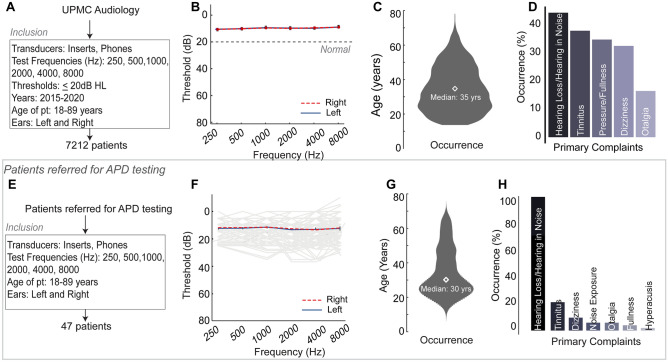
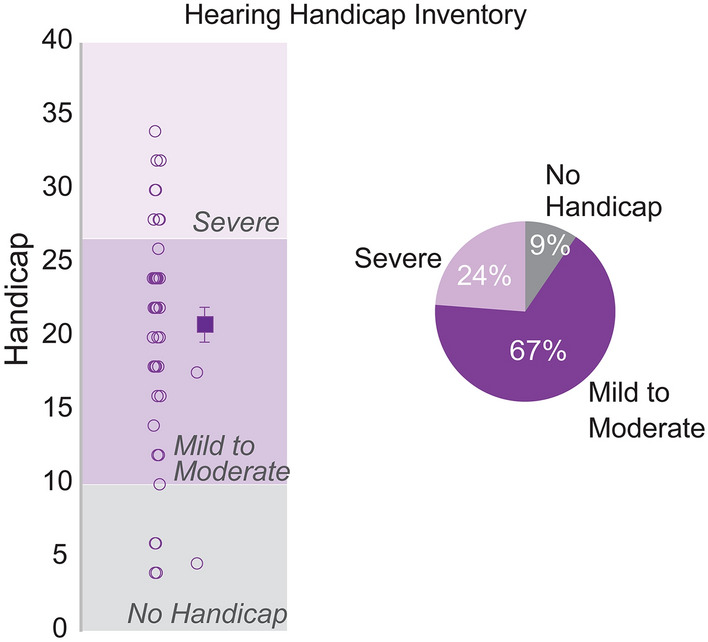
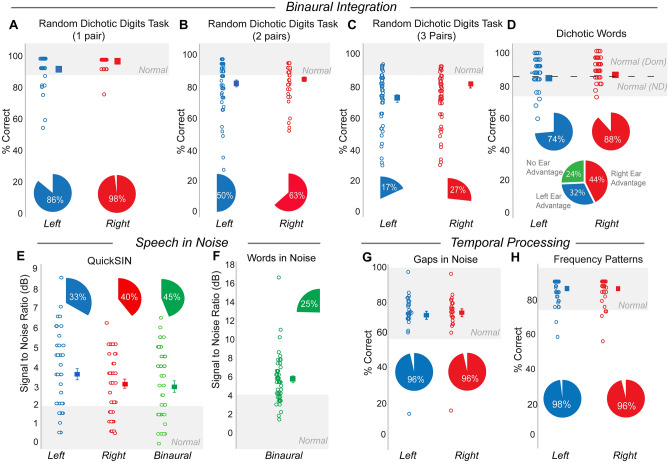
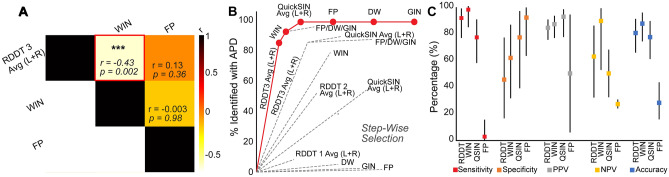
Hearing thresholds form the gold standard assessment in Audiology clinics. However, ~ 10% of adult patients seeking audiological care for self-perceived hearing deficits have thresholds that are normal. Currently, a diagnostic assessment for auditory processing disorder (APD) remains one of the few viable avenues of further care for this patient population, yet there are no standard guidelines for referrals. Here, we identified tests within the APD testing battery that could provide a rapid screener to inform APD referrals in adults. We first analyzed records from the University of Pittsburgh Medical Center (UPMC) Audiology database to identify adult patients with self-perceived hearing difficulties despite normal audiometric thresholds. We then looked at the patients who were referred for APD testing. We examined test performances, correlational relationships, and classification accuracies. Patients experienced most difficulties within the dichotic domain of testing. Additionally, accuracies calculated from sensitivities and specificities revealed the words-in-noise (WIN), the Random Dichotic Digits Task (RDDT) and Quick Speech in Noise (QuickSIN) tests had the highest classification accuracies. The addition of these tests have the greatest promise as a quick screener during routine audiological assessments to help identify adult patients who may be referred for APD assessment and resulting treatment plans.
© 2023. Springer Nature Limited.
Conflict of interest statement
The authors declare no competing interests.
Figures
References
-
- Pryce H, Wainwright D. Help-seeking for medically unexplained hearing difficulties: A qualitative study. Int. J. Ther. Rehabil. 2008;15:343–349.
-
- Hind SE, et al. Prevalence of clinical referrals having hearing thresholds within normal limits. Int. J. Audiol. 2011;50:708–716. - PubMed
-
- Spankovich C, Gonzalez VB, Su D, Bishop CE. Self reported hearing difficulty, tinnitus, and normal audiometric thresholds, the National Health and Nutrition Examination Survey 1999–2002. Hear. Res. 2018;358:30–36. - PubMed
Publication types
MeSH terms
Grants and funding
LinkOut - more resources
Full Text Sources
Miscellaneous
