


Prevalence of vancomycin-resistant Enterococci in India between 2000 and 2022: a systematic review and meta-analysis
- PMID: 37605268
- PMCID: PMC10441759
- DOI: 10.1186/s13756-023-01287-z
Prevalence of vancomycin-resistant Enterococci in India between 2000 and 2022: a systematic review and meta-analysis
Abstract
Background: Vancomycin-resistant Enterococci (VRE) infections are recurrently reported in different parts of India in the last two decades. However, an up-to-date, countrywide information concerning the prevalence and the rate of VRE in India is limited and hence this study aimed to estimate the pooled prevalence of VRE in India.
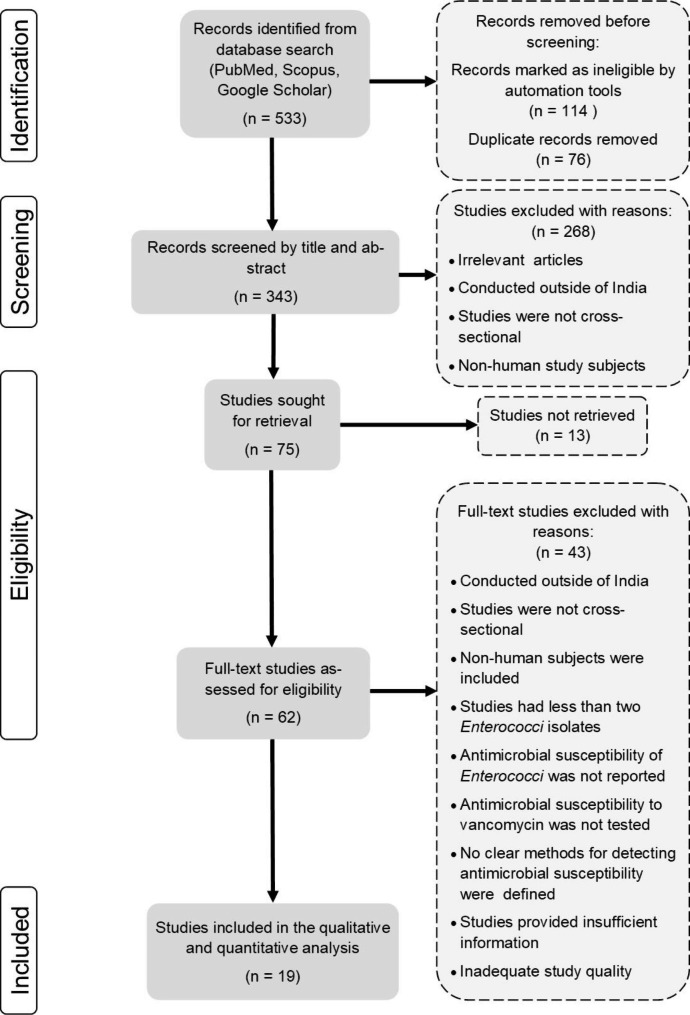
Methods: A literature search was performed using various databases. The Preferred Reporting Items for Systematic Reviews and Meta-Analyses (PRISMA) guidelines were followed throughout. Cross-sectional studies reporting the prevalence of VRE in India from human samples whereby at least two Enterococci were isolated between 1 January 2000 and 31 December 2022 were sought for inclusion. Data were extracted and analysed using Microsoft Excel and Comprehensive Meta-analysis version 4, respectively.
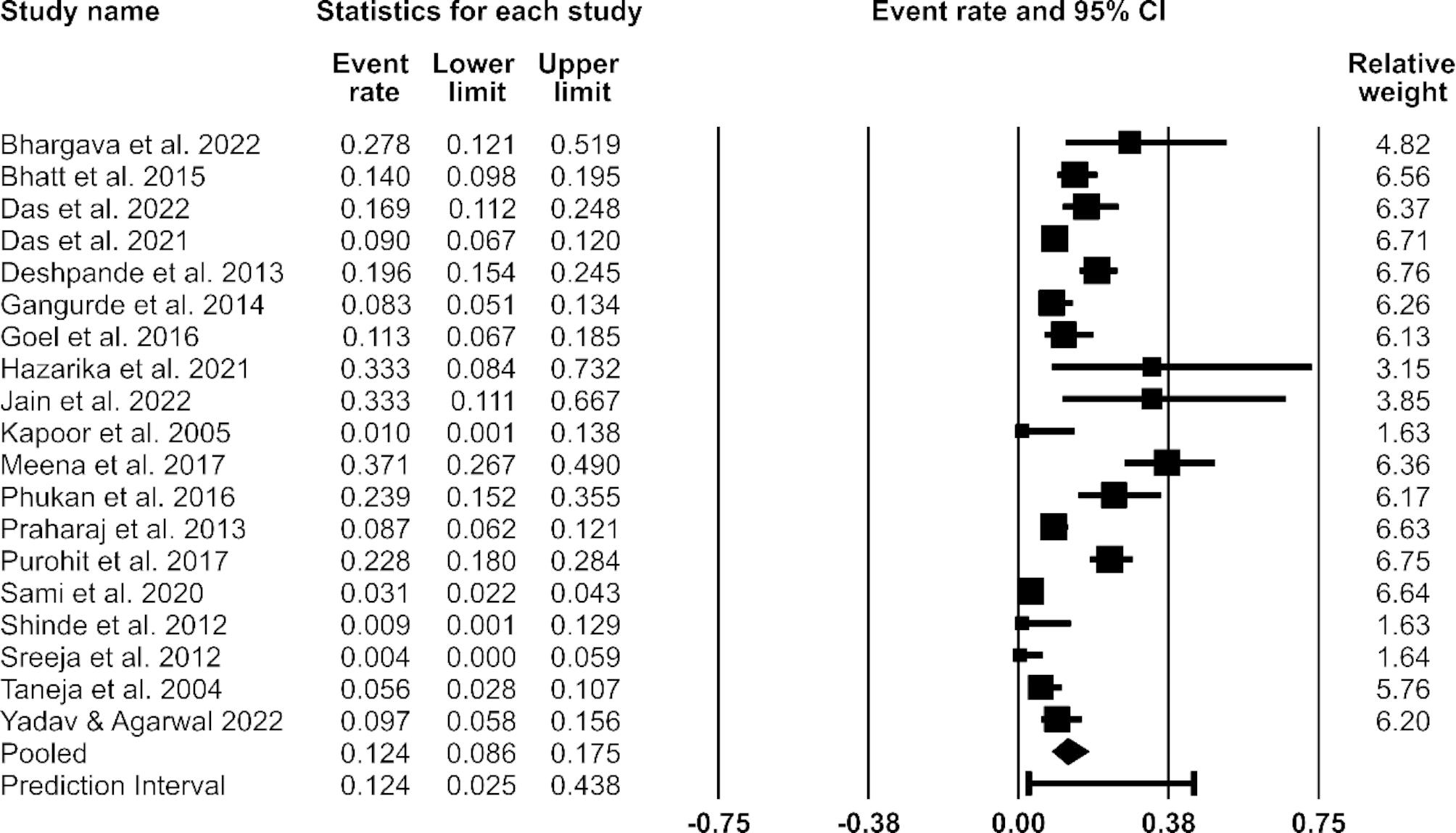
Results: Nineteen studies were included in the analyses. A collective total of 3683 Enterococci isolates were examined, of which 368 were VRE strains. The pooled prevalence of VRE in India was calculated at 12.4% (95% CI: 8.6-17.5; Q = 189.69; I2 = 90.51%; p = < 0.001). E. faecalis was the most frequently isolated species (1450 [39.37%]) followed by E. faecium (724 [19.66%]). Amongst the VRE strains, E. faecium was the most prevalent (214 [58.15%]) followed by E. faecalis (134 [36.41%]). An upsurge in the rate of VRE infections was observed in India over time: VRE prevalence was estimated at 4.8% between 2000 and 2010 and 14.1% between 2011 and 2020.
Conclusion: This study presents the most up-to-date information on the rate of VRE infections in India. Though lower than the findings for some less developed countries, VRE prevalence in India is notable and on the rise.
Keywords: Antimicrobial resistance; Prevalence; Vancomycin; Vancomycin-resistant Enterococci.
© 2023. BioMed Central Ltd., part of Springer Nature.
Conflict of interest statement
The authors declare that they have no conflicts of interest.
Figures
References
-
- Weiner LM, Webb AK, Limbago B, Dudeck MA, Patel J, Kallen AJ, et al. Antimicrobial-resistant pathogens associated with healthcare-associated infections: summary of data reported to the National Healthcare Safety Network at the Centers for Disease Control and Prevention, 2011–2014. Infect Control Hosp Epidemiol. 2016;37:1288–301. doi: 10.1017/ice.2016.174. - DOI - PMC - PubMed
Publication types
MeSH terms
LinkOut - more resources
Full Text Sources
