


Factors associated with father-infant bonding during the COVID-19 pandemic: an internet-based cross-sectional study in Japan
- PMID: 37608013
- PMCID: PMC10444891
- DOI: 10.1038/s41598-023-40225-2
Factors associated with father-infant bonding during the COVID-19 pandemic: an internet-based cross-sectional study in Japan
Abstract
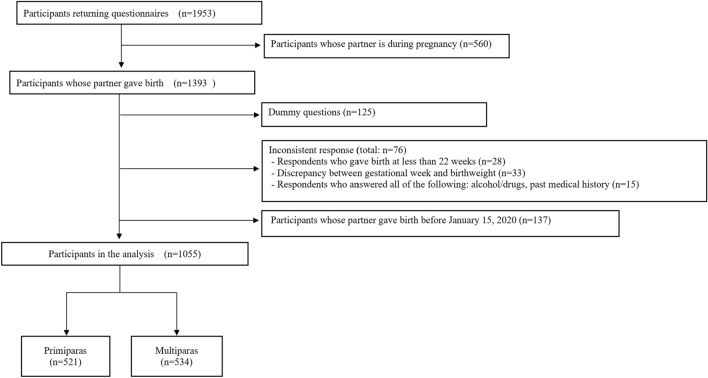
The COVID-19 pandemic has forced lifestyles changes and affected the relationships between fathers and their infants. However, the factors associated with paternal-infant bonding have not been clarified. This study aimed to explore the factors associated with father-infant bonding during the COVID-19 pandemic in Japan. This cross-sectional study used data from a nationwide survey and the Japanese version of the Mother-to-Infant Bonding Scale (MIBS) to measure father-infant bonding. The participants were divided into two groups depending on their partners' parity. A linear regression model (Gauss-Markov-type) was used for both groups. A total of 1055 men were included in the analysis. Of these men, 521 (49.4%) had a primipara partner, and 534 (50.6%) had a multipara partner. No significant differences were found between the two groups' MIBS-J scores. Fathers' mental health, relationship with the partner and family members, abusive behavior towards children, wanted pregnancy, and the youngest child's Neonatal Intensive Care Unit admission history were associated with father-infant bonding. Regarding factors related to COVID-19, caring for the child while the partner is at home has a negative impact on bonding, while fear related to infection with COVID-19 has no negative impact on bonding.
© 2023. Springer Nature Limited.
Conflict of interest statement
The authors declare no competing interests.
References
Publication types
MeSH terms
LinkOut - more resources
Full Text Sources
Medical
