


Using adaptive behavior scores to convey level of functioning in children with autism spectrum disorder: Evidence from the Study to Explore Early Development
- PMID: 37609907
- PMCID: PMC10884350
- DOI: 10.1177/13623613231193194
Using adaptive behavior scores to convey level of functioning in children with autism spectrum disorder: Evidence from the Study to Explore Early Development
Abstract
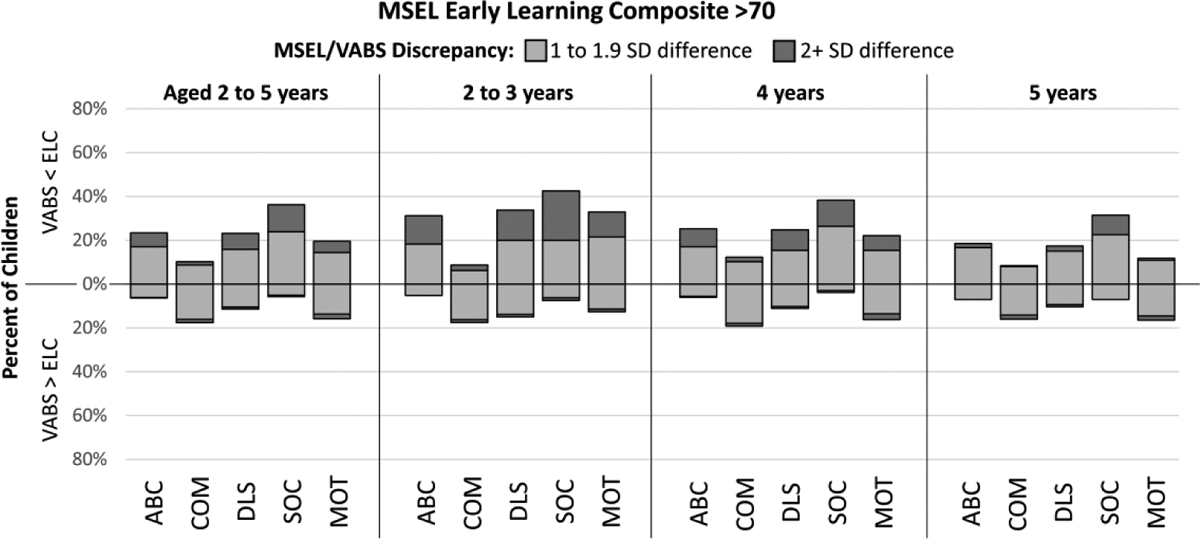
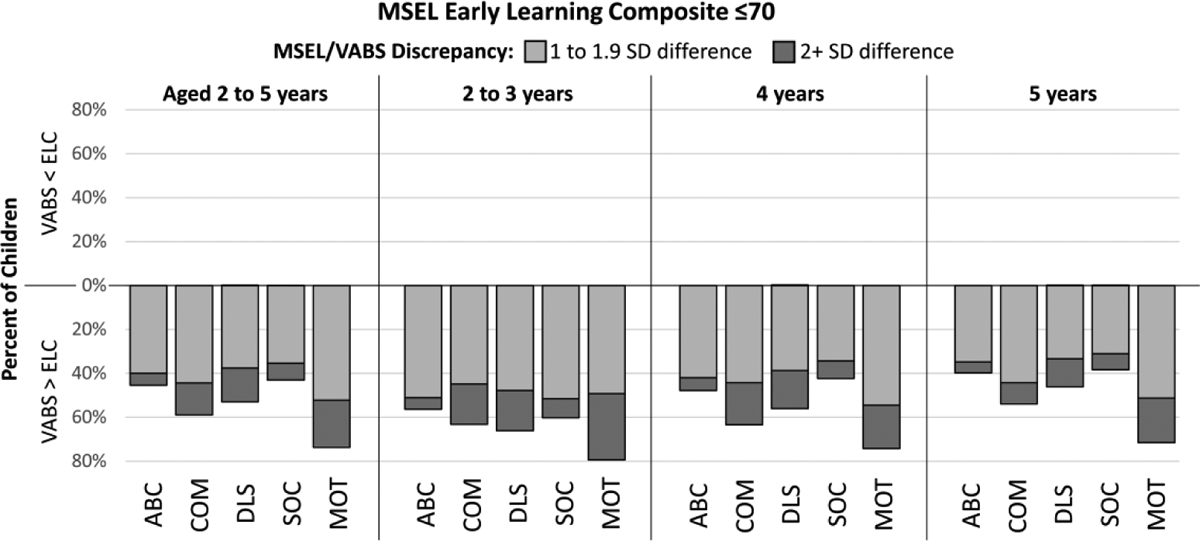
Autistic people are often described as "low-" or "high-functioning" based on their scores on cognitive tests. These terms are common in publications and in everyday communication. However, recent research and feedback from the autistic community suggests that relying on cognitive ability alone to describe functioning may miss meaningful differences in the abilities of autistic children and adults and in the kinds of support they may need. Additional methods are needed to describe "functioning" in autistic children. We examined whether scores from a test measuring adaptive behaviors would provide information on the functional abilities of children with autism that is different from cognitive ability and autism symptom severity. Adaptive behaviors include age-appropriate skills that allow people to function in their everyday lives and social interactions. We found that a large amount of the variation in adaptive behavior scores was not explained by cognitive development, autism symptom severity, and behavioral and emotional problems. In addition, there was a wide range of adaptive ability levels in children with autism in our study, including in those with low, average, or high cognitive scores. Our results suggest that adaptive behavior scores could provide useful information about the strengths and support needs of autistic children above and beyond measures of cognitive ability and autism symptom severity. Adaptive behavior scores provide important information on the needs of autistic people.
Keywords: adaptive behavior; adaptive functioning; autism spectrum disorders; cognitive development; epidemiology; intelligence quotient.
Conflict of interest statement
Declaration of conflicting interestsThe author(s) declared no potential conflicts of interest with respect to the research, authorship, and/or publication of this article.
Figures

References
-
- Achenbach TM (1992) Child Behavior Checklist. Burlington, VT: Achenbach System of Empirically Based Assessment.
-
- Alvares GA, Bebbington K, Cleary D, Evans K, Glasson EJ, Maybery MT, Pillar S, Uljarević M, Varcin K, Wray J, & Whitehouse AJO (2020). The misnomer of ‘high functioning autism’: Intelligence is an imprecise predictor of functional abilities at diagnosis. Autism, 24(1), 221–232. 10.1177/1362361319852831 - DOI - PubMed
Publication types
MeSH terms
Grants and funding
- U01 DD001291/DD/NCBDD CDC HHS/United States
- U10 DD000180/DD/NCBDD CDC HHS/United States
- U01 DD000746/DD/NCBDD CDC HHS/United States
- U10 DD000901/DD/NCBDD CDC HHS/United States
- U10 DD000181/DD/NCBDD CDC HHS/United States
- U01 DD000498/DD/NCBDD CDC HHS/United States
- U01 DD000749/DD/NCBDD CDC HHS/United States
- U01DD001215/ACL/ACL HHS/United States
- U10 DD000182/DD/NCBDD CDC HHS/United States
- U01 DD001215/DD/NCBDD CDC HHS/United States
- U10 DD000183/DD/NCBDD CDC HHS/United States
- U01DD000750/ACL/ACL HHS/United States
- U10 DD000184/DD/NCBDD CDC HHS/United States
- U01 DD000752/DD/NCBDD CDC HHS/United States
- U01 DD000750/DD/NCBDD CDC HHS/United States
- U54 HD090256/HD/NICHD NIH HHS/United States
- U01 DD000748/DD/NCBDD CDC HHS/United States
LinkOut - more resources
Full Text Sources
Medical
